10 Easy Things You Can Do that Promote Privacy and Positive Relationships

Although this list can be used with any population, it is geared towards individuals who need a considerable amount of support. Many of these are probably things you already do!

1.  Prompt clients/consumers/students to greet one another.

I’m always surprised to realize that some people don’t know the names of the other people they spend time with each day.  A simple greeting is a wonderful, simple, social script that you have natural opportunities to practice each day.

2.  Ask permission or notify an individual before touching their person or their wheel chair.

This reinforces that an individual has control and autonomy over his or her own body.  It’s important for people to feel in control of their body so that they feel safe and also so they can keep others’ safe.  It also communicates that a person’s body is something that needs to be treated with respect.

3.  Keep all aspects of a personal care (toileting) routine private.

This means that you don’t follow behind someone with a Depends (or other personal care item)- use a bag.  It also means you don’t announce taking someone to the restroom to the group (say it quietly so only the person you are speaking to can hear).

4.  Do not speak negatively about clients/consumers/students in front of others – including saying they are having  behaviors.

People are very perceptive about when others are speaking negatively about them. When you say so and so is having behaviors it makes the situation very public, embarrasses the individual, and gives positive reinforcement (in the form of attention) to the behavior.  If for your safety you need to communicate this, use a code (In Champaign we would say “did you see the Illini’s defense last night?” which meant we are having a potentially dangerous behavior situation please hang out until all clear).

5.  Do not affectionately kiss, cuddle, or pat on the head clients/consumers/students.

In someways this is a no brainer and in other ways it is hard.  I know so many people who are touch deprived and it seems harmless to give someone a hug when you see them but these types of affection have several negative side effects.  1) They send an inappropriate message of how to interact in non-sheltered situations (you can’t hug people you meet on the bus).  2) They communicate that the individual is child-like and a-sexual.  3) They can create a climate where it is difficult to detect sexual predators.

6.  Make home movies.

A flip camera is less than $200 and very easy to use.  Make videos showing people being friendly to one another, answering questions about what is important to them, and daily routines or special events.  People love watching themselves and their friends.  It allows them to tell a story that they may not be able to tell by themselves.

7.  While maintaining appropriate boundaries, talk about emotions (including your own).

All people have complex feelings regardless of their abilities in other areas, but people don’t always have the words to communicate them.  It is appropriate to model emotional expression.  For example, when I go with a group from our day program to deliver food to families, I tell a story about how I feel.  I say, “It makes me a little sad to know that people don’t have any food, but the family was so happy we brought them food.  It makes me feel happy and proud to help someone else.  I like to do it.”  I just talk about it as we’re driving back.  It’s also appropriate to name clients’/students’/consumers’ emotions, “You seem like you might be a little bored” or “You look so proud to have gotten your pay check.” What you are doing with these easy statements is creating an emotionally safe environment.  (Note: this is way different than unloading personal problems on clients/students/consumers).

8.  When referring to intimate body parts, use the correct word.

9.  During lunch/snack/work breaks prompt folks to talk to one another, even if it the same conversation you had yesterday, and preferably incorporate pictures.

Perhaps combine with number 10 🙂

10.  Have a regular discussions about current events.

One of my favorite stories came out of a current event discussion.  It was during the 2008 primaries and I said that Hillary Clinton was running.  The person I was talking to said, “Hillary sounds like a girls name” and I said, “It is.”  He started laughing hysterically, and said, “Sarah don’t tease me, a woman can’t run for president.”  What a great way to start talking about gender!

A Thinking Person’s Guide to Autism

“A Thinking Person’s Guide to Autism” is a wonderful resource and online community.  They have a blog, facebook page, and book so you can check them out in what ever way is most comfortable to you.  Although they deal with many topics related to Autism Spectrum Disorders, they often touch on topics of sexuality.

I especially would recommend checking out this post, “Talking About Sex with Young Adults with Autism”  Here’s an excerpt.

“Amy looked nice, but the grown-ups wouldn’t let us go in Amy’s room and shut the door.”

“Did Amy want to go in her room with you and shut the door?”

“Not really. So we went outside and the parents kept watching us.”

“Did Amy want to be alone with you outside?”

“I’m not sure.”

“Did you touch Amy?”

“I wanted to. I wanted her to lie down on the grass so we could do sex.”

“Have you ever had sex with anyone else?”

“Probably not.”

For Parents

In a parent focus group* on the topic of sexuality and their children with ASD several interesting themes emerged: parents struggle with what healthy sexuality looks like in their child with ASD, they feel their child’s social impairments make many sexuality topics difficult to understand, they feel the community does not understand the sexuality needs of their child, and they feel unprepared to support their child with their sexuality need.

Does that sound like you?

These researchers made several suggestions for parents.  Although they were focused on children with ASD, I think this would be applicable for almost all children.  I think they are also good things for professionals to keep in mind too!

1) Lean about sexuality and ASD as well as sexual development in general.

2) Think about your hopes and fears for your child.  Also think about your own experiences learning about sexuality.

3) Set goals for your child (and I would maybe modify, to the degree that they are able, with your child).

4) Think about the method to communicate these messages to your child.

5)  Coordinate with schools, physicians, ect.

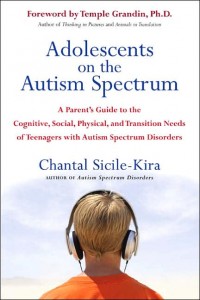
I have found a book that may be useful called “Adolescents on the Autism Spectrum: A Parent’s Guide to the Cognitive, Social, Physical, and Transition Needs of Teenagers with Autism Spectrum Disorders “.  You can get a pretty good preview on google books to make sure it is right for you.  I like it because it talks about ASD in general and then weaves in topics related to puberty.  It also thinks about changes from multiple domains.  For example, one suggestion was realizing your teen might need more control and finding ways to incorporate that into his or her daily life.

This tip sheet from the Better Health Channel may also be helpful: Sex education for children with intellectual disabilities – tips for parents – Better Health Channel

*Only a short preview of this article is available for free online.  Although the entire article is available for purchase it is written for an academic audience.

The Specials

I had a great time in Rockford at The Birds and the Bees workshop.  I always feel like I learn so much each time I do a workshop.  I got to meet a lot of interesting folks and I hope people walked away with a few things to think about.  One thing that people asked for was some video showing what education might actually look like.  I haven’t been able to find a great video yet, but I did find a web series that is really interesting called “The Specials”.  It is made in the UK and follows five young adults as they transition out of school and into a group home.  It is really interesting and touches on topics of sexuality.  Worth checking out.  http://www.the-specials.com/episodes 

Unfortunately- the website just has excerpts from the show and the DVDs aren’t available for purchase yet in the US.  The excerpts are rather long and sometimes the full ones pop up on You Tube so keep an eye out.

Updated Resouce List

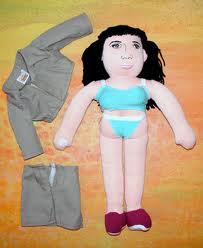
I added atomically correct dolls to the resource list.   This company has lesson plans available, but I have never used them.  I have used the dolls before with middle school students to talk about how different people may be feeling.  I also added a link to atomically correct models of reproductive organs that are more life like.

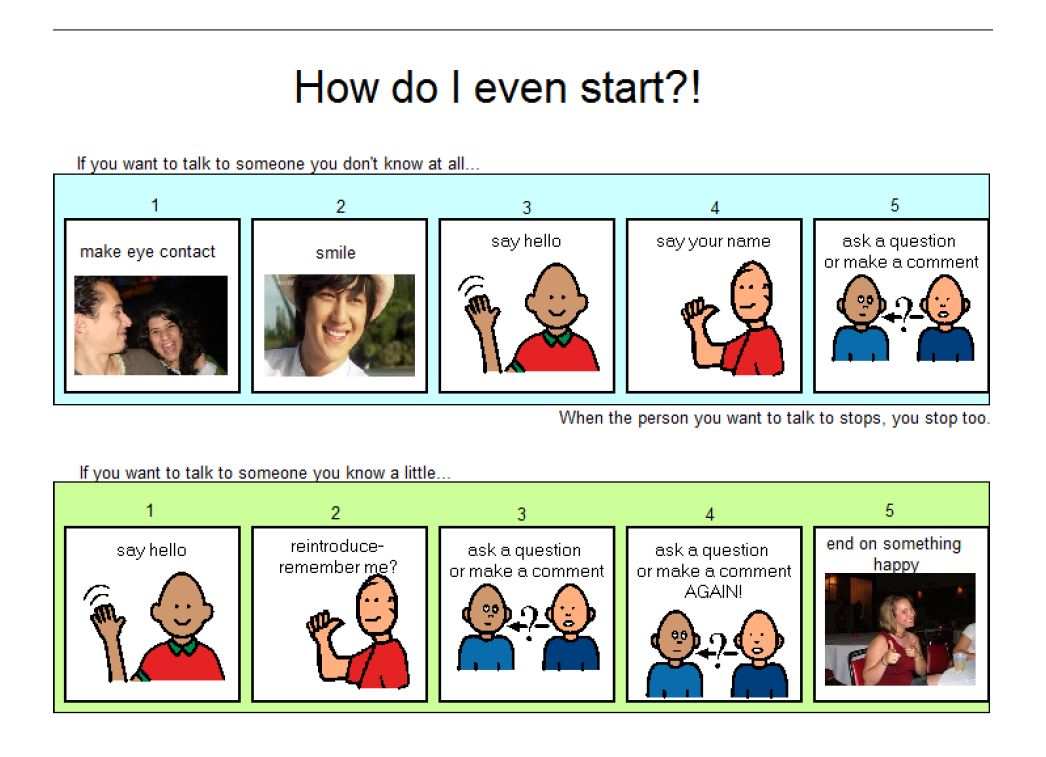
Social Narrative for Initiating Social Interactions

This is a social narrative in comic strip form.  It supports initiating social interactions.  One strip is for people you don’t know at all and the other strip is for people you know a little.  I would use this in combination with role playing (can you tell I like role playing?).  Over initiating and under initiating can both be a problem.  This is geared more towards encouraging initiation, but it could be used to help establish boundaries too. The YAI relationship videos also cover some of this information. Click here to get as a pdf: How do I even start

.

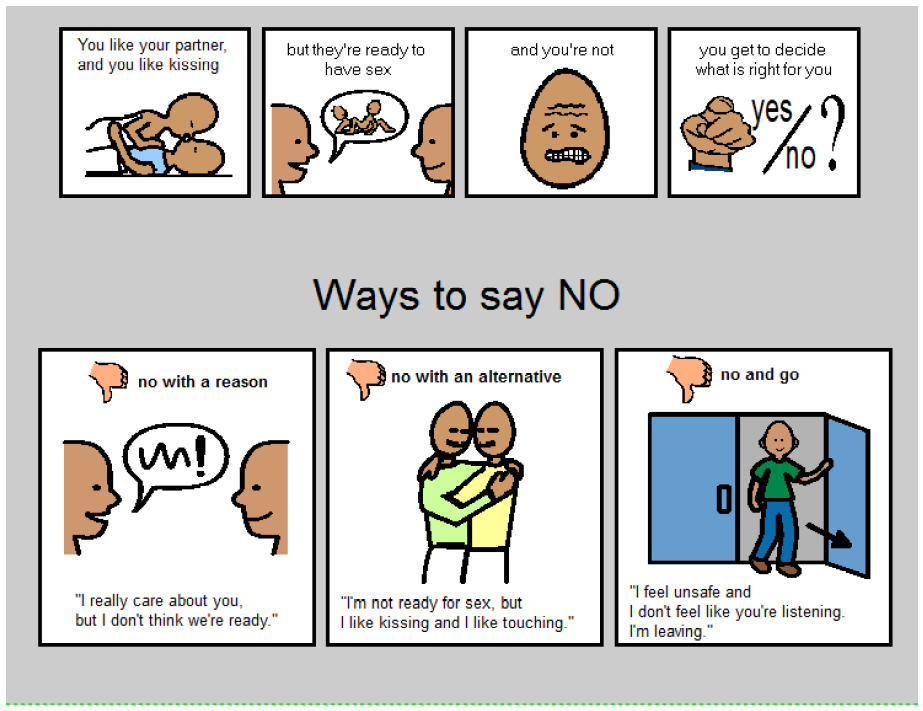
Ways to Say No

I developed this to be used in conjunction with the YAI relationship series, but you could definitely use it independently.  I would use this to supplement role playing and practice using each of the saying no strategies.  You can click here to get it as a pdf:

Ways to say no.

Supplement to Boys/Girls/Both Activity

boys, girls, bothIf you attended the workshop you might remember an activity we did called “Boys/Girls/Both.”  This activity was adapted from the F.L.A.S.H. curriculum.  Basically, you give students 3 signs: one that says “boys”, one that says “girls”, and one that says “both.”  You also hand out sheets of paper with different changes that happen during puberty (each sheet has its own item on it).  You then instruct students to decide if the change happens to boys, girls, or both.  I have created a visual support so instead of just having words you can also use pictures.  Click here to get a pdf of the support:

Boys, Girls, Both pictures.

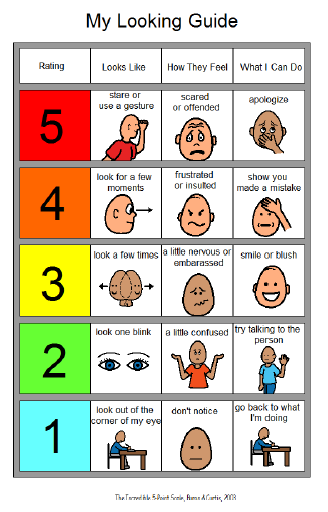
My Looking Guide

You might have seen this visual aid at the workshop.  Often folks don’t understand why something as simple as looking at someone else may get them into trouble.  This visual support explains how the other person might feel as well as what they can do in various situations.  Click on the link if you would like to view this image as a pdf (feel free to copy and use it for educational purposes).

My looking guide.