I added atomically correct dolls to the resource list. This 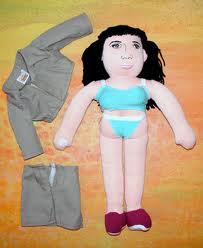 company has lesson plans available, but I have never used them. I have used the dolls before with middle school students to talk about how different people may be feeling. I also added a link to atomically correct models of reproductive organs that are more life like.
Visual Supports
Social Narrative for Initiating Social Interactions
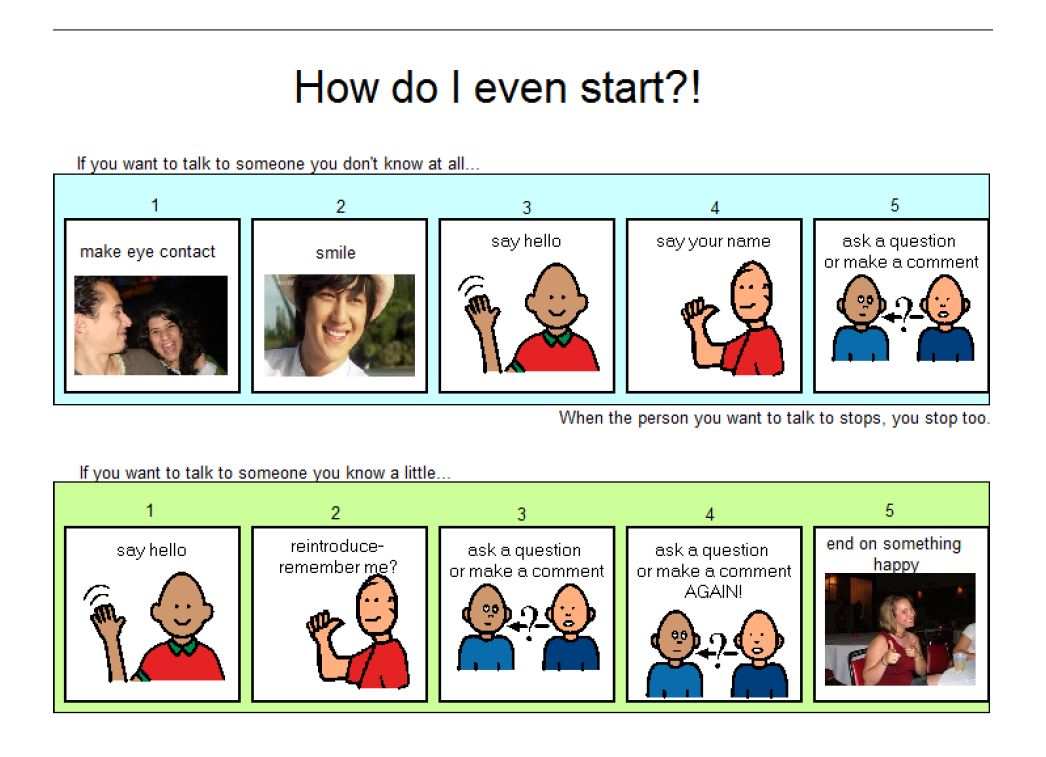
This is a social narrative in comic strip form. It supports initiating social interactions. One strip is for people you don’t know at all and the other strip is for people you know a little. I would use this in combination with role playing (can you tell I like role playing?). Over initiating and under initiating can both be a problem. This is geared more towards encouraging initiation, but it could be used to help establish boundaries too. The YAI relationship videos also cover some of this information. Click here to get as a pdf: How do I even start
 .
.
Ways to Say No
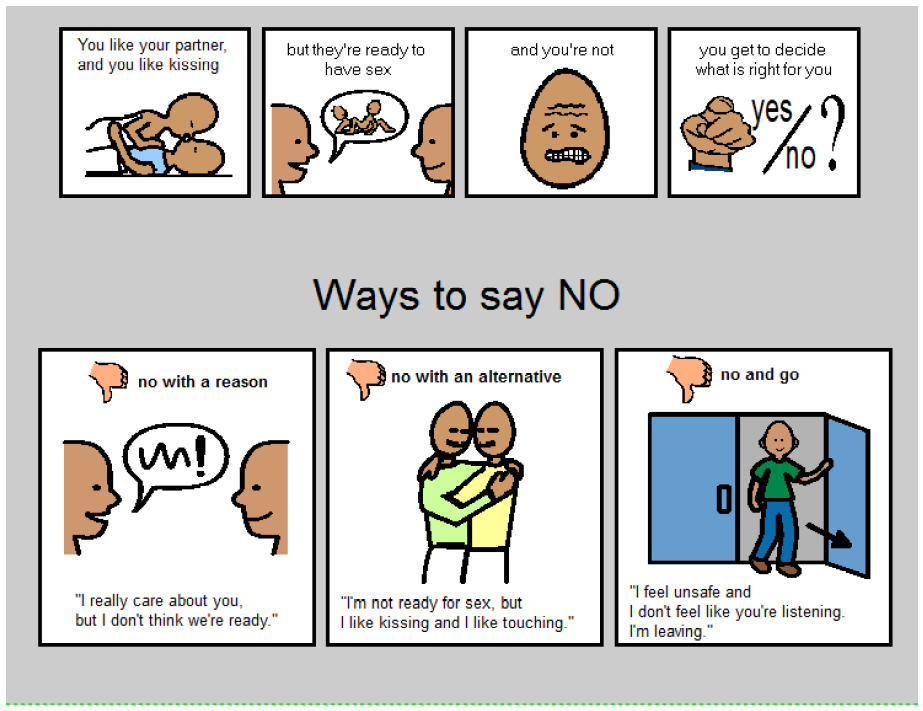
I developed this to be used in conjunction with the YAI relationship series, but you could definitely use it independently. I would use this to supplement role playing and practice using each of the saying no strategies. You can click here to get it as a pdf:
Supplement to Boys/Girls/Both Activity
 If you attended the workshop you might remember an activity we did called “Boys/Girls/Both.” This activity was adapted from the F.L.A.S.H. curriculum. Basically, you give students 3 signs: one that says “boys”, one that says “girls”, and one that says “both.” You also hand out sheets of paper with different changes that happen during puberty (each sheet has its own item on it). You then instruct students to decide if the change happens to boys, girls, or both. I have created a visual support so instead of just having words you can also use pictures. Click here to get a pdf of the support:
My Looking Guide
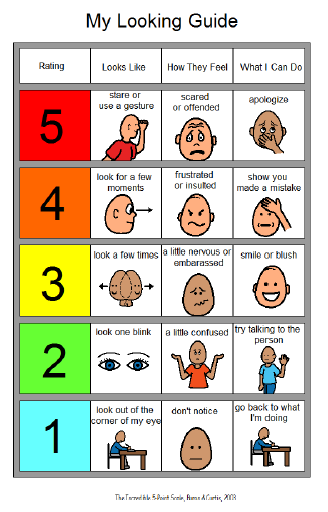 You might have seen this visual aid at the workshop. Often folks don’t understand why something as simple as looking at someone else may get them into trouble. This visual support explains how the other person might feel as well as what they can do in various situations. Click on the link if you would like to view this image as a pdf (feel free to copy and use it for educational purposes).
 The Birds and The Bees