Understanding Pregnancy Emotions

It is very normal to experience a range of emotions when you find out you are pregnant, since it is a major life event that brings about a lot of change. It’s important to remember that every experience is valid and part of the parenthood journey.

Common Reasons for Pregnancy Emotions

Hormones: There are significant hormonal shifts, which can have an intense impact on your emotions. Your estrogen and progesterone hormones fluctuate, which then influences the hormones that regulate your mood (serotonin and dopamine), leading to mood swings and heightened emotions.

Body and body image changes: Your body goes through a lot of physical changes (weight gain, changes in posture, changes in skin, etc.) which can sometimes provoke emotions about body image and self-esteem. Some expectant parents may feel proud that their body’s changing to nurture life, but others may experience feelings of discomfort or insecurity.

Stress: This is a very stressful time for parents, and you may feel stressed about finances, relationship adjustments, childbirth itself, and parenting. Your body heightens its stress response system (your cortisol levels) which can lead to feelings of anxiety, mood swings, and irritability.

Fatigue: Changing hormones, difficulty sleeping, and stress can cause fatigue and exhaustion, which is very common during pregnancy. This can further heighten feelings and make you emotional.

Emotional Changes Throughout Pregnancy

First trimester: Can bring on a lot of early pregnancy emotions and first-trimester mood swings. You may experience a whirlwind of feelings as you come to terms with the reality of being pregnancy, and may feel excited, anxious, and/or overwhelmed.

Second trimester: Experience a welcome break from intense emotions of early pregnancy. You may feel more stable and have more balanced emotions, but you may continue to feel anxious or stressed.

Third trimester: As you’re preparing for childbirth, it can evoke even stronger emotions. You may be fearful of the unknown, but also excited about the arrival of a child. Common feelings include anticipation and excitement, occasional impatience, and anxiety.

Managing Emotional Changes During Pregnancy

It’s important to be able to identify and label what you’re feeling, so that it can be addressed in healthy and effective ways. Be mindful of what you’re experiencing in the present moment. You also should practice self-compassion by acknowledging the work that your body is doing by being pregnant, and accepting these changes.

NewYork-Presbyterian provided some strategies to manage your emotional changes during pregnancy:
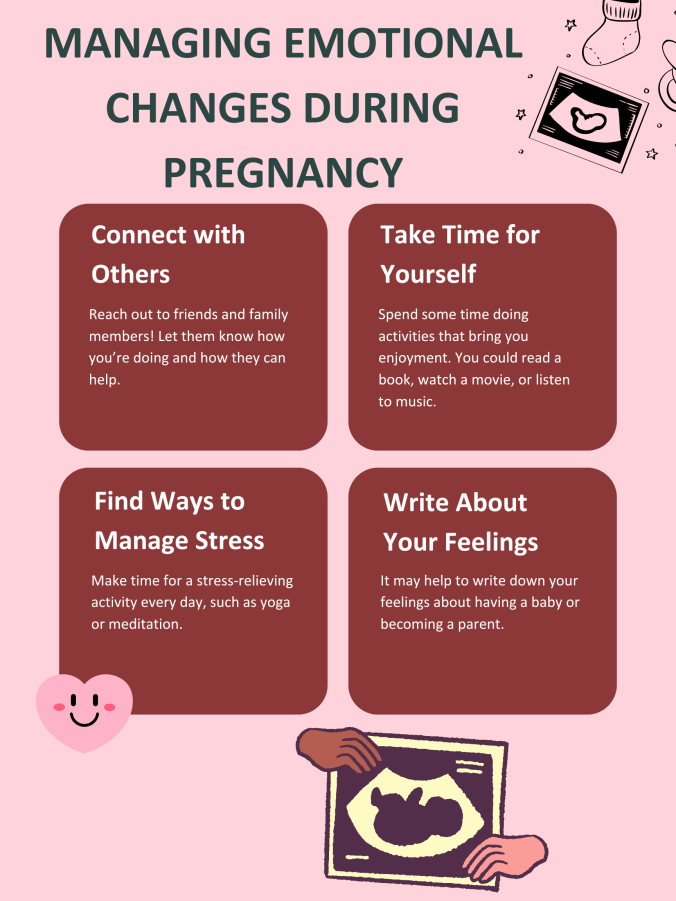
Title: Managing Emotional Changes During Pregnancy. On the top-right page, black and white clip art of an ultrasound and a sock. Two boxes on top, two below. Upper-left box: Connect with Others: Reach out to friends and family members! Let them know how you're doing and how they can help. Upper-right box: Take Time for Yourself: Spend some time doing activities that bring you enjoyment; You could read a book, watch a movie, or listen to music. Bottom-left box: Find Ways to Manage Stress: Make time for a stress-relieving activity every day, such as yoga or meditation. Bottom-right box: Write About Your Feelings: It may help to write down your feelings about having a baby or becoming a parent. At the bottom of the page, a clip art image of a person holding an ultrasound of a fetus.

When to Seek Help for Pregnancy Mood Swings

There is no shame in reaching out to a mental health professional when you’re struggling. Symptoms of depression can sometimes resemble pregnancy mood swings, but the American College of Obstetricians and Gynecologists (ACOG) recommends to speak to your provider if you have any of these signs for at least two weeks:

  • Depressed mood most of the day, almost every day
  • Loss of interest in work or other activities
  • Persistent feelings of guilt, hopelessness, or worthlessness
  • Difficulty sleeping or sleeping more than usual
  • Loss of appetite or other concerns around weight
  • Trouble paying attention, concentrating, or making decisions
  • Thoughts about death or suicide


Gender Dysphoria in Adolescents

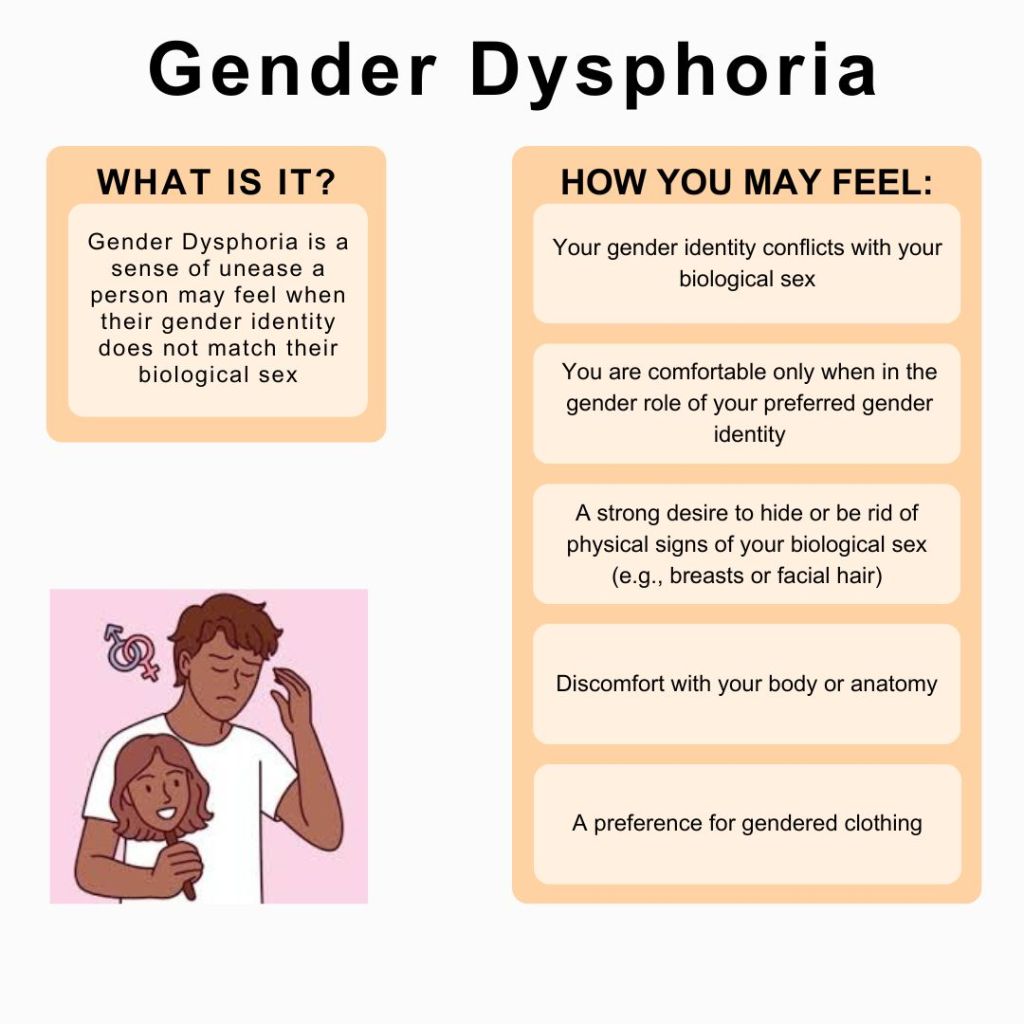
Gender dysphoria is a sense of unease that a person may have because of a mismatch between their sex assigned at birth and gender identity. In adolescence, especially around puberty when young teenagers’ bodies are changing, and they begin exploring their sexual and romantic identities, gender dysphoria typically increases around this time. Included below are some helpful definitions to include in discussions around gender dysphoria, a visual aid tool to discuss how someone may feel if they experience gender dysphoria, and helpful resources from transgender people talking about their gender identity.

Definitions to incorporate while discussing gender dysphoria:

  • Biological sex – label assigned at birth based on physical characteristics (e.g., chromosomes, hormones, and reproductive organs)
  • Primary sex characteristics – changes in the reproductive organs (males: growth of testes, penis, scrotum, and spermarche; females: growth of the uterus and menarche)
  • Secondary sex characteristics – visible physical changes that occur during puberty (males: broader shoulders, a lower voice; females: breast development, hips broaden)
  • Gender Expression – learned roles, behaviors, and actions of women/girls and men/boys (i.e., how society expects certain genders to act and look like)
  • Gender identity – our sense of who we are and how we see and describe ourselves
  • Transgender – people whose gender identity does not match their sex assigned at birth

*For clarification: based on your biological sex (what physical characteristics you are born with), society assigns you a gender (how you should act, what you should be interested, and your role in the world)*

Title: Gender Dysphoria. A single text box titled "What is it?" with the definition below: gender dysphoria is a sense of unease a person may feel when their gender identity does not match their biological sex. A single-column table titled "How you may feel:" In descending order: your gender identity conflicts with your biological sex, you are comfortable only when in the gender role of your preferred gender identity, a strong desire to hide or be rid of physical signs of your biological sex (e.g., breasts or facial hair), discomfort with your body or anatomy, and/or a preference for gendered clothing.

Helpful Resources:

Teen Vogue has an article discussing what it’s like to be transgender and living with gender dysphoria.

The Guardian also has an article where people who identify as transgender discuss their experience with exploring their gender identity. Although gender dysphoria is not the main focus, it is thoroughly discussed in the experiences of the transgender people featured.

This article from BuzzFeed includes people with disabilities exploring their gender identity and how it intersects with their disability. Gender dysphoria is mentioned, but the article mainly focuses on how society has created barriers for transgender people with disabilities. It would still be beneficial to use, as it brings attention to an often overlooked area of the disability and transgender community.

Accessible Mental Health Services

Accessible mental health services can be a challenge for people with disabilities, as there can be a lack of specialized provider training and difficulties with financial costs. We are defining accessibility in terms of disability and financial costs. This post provides a few mental health services for people with disabilities, with some services offering in-person services and others offering both in-person and online services.

Envision Unlimited

Mission Statement: “Envision Unlimited is a certified Community Mental Health Provider offering a full complement of behavioral health services to people with a variety of mental health concerns. We are committed to assisting clients in their best and meaningful lives.”

  • Offers outpatient therapy services to adults and adolescents, both in person and via telehealth
  • Based in Chicago, Illinois

Envision Unlimited emphasizes that no one will be denied access to services due to an inability to pay, and a discount is available.

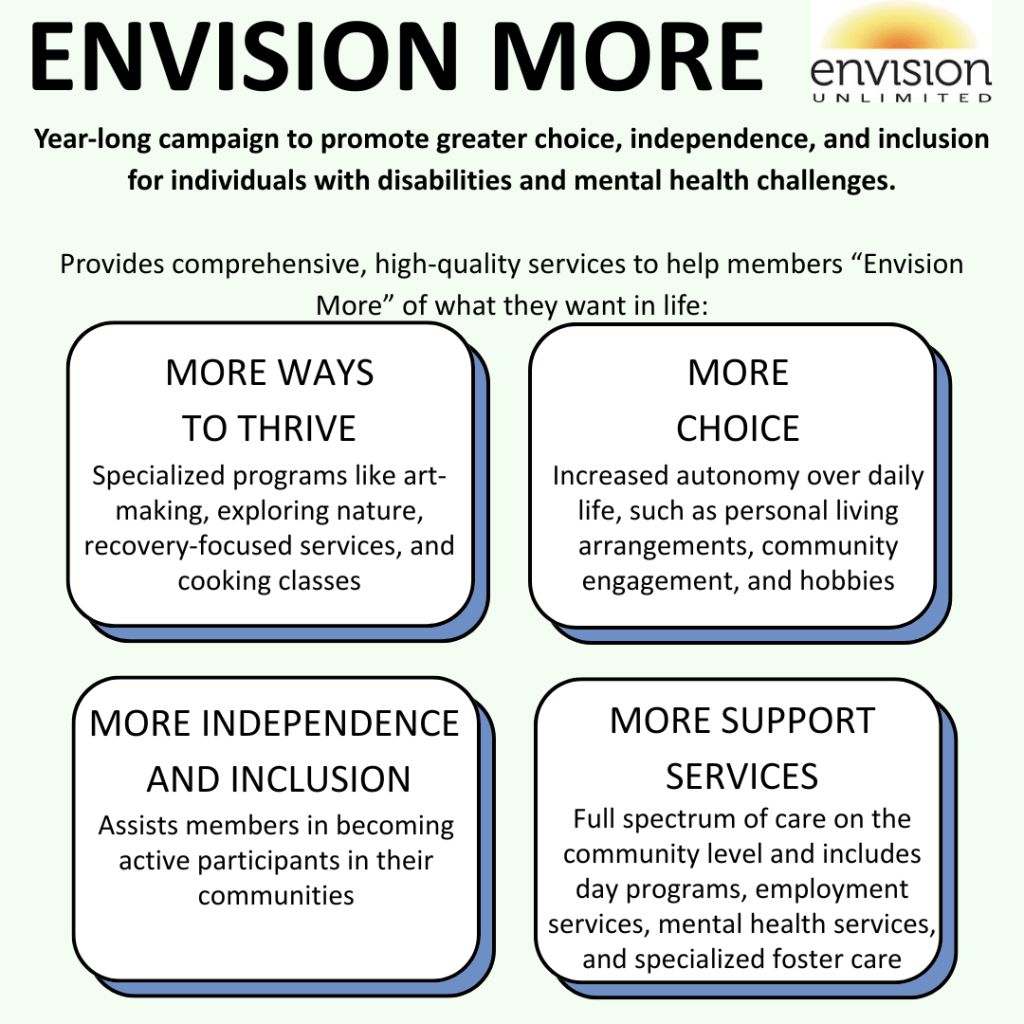
There is also a program called ENVISION MORE for people with disabilities.

Title: ENVISION MORE. Year-long campaign to promote greater choice, independence, and inclusion for individuals with disabilities and mental health challenges. Provides comprehensive, high-quality services to help members "Envision More" of what they want in life. Box 1: More Ways to Thrive; Specialized programs like art-making, exploring nature, recovery-focused services, and cooking classes. Box 2: More Choice; Increased autonomy over daily life, such as personal living arrangements, community engagement, and hobbies. Box 3: More Independence and Inclusion; Assists members in becoming active participants in their communities. Box 4: More Support Services; Full spectrum of care on the community level, and includes day programs, employment services, mental health services, and specialized foster care. The logo for Envision Unlimited is in the upper right-hand corner.

NYSTART (New York Systemic, Therapeutic, Assessment Resources and Treatment)/CSIDD (Crisis Services for Individuals with Intellectual and/or Developmental Disabilities)

Goal: “…to build relationships and support across service systems to help people remain in their homes and communities and enhance the ability of the community to support them.”

  • Offers crisis prevention and response services to people who have both developmental disabilities and complex behavioral needs, as well as to their families and those who provide supports
  • Services are available 24 hours a day, 7 days a week to OPWDD (The New York State Office for People with Developmental Disabilities) eligible individuals age 6 and over who meet NYSTART/CSIDD eligibility
  • Based in New York, must be a New York resident 

The Arc

The Arc company logo.

Mission Statement: “Promoting and protecting the human rights of people with intellectual and developmental disabilities and actively supporting their full inclusion and participation in the community throughout their lifetimes.”

Delaware Disability Resources and Advocacy Organizations

  • All of the following services are based in Delaware

NAMI (National Alliance on Mental Illness)

Mission Statement: “NAMI Delaware supports, educates, and advocates for an improved quality of life for individuals and families affected by mental health conditions.”

  • Offers a variety of signature programs, an annual education conference, and special events (for individuals, families, and professionals to receive support and information)
  • Shapes public policy, has a toll-free NAMI Delaware Helpline, and works with media, educators, healthcare professionals, and elected and appointed officials (to raise awareness, fight stigma, and encourage understanding)
  • This link is for Delaware’s NAMI program, however, there are more than 650 NAMI State Organizations and Affiliates across the country

Division of Substance Abuse and Mental Health

Mission Statement: “To improve the quality of life for Delaware’s citizens by promoting health and well-being, fostering self-sufficiency, and protecting vulnerable populations.”

  • Offers help for mental health issues (in which all services are free, and any referrals are available regardless of insurance), support groups and one-on-one counseling, suicide prevention resources, and other additional resources. 

Mental Health Association in Delaware

Mission Statement: “The Mental Health Association in Delaware strives to strengthen knowledge, resources and support around mental health and recovery.”

  • Offers education, support, and advocacy
  • Support: Offers wellness groups (one is a disability & chronic illness haven wellness group), mental health screening, and a peer support program with the mental health court (mental health court is available for people who have been charged with crimes because of a behavioral health disorder)

How to Guide on Flirting Online

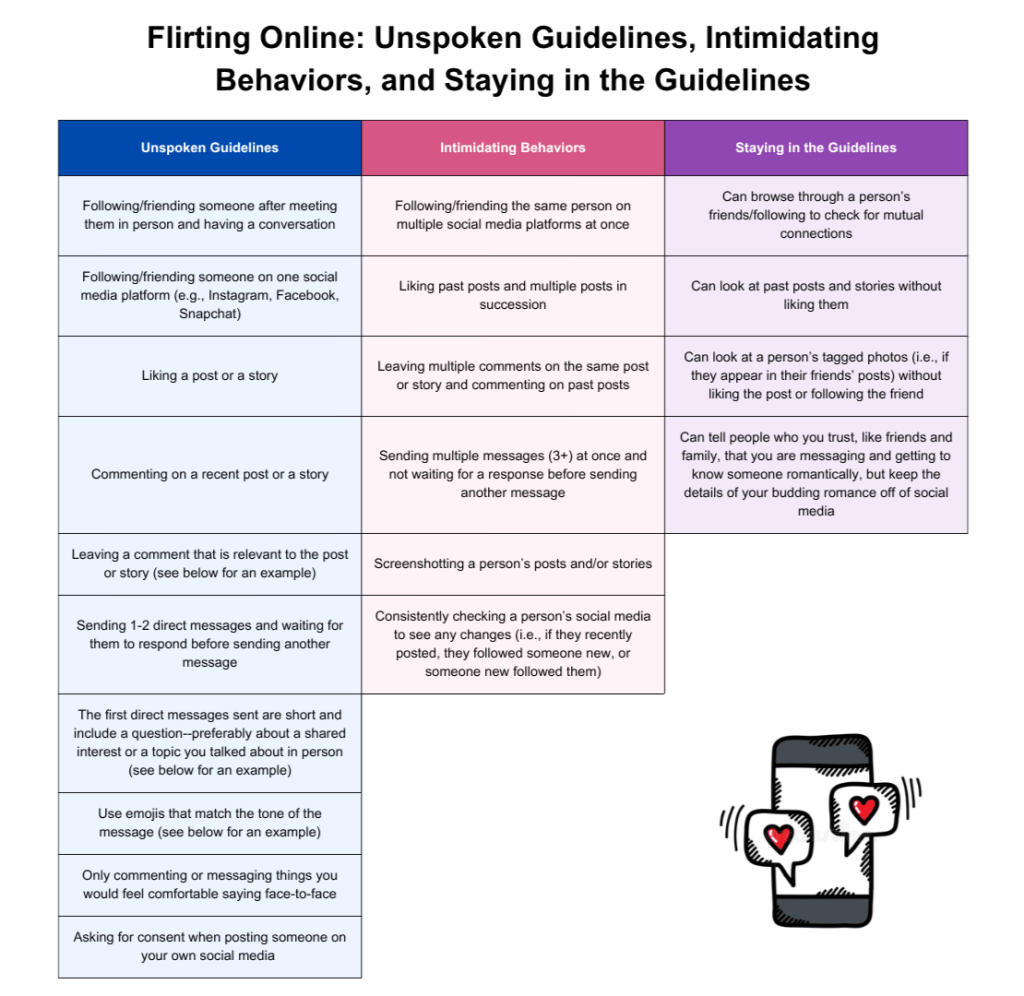
Social media can be difficult to navigate as there are unknown “rules” and behaviors that are widely followed when first interacting with others, especially those you are interested in romantically. This aid demonstrates several unspoken guidelines, intimidating behaviors, and tips on staying within the guidelines on social media when trying to flirt. It is worth mentioning that this is not a comprehensive list of all guidelines and intimidating behaviors, but rather a guide to help you talk to your crush online in a fun, respectful way that keeps everyone comfortable. As a 21-year-old who has been online from a young age, some of these guidelines are based on my own experiences and knowledge.

Table of unspoken guidelines, intimidating behaviors, and tips on staying in the guidelines. From top going down, unspoken guidelines: following/friending someone after them meeting in person, following/friending someone on one social media platform, liking a post/story, commenting on recent post/story, leaving relevant comments on posts/stories, sending 1-2 direct messages and waiting for a response before sending another message, the first direct messages are short and include a question, use emojis that match message tone, only commenting/messaging things you can say face-to-face, and ask for consent when posting someone. From top going down, intimidating behaviors: following/friending someone on multiple social media platforms at once, liking past posts and multiple posts in succession, leaving multiple comments and commenting on past posts, sending multiple messages at once and not waiting for a response before sending another message, screenshotting posts and stories, and consistently checking a person's social media for any changes. From top going down, staying in the guidelines: can browse through a person's friends/following, can look at past posts and stories without liking them, can look at a person's tagged photos without liking the post or following the friend, and can tell people who you trust, like friends and family, that you are getting to know someone, but keeping the details of your budding romance off of social media.

Example of a relevant comment: Someone posts a photo of them graduating school and you comment, “Congratulations!”

Example of a direct message: You talked to someone last week about a book series and sent this message: “Hi! It’s [your name], we talked last week about [book series]. I started reading it and really liked it. Do you have any other recommendations?”

Examples of using emojis: (1) You are messaging your crush about a movie that you both recently watched and talking about a scene that left you in disbelief: “I can’t believe that happened 😭 I was not expecting it at all!” (2) You made plans to hang out with your crush in person and sent this message: “I’m excited to hang out on Saturday 😊 See you then!”

Teen Vogue has a list of questions to keep the conversation going with your crush, whether you’re looking for something low-pressure, flirty, deep, random, interesting, or just plain fun.

The Napoleon Cat Blog gives some tips for commenting on someone’s post, showing different examples for different post scenarios. Some of them are intended for friends, but can still be used for your crush’s posts. Their 35 Short Comments for Instagram section is best used when you first start commenting, as they are simple, not intimidating, and friendly.