Guide For Gynecology and Testicular Exams

Testicular and gynecological exams are very important to the health of your reproductive organs. These exams help to play a critical role in early detections of cancer which can help to increase chances of successful treatment. Testicular exams are used to check for lumps, swelling or changes in the testicles and identify other issues like infections or injuries. Gynecological exams are used to examine the uterus, ovaries, and cervix for any abnormalities along with screening for cancers, infections or other health issues. Overall, these exams are an important part of sexual health. Make sure you are going to get one around once a year. Here is a step-by-step guide of what to expect during these exams.

Testicular Exams:

Purpose: The reason you should get one done is to help detect changes in the testicles early on such as lumps, swelling, or anything that is out of the normal that could indicate cancer or other conditions.

Who should be getting one: A person who has biological male reproductive parts. Men should start getting these around age 15 every year with a healthcare provider.

What to expect during this exam: First you will talk to the doctor. They will ask you questions such as family history and if you are sexually active. They will also ask if you have any concerns that you would like to address. After they will give you privacy to undress from the waist down. You are able to keep your shirt on during this. After the doctor will do a visual check of the scrotum and groin area. Lastly, they will feel each testicle using their fingers to check size, shape, tenderness, or if there are any lumps.

Always remember that at any time during this if you feel uncomfortable you can ask the doctor to stop. You are able to ask any questions you make like and have the doctors explain these steps to you as well.

Gynecology exam:

Purpose of these exams: These exams are important for maintaining reproductive health and catching early problems such as cervical or ovarian cancer. Gynecologists can also help you show your options for different birth control methods such as the pill, IUD, the patch and many others. 

Who should be getting one: Anyone with female reproductive organs should see a gynecologist. Most should start getting exams starting at 21 or sooner if you are sexually active. You can also start going younger if you have any concerns or irregular periods.

What to expect during these exams: Starting off the doctors will come in and discuss any general health concerns or questions you might have. They will ask if your menstrual cycle is regular or if you have concerns about this.

  1. External exam: the docotor will look at the outside of your vagina area to check for irritation, swelling, or any other visible concerns.
  2. Pelvic exam: The doctor will gently examine the internal organs (uterus and ovaries) They do this by inserting one or two gloved fingers while genetly pressing on the abdomen to feel for anything out of the normal.
  3. Speculum exam: It is a medical tool that is used to open the vaginal walls so the doctor can see the cervix. This should not be painful. It can be a little uncomfortable or have some pressure. During this the doctors may collect a small sample of cells from the cervis to screen for early signs of cervical cancer. This is called a pap smear and only takes a few seconds. 

Always remember that at any time during this if you feel uncomfortable you can ask the doctor to stop. You are able to ask any questions you make like and have the doctors explain these steps to you as well.

How to set up an appointment:
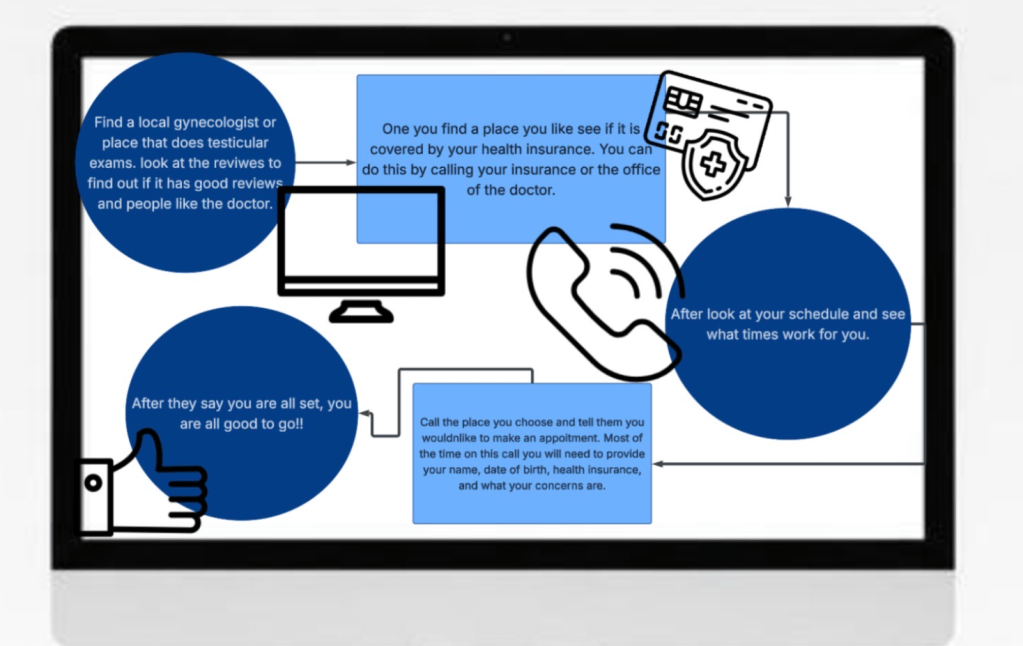
Find a local gynecologist or place that does testicular exams. look at the reviews to find out if it has good reviews and people like the doctor. One you find a place you like see if it is covered by your health insurance. You can do this by calling your insurance or the office of the doctor. Look at you schedule and see what times work for you. Call the place you choose and tell them you would like to make an appoitment. Most of the time on this call you will need to provide your name, date of birth, health insurance, and what your concerns are. After they say you are all set, you are all good to go!

Common concerns 

  1. They are painful: these exams should not be painful at all. If they are painful make sure you let your doctor know so they can help figure out what is going on.
  2. Only get these exams when you are sexually active: you definitely should get these exams while you are sexually active but you should also get them before if you have any concerns. Also get them if testicular or cervix/ovary cancer runs in your family. 

For more information about these exams click on the links below:

Testicular exam – Mayo Clinic

What Happens During a Gyno Exam, From Start to Finish – ScienceInsights

Overall testicular and gynecological exams are an important part of maintaining overall sexual and reproductive health. These exams help you have a peace of mind in early detection of cancers, infections, and any other concerns you may have. Although this can feel nerve-wracking to do, they are very quick, safe, and not painful. Make sure you talk to your doctor if you feel uncomfortable at any time.
Beyond The Myths: Inclusive Sex Education and Mental Health Awareness

Exploring your sexuality can be confusing, especially when you start engaging in sexual acts with other people for the first time. Virginity is the term used to describe the state of never having had sex, and “losing your virginity” can be nerve-wracking. Even the word “losing” is not the best description, because you should be gaining something from your experience instead. There are many misconceptions around sex that can contribute to feeling anxious about having sex for the first time. This is a guide that debunks myths and discusses the many ways you can have sex to help you feel a little more comfortable when engaging in sexual acts, and the importance of your mental wellbeing when it comes to this.

Sex Myths

Myth Reality 
You will feel different after having sex.People often believe after having sex for the first time it will instantly change everything and bring a complete happiness in your life. The truth is there is no “right” way to feel after having it. You can feel happy, anxious, calm, excited, nervous, or even the same. All of these reactions are completely normal. 
Pain is always present.First time sex can feel uncomfortable at first. The vagina is muscle so when it is being strecthed it comes along with discomfort. But with communication, patience, and enough foreplay with your partner the discomfort will last for only a little bit. If the pain is severe or ongoing it is a good idea to talk to a healthcare professional because sex is not supposed to hurt. 
It will be perfect and magical. Watching television they depict first time sex as something magical and smooth. In reality that is not always the case. First time sex can be awkward and nervewracking and that is okay! Learning and figuring things out with your partner is completely normal. It does not have to be perfect for it to be meaningful.  
Talking about boundaries will ruin the mood.This is absolutely not true. If there is something you do not feel comfortable with when about to have sex with your partner, make sure you say it. You saying it will not ruin the mood whatsoever. It will just make sure that you are being treated with respect and that you are not uncomfortable during the experience. When both partners feel safe and heard, it will create a more positive experience. 
Penetration is required. This is a myth because that statement limits the definition of sex to only penis-in-vagina orientation. Intimacy includes many forms such as oral sex, touching, mutual stimulation, and many other experiences. 

Diving Deeper into Inclusive Sex

As mentioned above, “penetration is required” for sex is a myth because of the many ways to be sexual, and based on your pain or mobility restrictions, sensory sensitivities, gender identity, and sexual orientation, sex may be different than how you imagined it. There is no one or “real” way to have sex; it is whatever you and your partner are comfortable with, so it’s important to talk to your partner about boundaries and what sex you would like to have.

There are many different ways people have sex:

  • Anal sex – a penis is inserted into another person’s anus
  • Oral sex – a person licks a person’s vulva, vagina, or clitoris or a person kisses/sucks a person’s penis
  • A person kisses and sucks the other person’s nipples
  • A person masturbates with another person
  • A person touches another person’s vagina or penis
  • Sex toys (ex: dildos…) are used

This fact sheet provides more information on having sex.

Being comfortable in your sexuality and expressing yourself sexually can help you understand yourself better and be in control of your own life. It can also give you confidence to have sex successfully (based on your own personal view of what “successful” sex is) and deepen your connection with your partners.

Resources To Promote Positive Mental Health

For LGBTQ+ individuals with disabilities, the LGBTQ+ community and spaces can act as a protective factor as it helps foster a sense of belonging, reduce isolation, and supports positive self-identity. However, LGTBQ+ people with disabilities also report higher rates of mental health concerns. The Trevor Project has a guide on their website for supporting LGBTQ+ people with disabilities, including direct links to resources that can be found on page 14 on the PDF format.

We wanted to attach some resources if you or someone you know is struggling with mental health concerns. The Cleveland Clinic provides more information about suicide and its warning signs on its website at https://my.clevelandclinic.org/health/articles/suicide.

The Never a Bother campaign is a youth suicide prevention awareness and outreach campaign for young people and their parents, caregivers, and allies. To get involved, please visit https://neverabother.org/

Discover Intimacy Coaching: Reclaiming Connection and Pleasure

Intimacy coaching is a specialized type of relationship coaching that focuses on helping emotional and physical intimacy. Intimacy and connection are essential parts of being human. Everyone deserves the chance to experience it fully. Intimacy coaching offers a supportive, judgement-free space to help individuals or couples explore and deepen their capacity for emotions, physical, and even spiritual intimacy. An intimacy coach helps you reconnect with your desires and communicate your needs. If you’re looking to bring back the spark, try something new, or simply understand your needs/desires better, intimacy coaching is the perfect way to go. 

To learn more about what intimacy coaching does, watch this video.

Here are some intimacy coaches that have great reviews and cater towards people with disabilities. 

Joslyn Nerdahl: Certified Sex Coach and Clinical Sexologist, Physical Disabilities

Joslyn Nerdahl is an intimacy coach who specialize in working with people with physical disabilities. She believes that communication and consent are the foundation of healthy intimacy. She has a passion for helping people learn how to talk about sex openly and provides a safe space for her clients to explore their needs and desires. Her services include intimacy coaching, sex education, and sexual rehabilitation. Learn more about her: Services – Joslyn Nerdahl

Grace Myhill: Intimacy Coach, Neurodiverse Couples Coaching

Grace Myhill is a couples coach and educator who specializes in working with couples where on or both partners are a person with autism. She focuses on each partner experience and validating each other their perspectives. She wants to help both partners work together to build emotional and relation skills. If you want to know more about her work visits her website: https://www.gracemyhill.com/

Dr. Mitchell Tepper: Sex Coach and Educator for People with Physical Disabilities

Dr. Mitchell Tepper is an educator who specializes in working with individuals with disabilities and chronic conditions to help reclaim pleasure and intimacy. His approach focuses on empowerment, inclusion, and accessibility. He emphasizes that everyone, regardless of physical ability deserves access to intimacy, pleasure, and love. To explore his work and resources visit his website: Coaching – Dr. Mitchell Tepper

Amy Gravino: Autism and Sexuality Advocate, Speaker, and Relationship Coach

While Amy Gravino is not an intimacy coach, she still advocates for autism sexuality. She is an educator who empowers autistic adults to embrace healthy relationships, self-advocacy, and sexual expression. If you want to learn more about her advocacy or watch one of her videos visit: A.S.C.O.T Consulting

I think intimacy coaching is a great way to explore yourself, your relationship, and spice things up.

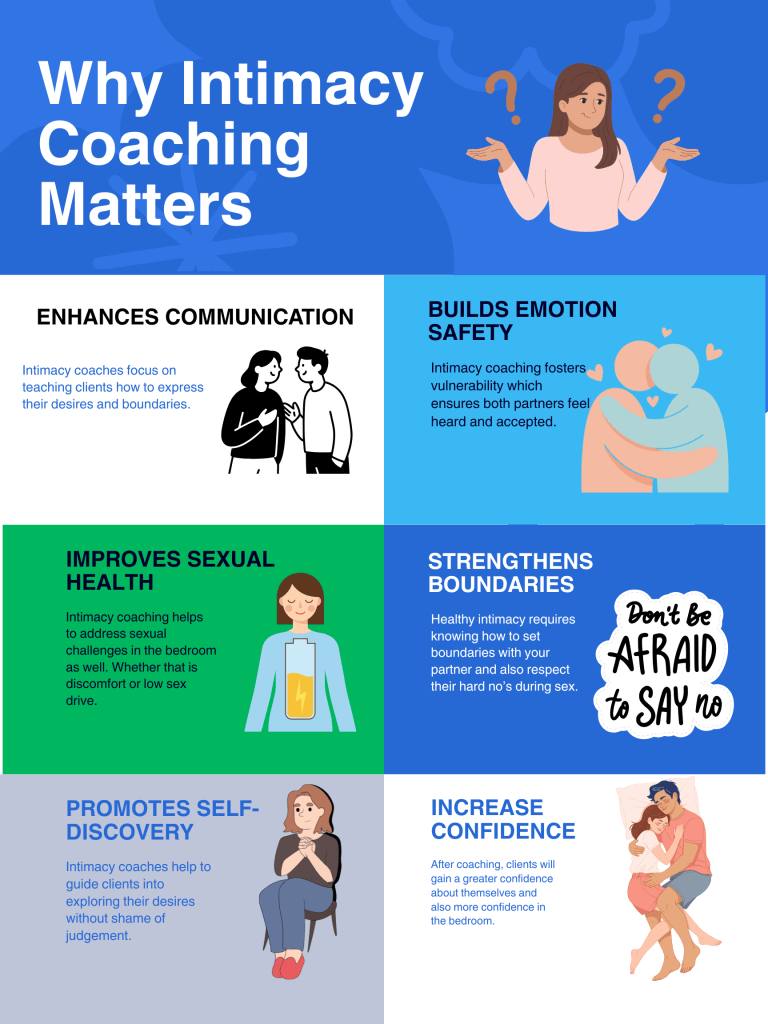
Why intimacy coaching matters. Enhances communication. Intimacy coaches focus on teaching clients how to express their desires and boundaries. Builds emotion safety. Intimacy coaching fosters vulnerability which ensures both partners feel heard and accepted. Improves sexual health. Intimacy coaching helps to address sexual challenges in the bedroom as well. Whether that is discomfort or low sex drive. Strengthen boundaries. Healthy intimacy requires knowing how to set boundaries with your partner and also respect their hard no’s during sex. Promote self discovery. Intimacy coaches help to guide clients into exploring their desires without shame of judgement. Increase confidence. After coaching, clients will gain greater confidence about themselves and also more confidence in the bedroom.