It is very normal to experience a range of emotions when you find out you are pregnant, since it is a major life event that brings about a lot of change. It’s important to remember that every experience is valid and part of the parenthood journey.
Common Reasons for Pregnancy Emotions
Hormones: There are significant hormonal shifts, which can have an intense impact on your emotions. Your estrogen and progesterone hormones fluctuate, which then influences the hormones that regulate your mood (serotonin and dopamine), leading to mood swings and heightened emotions.
Body and body image changes: Your body goes through a lot of physical changes (weight gain, changes in posture, changes in skin, etc.) which can sometimes provoke emotions about body image and self-esteem. Some expectant parents may feel proud that their body’s changing to nurture life, but others may experience feelings of discomfort or insecurity.
Stress: This is a very stressful time for parents, and you may feel stressed about finances, relationship adjustments, childbirth itself, and parenting. Your body heightens its stress response system (your cortisol levels) which can lead to feelings of anxiety, mood swings, and irritability.
Fatigue: Changing hormones, difficulty sleeping, and stress can cause fatigue and exhaustion, which is very common during pregnancy. This can further heighten feelings and make you emotional.
Emotional Changes Throughout Pregnancy
First trimester: Can bring on a lot of early pregnancy emotions and first-trimester mood swings. You may experience a whirlwind of feelings as you come to terms with the reality of being pregnancy, and may feel excited, anxious, and/or overwhelmed.
Second trimester: Experience a welcome break from intense emotions of early pregnancy. You may feel more stable and have more balanced emotions, but you may continue to feel anxious or stressed.
Third trimester: As you’re preparing for childbirth, it can evoke even stronger emotions. You may be fearful of the unknown, but also excited about the arrival of a child. Common feelings include anticipation and excitement, occasional impatience, and anxiety.
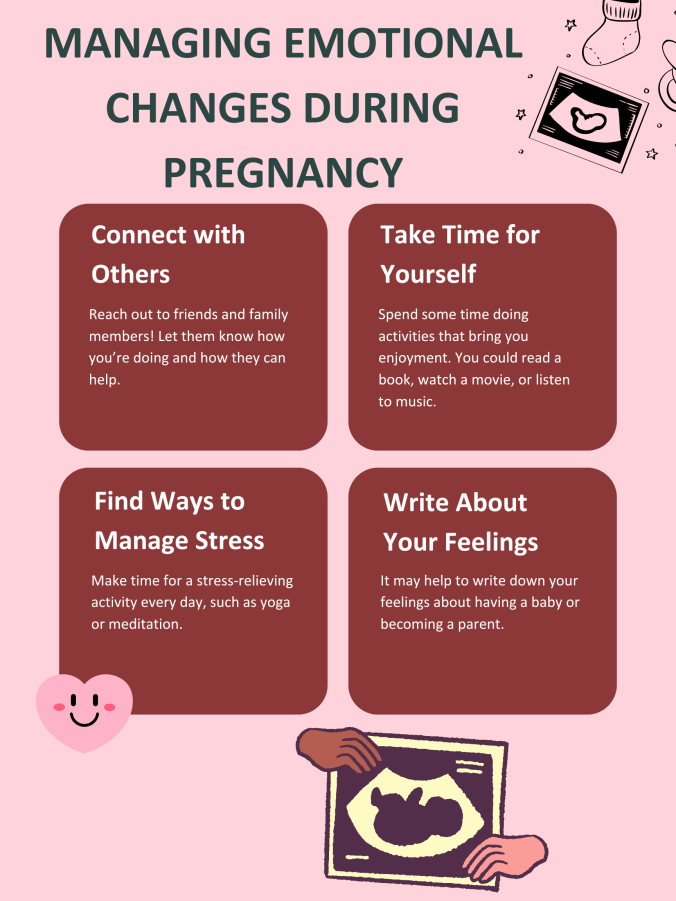
Managing Emotional Changes During Pregnancy
It’s important to be able to identify and label what you’re feeling, so that it can be addressed in healthy and effective ways. Be mindful of what you’re experiencing in the present moment. You also should practice self-compassion by acknowledging the work that your body is doing by being pregnant, and accepting these changes.
NewYork-Presbyterian provided some strategies to manage your emotional changes during pregnancy:
When to Seek Help for Pregnancy Mood Swings
There is no shame in reaching out to a mental health professional when you’re struggling. Symptoms of depression can sometimes resemble pregnancy mood swings, but the American College of Obstetricians and Gynecologists (ACOG) recommends to speak to your provider if you have any of these signs for at least two weeks:
- Depressed mood most of the day, almost every day
- Loss of interest in work or other activities
- Persistent feelings of guilt, hopelessness, or worthlessness
- Difficulty sleeping or sleeping more than usual
- Loss of appetite or other concerns around weight
- Trouble paying attention, concentrating, or making decisions
- Thoughts about death or suicide

