Hierarchy: Masturbation Training by Lisa Mitchell

Below is a “Hierarchy: Masturbation Training” by Lisa Mitchell, LCSW-R at Penn State.  Her plan for what she calls, “private touching”, was specifically developed for individuals with Autism Spectrum Disorders, but I think it is a good general framework.  The hierarchy goes from lowest level of support to highest level of support.  Across the board, masturbation is a topic people want more information about.  I think this is a nice way to think about what kind of education or training is available as well as what you might want to try before moving on to something more intensive.  I have also included a link to her entire powerpoint.  She covers other topics/tips you may find interesting (relationship checklist, key concepts for topic areas, teaching techniques, problem behaviors).

  1. When appropriate, work with families and/or residence to establish a visual “private time schedule.”
  2. When appropriate, supply individual with lubricant, explaining that it is for use during “private time.”
  3. Meet with individual. Present illustrations of same sex persons masturbating, in conjunction with verbal explanation regarding technique.
  4. Meet with individual. Use illustrations and anatomical model in conjunction with verbal explanation of technique.
  5. Meet with individual. Use anatomically correct dolls to demonstrate appropriate masturbatory technique, in conjunction with verbal explanation.
  6. When appropriate, supply masturbatory aids such as body pillows, magazines, collages of stimulating pictures, vibrating pillows, masturbation sleeves, masturbation pumps, or vibrators. Explain safe usage of such aids.
  7. Meet with individual. Arrange for multiple viewings (when necessary) of instructional masturbation movies “Handmade Love” for males, or “Fingertips” for females. Viewings should occur in the individual’s bedroom or the private location where masturbation will be allowed to occur. Trainer may need to supply a verbal explanation while simultaneously viewing the tape to reinforce principles. (I would have the person watch on their own before feeling the need to view with another present. In general I think the videos are very good but very explicit. You could use the video in place of the verbal instructions indicated in the hierarchy).
  8. For individuals with more significant challenges, consider use of ABA type
    approach (preferably done with relatively unfamiliar trainer) to teach more
    successful masturbatory technique. Shape up steps one at a time (e.g. “Pull pants
    and underwear down”, “Lay on belly”, “Put pillow between legs”, “Rock from side to
    side”. Or “Pull pants down”, “Sit on bed”. “Put fingers around penis”, “Rub up and
    down, up and down.”) – I have heard of this method, but I do not know anyone personally who has ever instructed on masturbation at this level.  I would want to have a very comprehensive plan on how this would be implemented, full team support, and special attention paid to protecting the individual being instructed and the person doing the instruction.  

Free Curriculum- Parent Version, Teacher Version, Spanish Version

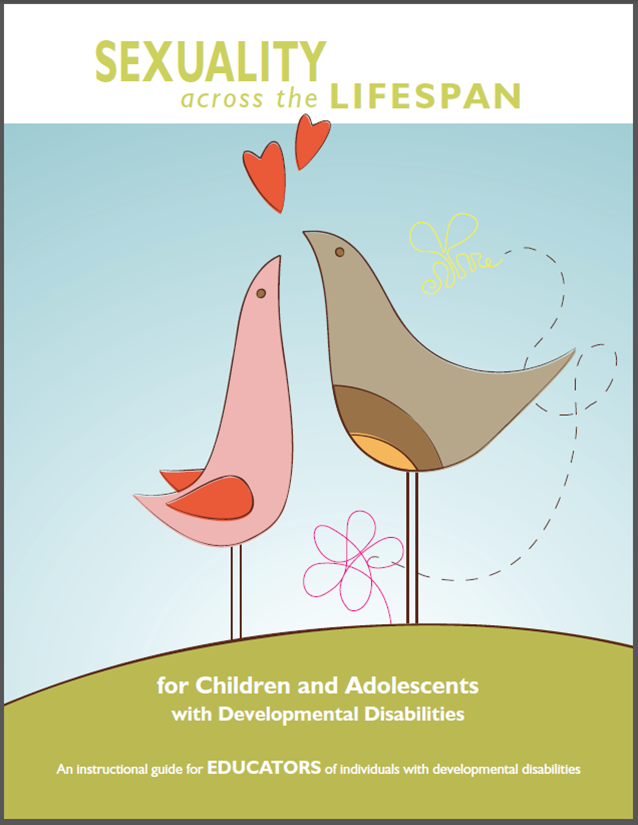
ImageI’m really excited about this free curriculum, “Sexuality Across the Lifespan” by: DiAnn L. Baxley and Anna L. Zendell.  It has versions for educators, teachers, and Spanish speakers.  You can view the curriculum by clicking on the links below.

What makes this special?  They do a nice job at adjusting lessons for different age groups, giving ideas for supplemental activities, and giving ideas for incorporating the topics into routines.  The parent version really focuses on how to reinforce healthy sexual development through interactions and daily routines.

This curriculum in not comprehensive but does have sections on social skills, dating, sexual abuse, puberty, and anatomy.  I hope you find this useful!

Let’s Talk About Ability and Sexuality

http://vimeo.com/17317232

This video was filmed at the Healthy Relationships and Sexuality Conference in California 2010. What’s special about this conference is that it was organized by people with disabilities (and their allies) for people with disabilities.

I’ve highlighted some of my favorite quotes from the video. My main point in posting it, is not so much that you watch it and learn a bunch of facts, but rather use as an example of a teaching tool. Creating a video like this is a wonderful learning experience and helps give purpose and permanence to the expression of ideas.

“Sexuality needs to be part of the service planning process” – “It’s not the people with disabilities who are uncomfortable but the staff who are helping support them” – ” “The definition of support needs to change as the person changes” – “A person with a disability can always find love” – “Disability does not define me. The way I think about other people and the way I treat other people: that’s what defines me” – “Maybe people will eventually become more open to us” – “If you get asked a frank question, give a frank answer”

Teaching Strategies- Autism Internet Modules

Many of the teaching strategies that you use when teaching human sexuality you also use in many other contexts.  Autism Internet Modules can help you learn teaching strategies like the ones listed below (currently they have 37 modules and they are always adding more).  The modules give a really complete overview (they can be a little boring but overall they are very helpful).  Some these may be a review but others may be something you have heard of but aren’t quite sure what it really is.  What’s especially nice is often the expert who developed the technique is the one teaching the module.  Just a little warning- you do have to set up a log in.  Many of these interventions have been specifically developed for people with Autism Spectrum Disorders- but not all of them!

Antecedent-Based Interventions (ABI) – Differential Reinforcement – Extinction – Functional Communication Training – Language and Communication – Naturalistic Intervention – Overview of Social Skills Functioning and Programming – Parent-Implemented Intervention – Peer-Mediated Instruction and Intervention (PMII) – Picture Exchange Communication System (PECS) – Pivotal Response Training (PRT) – Preparing Individuals for Employment – Prompting – Reinforcement – Repetitive Patterns of Behavior, Interests, and Activities – Response Interruption/Redirection – Rules and Routines – Self-Management – Social Narratives – Social Skills Groups – Social Supports for Transition-Aged Individuals – The Incredible 5-Point Scale – Visual Supports

For those of you who attended the workshop, in the workbook starting on page 34 there is a table with examples of strategies.  Some of the strategies come from Autism Internet Modules.

Sexuality and Intellectual/Developmental Disability Community Forum

I just wanted to share this upcoming event with you (Friday, April 13th from 12:00-3:30).  It looks really interesting.  The Sexuality and Disability Consortium (SDC) at the University of Illinois at Chicago is hosting a roundtable discussion and a presentation by Linda Sandman, MSW, LCSW, Clinical Director of the Developmental Disabilities Family Clinics on…

Successes and Challenges:Sexuality Education with People with Intellectual/Developmental Disabilities.

After the main discussion you can choose to attend one of several roundtable discussions on the following topics • Sexual self-advocacy • How to talk to families about sexuality • Why is sexuality education important in my agency • Sharing sexuality education resources

The cost is only $10 and self advocates are welcome.

If you can’t make, don’t worry.  I’ll post an update on what I learn.

A Thinking Person’s Guide to Autism

“A Thinking Person’s Guide to Autism” is a wonderful resource and online community.  They have a blog, facebook page, and book so you can check them out in what ever way is most comfortable to you.  Although they deal with many topics related to Autism Spectrum Disorders, they often touch on topics of sexuality.

I especially would recommend checking out this post, “Talking About Sex with Young Adults with Autism”  Here’s an excerpt.

“Amy looked nice, but the grown-ups wouldn’t let us go in Amy’s room and shut the door.”

“Did Amy want to go in her room with you and shut the door?”

“Not really. So we went outside and the parents kept watching us.”

“Did Amy want to be alone with you outside?”

“I’m not sure.”

“Did you touch Amy?”

“I wanted to. I wanted her to lie down on the grass so we could do sex.”

“Have you ever had sex with anyone else?”

“Probably not.”

For Parents

In a parent focus group* on the topic of sexuality and their children with ASD several interesting themes emerged: parents struggle with what healthy sexuality looks like in their child with ASD, they feel their child’s social impairments make many sexuality topics difficult to understand, they feel the community does not understand the sexuality needs of their child, and they feel unprepared to support their child with their sexuality need.

Does that sound like you?

These researchers made several suggestions for parents.  Although they were focused on children with ASD, I think this would be applicable for almost all children.  I think they are also good things for professionals to keep in mind too!

1) Lean about sexuality and ASD as well as sexual development in general.

2) Think about your hopes and fears for your child.  Also think about your own experiences learning about sexuality.

3) Set goals for your child (and I would maybe modify, to the degree that they are able, with your child).

4) Think about the method to communicate these messages to your child.

5)  Coordinate with schools, physicians, ect.
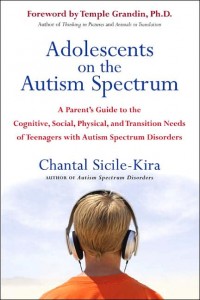
I have found a book that may be useful called “Adolescents on the Autism Spectrum: A Parent’s Guide to the Cognitive, Social, Physical, and Transition Needs of Teenagers with Autism Spectrum Disorders “.  You can get a pretty good preview on google books to make sure it is right for you.  I like it because it talks about ASD in general and then weaves in topics related to puberty.  It also thinks about changes from multiple domains.  For example, one suggestion was realizing your teen might need more control and finding ways to incorporate that into his or her daily life.

This tip sheet from the Better Health Channel may also be helpful: Sex education for children with intellectual disabilities – tips for parents – Better Health Channel

*Only a short preview of this article is available for free online.  Although the entire article is available for purchase it is written for an academic audience.