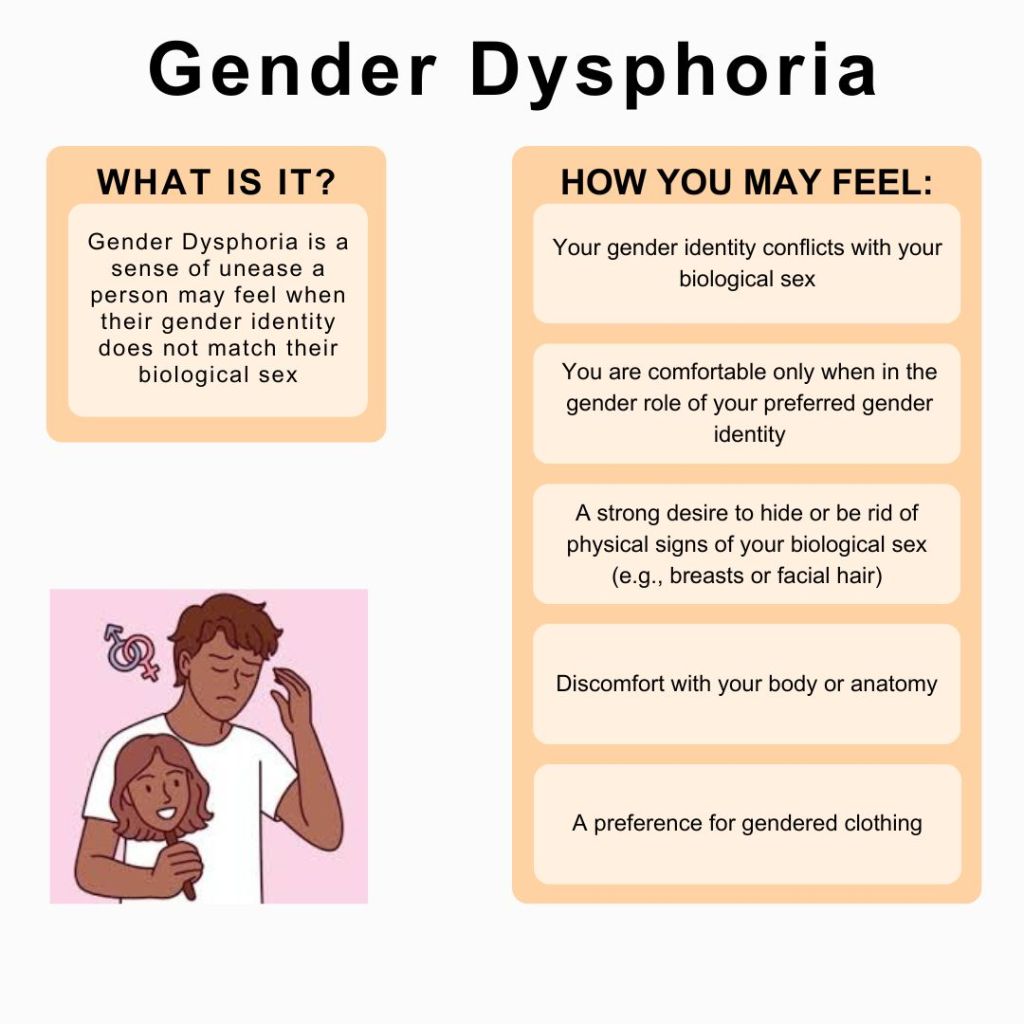
Gender dysphoria is a sense of unease that a person may have because of a mismatch between their sex assigned at birth and gender identity. In adolescence, especially around puberty when young teenagers’ bodies are changing, and they begin exploring their sexual and romantic identities, gender dysphoria typically increases around this time. Included below are some helpful definitions to include in discussions around gender dysphoria, a visual aid tool to discuss how someone may feel if they experience gender dysphoria, and helpful resources from transgender people talking about their gender identity.
Definitions to incorporate while discussing gender dysphoria:
- Biological sex – label assigned at birth based on physical characteristics (e.g., chromosomes, hormones, and reproductive organs)
- Primary sex characteristics – changes in the reproductive organs (males: growth of testes, penis, scrotum, and spermarche; females: growth of the uterus and menarche)
- Secondary sex characteristics – visible physical changes that occur during puberty (males: broader shoulders, a lower voice; females: breast development, hips broaden)
- Gender Expression – learned roles, behaviors, and actions of women/girls and men/boys (i.e., how society expects certain genders to act and look like)
- Gender identity – our sense of who we are and how we see and describe ourselves
- Transgender – people whose gender identity does not match their sex assigned at birth
*For clarification: based on your biological sex (what physical characteristics you are born with), society assigns you a gender (how you should act, what you should be interested, and your role in the world)*
Helpful Resources:
Teen Vogue has an article discussing what it’s like to be transgender and living with gender dysphoria.
The Guardian also has an article where people who identify as transgender discuss their experience with exploring their gender identity. Although gender dysphoria is not the main focus, it is thoroughly discussed in the experiences of the transgender people featured.
This article from BuzzFeed includes people with disabilities exploring their gender identity and how it intersects with their disability. Gender dysphoria is mentioned, but the article mainly focuses on how society has created barriers for transgender people with disabilities. It would still be beneficial to use, as it brings attention to an often overlooked area of the disability and transgender community.

