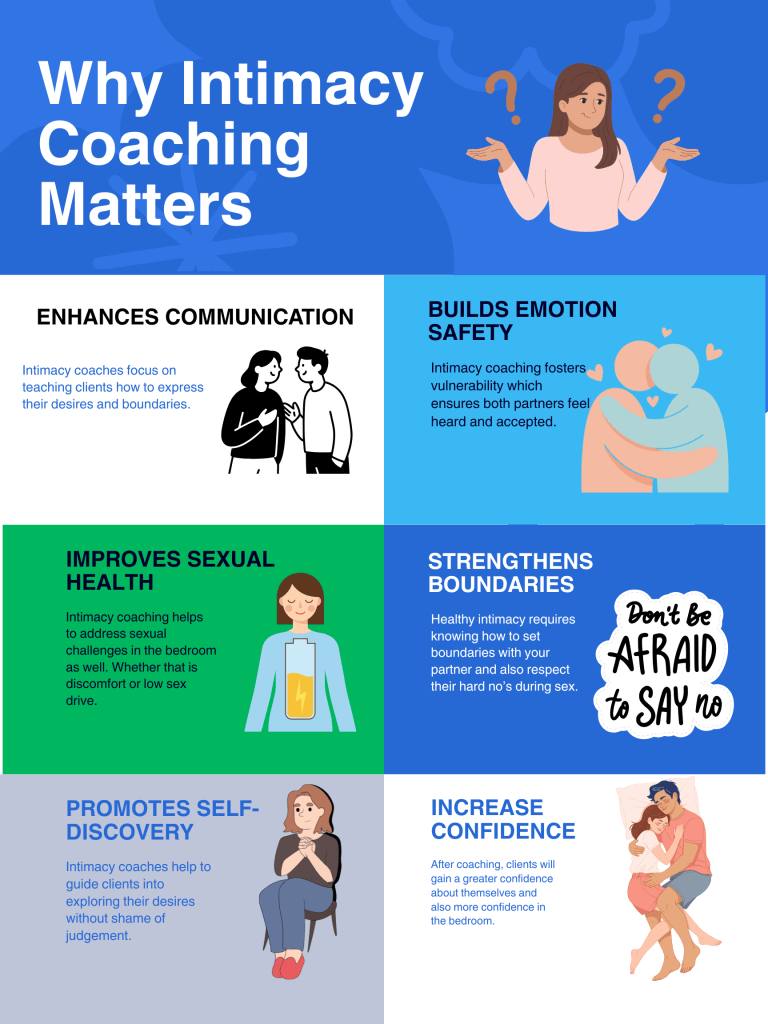
Intimacy coaching is a specialized type of relationship coaching that focuses on helping emotional and physical intimacy. Intimacy and connection are essential parts of being human. Everyone deserves the chance to experience it fully. Intimacy coaching offers a supportive, judgement-free space to help individuals or couples explore and deepen their capacity for emotions, physical, and even spiritual intimacy. An intimacy coach helps you reconnect with your desires and communicate your needs. If you’re looking to bring back the spark, try something new, or simply understand your needs/desires better, intimacy coaching is the perfect way to go.
To learn more about what intimacy coaching does, watch this video.
Here are some intimacy coaches that have great reviews and cater towards people with disabilities.
Joslyn Nerdahl: Certified Sex Coach and Clinical Sexologist, Physical Disabilities
Joslyn Nerdahl is an intimacy coach who specialize in working with people with physical disabilities. She believes that communication and consent are the foundation of healthy intimacy. She has a passion for helping people learn how to talk about sex openly and provides a safe space for her clients to explore their needs and desires. Her services include intimacy coaching, sex education, and sexual rehabilitation. Learn more about her: Services – Joslyn Nerdahl
Grace Myhill is a couples coach and educator who specializes in working with couples where on or both partners are a person with autism. She focuses on each partner experience and validating each other their perspectives. She wants to help both partners work together to build emotional and relation skills. If you want to know more about her work visits her website: https://www.gracemyhill.com/
Dr. Mitchell Tepper: Sex Coach and Educator for People with Physical Disabilities
Dr. Mitchell Tepper is an educator who specializes in working with individuals with disabilities and chronic conditions to help reclaim pleasure and intimacy. His approach focuses on empowerment, inclusion, and accessibility. He emphasizes that everyone, regardless of physical ability deserves access to intimacy, pleasure, and love. To explore his work and resources visit his website: Coaching – Dr. Mitchell Tepper
Amy Gravino: Autism and Sexuality Advocate, Speaker, and Relationship Coach
While Amy Gravino is not an intimacy coach, she still advocates for autism sexuality. She is an educator who empowers autistic adults to embrace healthy relationships, self-advocacy, and sexual expression. If you want to learn more about her advocacy or watch one of her videos visit: A.S.C.O.T Consulting
I think intimacy coaching is a great way to explore yourself, your relationship, and spice things up.
Going to the doctor for a sexual health visit can be scary if you don’t know what to expect. Here are some resources to explore in order to be prepared!
The Autistic Women & Nonbinary Network shares a list of gynecologists and other intimate care providers who offer accessible and inclusive care.
Cerebral Palsy Foundation posted several videos on preparing for a mammogram appointment and how to optimize your visit.
If you’re wondering what kind of doctor to see about sexual health, the National Coalition for Sexual Health lists who to see for different kinds of appointments.
The Office of Developmental Primary Care at the University of California, San Francisco, offers a guide on relationships, romance, sexuality, and sexual health. The guide includes tips for successful medical appointments and what to expect at a doctor visit.
Planned Parenthood offers information on what to expect at a wellness visit, which is a doctor’s visit that is centered around your reproductive health.
Alabama:The University of Alabama at Birmingham offers resources on sexuality and relationships, sexual abuse, and tips for parents when discussing sexuality with their children.
Alaska: Olmstead Rights shares a list of resources and advocacy organizations in Alaska. The resources are directed towards individuals with physical, intellectual and developmental disabilities, and mental illness.
Arizona:Special Olympics Arizona offers a list of resources for individuals with disabilities who want to learn more about health and wellness.
Arkansas: The Arkansas Disability Coalition is an organization that helps families and individuals with disabilities by providing health-related support, information, and resources.
California: Disability Without Abuse Project is dedicated to spreading awareness about abuse faced by individuals with intellectual or developmental disabilities. They offer resources, a newsfeed, and a blog for people who are interested in learning more.
Colorado:The Initiative Colorado works to raise awareness and break down barriers to accessing health services.
Connecticut:The Center for Relationship and Sexuality Education strives to make sexual health information more accessible for members of the intellectual and developmental disability community. They provide learning materials and professional development programs.
Delaware: Planned Parenthood of Delaware provides education and training services for people with intellectual and developmental disabilities.
Florida: The Disability and Health Program aims to increase the accessibility and availability of health resources for people in the disability community.
Hawaii:Hawaii Pacific Health is a resource for people who would like to learn more about sexual abuse, and for those who have already experienced sexual abuse.
Idaho:DisAbility Rights Idaho provides protection and advocacy for people with disabilities.
Illinois:Community Choices supports individuals with disabilities in the process of filling medications, scheduling and going to appointments, and connecting with health representatives.
Indiana: Indiana Institute on Disability and Community has a feature on their website where you can input information to find resources specific to your situation. They also offer training and workshops and other opportunities to become involved in the community.
Iowa: The Iowa Department of Public Health provides a list of resources for people with disabilities who would like to learn more about sexual health.
Louisiana: Green Clinic offers resources for dating violence and sexual assault, and sexual health. They also share resources for STI testing.
Maine: MomentumRELATE offers education, dialogue, advocacy, and training for people with disabilities. They are committed to helping people develop a healthy and positive understanding of sexuality and relationships.
Maryland: Respectability offers general sexuality resources for members of the disability community. Some of the topics they includes resources for are masturbation, hygiene and self care, puberty, and relationships.
Massachusetts: The Massachusetts Department of Public Health and the Massachusetts Department of Developmental Services collaborated to create a guide on healthy relationships and sexuality.
Minnesota:Family Tree Clinic offers a wide range of services including birth control, annual exams, trans hormone care, STI testing and treatment, and Rapid HIV testing. They also offer a health education program for members of the community who are deaf, deafblind, and hard of hearing.
Mississippi: The Arc focuses on respect, abilities, freedom of choice, and inclusion. They provide resources for people with disabilities regarding self-advocacy.
Missouri:SHADE (Sexual Health and Disability Education) teaches sexual education to people with disabilities. They have a newsletter, resources, and guides for supplemental information.
Nebraska: Munroe-Meyer Institute has a team of occupational therapists, physical therapists, psychologists, and recreational therapists who offer sexual health services to individuals with intellectual and developmental disabilities.
Nevada:Planned Parenthood offers comprehensive sex education and services for individuals with disabilities.
New Hampshire: Disability Rights Center – NH offers information and assistance regarding Medicaid and healthcare, access and accommodations, and general health.
New Hampshire: Elevatus Training is an organization that offers extensive information about navigating sexuality as a person with a disability.
New Jersey:The Division of Disability Services in the Department of Human Services collaborates with health educators, policy makers, and experts in the field of health to create an inclusive setting for people with disabilities to learn about sexual health.
New Jersey: A.S.C.O.T. Counseling offers presentations and counseling on subjects like autism and sexuality, and the experiences women on the spectrum have.
New York: Project SHINE works to create innovative and accessible sexual health tools for members of the disability community.
North Carolina:Autism Society of North Carolina offers an extensive list of resources about sexual health for youth and adults with disabilities.
North Dakota:My Ally Health is a reproductive health clinic. They assure that their services are available to anyone regardless of disability status, race, sex, religion, or economic status.
Ohio:The Ohio Developmental Disabilities Council has meetings, sends newsletters, holds events, and offers resources about health for people with disabilities. One of their previous events involved a discussion about healthy romantic relationships and sexuality in the I/DD community!
Pennsylvania: Positive Approaches Journal was published by the Pennsylvania Department of Human Services. The journal features research and information on sexuality, LGBTQIA+ inclusion, and relationships.
Rhode Island:Zencare is a resource that connects people with disabilities with sex therapists in the area.
South Carolina:United Spinal Association is a source for people with spinal cord injuries or disorders. They provide tips for patients and discuss how to plan for a doctor visit.
South Carolina:Able South Carolina is a community-based nonprofit that offers a variety of services for individuals with disabilities.
South Dakota:Bridging South Dakota is a program that offers support for people with disabilities who are survivors of sexual assault.
South Dakota: Planned Parenthood provides a variety of services, such as abortion, birth control, pregnancy testing and services, and STD testing and treatment.
Tennessee:Tennessee Disability Services offers a list of resources on dating and romantic relationships, targeted towards individuals with intellectual disabilities.
Tennessee: Autism Tennessee offers occasional events that involve discussions about relationships and sex. Their Sexual Identity & Inclusion Alliance facilitator is very passionate about creating equal access to information for everyone.
Texas: Planned Parenthood provides a variety of services, such as abortion, birth control, pregnancy testing and services, and STD testing and treatment.
Texas:Navigate Life Texas is a resource for parents of children with disabilities. They offer tips on discussing puberty and sexuality, how to talk to the doctor, and more.
Utah:Planned Parenthood Association of Utah provides a variety of services, such as abortion, birth control, pregnancy testing and services, and STD testing and treatment.
Vermont: Planned Parenthood of Northern New England offers sexuality education for people with developmental disabilities, along with other sexual health resources and services.
Virginia: Disability-inclusive Sexual Health Network (DSHN) connects and supports youths with disabilities in Virginia through sexual education. They have a youth advisory board, resources, and plenty of ways to get involved on their website.
Washington:The Arc of King County shares resources on relationships, sexuality, and gender. Their goal is to ensure that everyone gets equal access to sexual health information.
Washington: The University of Washington has compiled a list of resources on sexuality and relationships for individuals with intellectual disabilities and autism.
Wisconsin:Wisconsin Behavioral Health Clinic emphasizes the importance of making sexual health information more accessible, and offers a variety of resources and services for people with disabilities.
Wyoming:The University of Wyoming shares resources on sexual and reproductive health, healthy relationships, and sexual orientation.
If you have a relevant organization that you would like added to this list, please contact us.
Rewire News Group is a news website that is focused on sexual health and social justice. They are looking to “reshape the national dialogue on all things sex by making it more inclusive, positive, and centered on social justice.” The website itself is not focused on intellectual disabilities, however, they do offer some amazing articles about issues in the disability community.
Elevatus offers a variety trainings staff, direct support professionals, educators, self-advocates and parents to teach sexuality education to children and adults with developmental disabilities. In addition to their trainings, Elevatus has a sex education curriculum that can be purchased.
Here are examples of some of their trainings and the costs:
For Staff and Professionals – Developmental Disabilities and Sexuality 101 ($397)
For Parents/Guardians – Talking With Your Kids: Developmental Disability and Sexuality ($47)
In-service/live workshops and a 3-Day Certificate Training ($725) for anyone who wants to lead sexuality education classes with people with developmental disabilities.
These days, it is hard to find an age appropriate content about sex, dating and abuse. Children have questions about their bodies, gender and reproduction. Teenagers worry if their bodies are developing normally or not while older adolescents struggle with peer pressure, changing relationships and emerging sexual feelings. AMAZE is an amazing website for parents and educators which helps them to expose their child to age appropriate content about sex through short videos. The website provides an insight to young people to successfully understand puberty, healthy body image, distinguish between healthy and unhealthy relationships, concepts of consent and mutual respect. Video topics are designed to meet the learning objectives outlined in the National Sexuality Education Standards.
Parents are the primary sexual educators of their children. By answering children’s questions, a parent let them know that you are “askable” and establishes an open line of communication that will serve you and your children well as they mature into sexually healthy young adults.
AMAZE also has resources for younger children like the parents’ playlist from amaze jr. It is designed to help parents become comfortable and confident talking to their children openly and honestly at any age.
This video will help parents to know when to talk about sexuality with their kids.
Do you think so playing “doctor – doctor” is safe or not? Check this video out which helps you to communicate your thinking and others about this game.
This video will model to the adolescents with disabilities to learn about manage their relationships with person they like or have attractions. This video guide them to deal with peer pressure and make healthy relationship.
This video helps your child to understand their body parts, difference between a male and female, and similarities between boy and girl.
Raising an individual with a disability presents a different set of obstacles then an abled individual may, but one topic that all parents must address is sexuality. Individuals with disabilities are sexual beings and therefore deserve an education on sexuality. While parents may acknowledge this need, finding resources and strategies to present the information may be more difficult if you are raising an individual who requires a different method of learning.
The Sexuality Resource Center for Parents provides a well rounded variety of information pertaining to sexuality. The website includes a section of information labeled “for all parents” that contains subjects they believe are useful for all children. In addition, they provide sections titles “For parents of children of typical development”, “For parents of children with developmental disabilities”, and “For parents of children with physical disabilities”. In each section, you can find a variety of information such as basics, specifics, activities, and additional resources. They also include tip guides!
The Sexuality Resource Center for Parents works to provide a better, comprehensive information base for parents to use when addressing sexuality to their child. The variety of knowledge is extremely useful when trying to find information to meet your child’s specific needs. In their own words, their mission statement claims “It’s time to acknowledge that children with developmental disabilities will become adults with sexual feelings, and as such, we must provide them with the information and skills they’ll need to become sexually healthy adults.“
The Association of University Centers on Disabilities has created an incredible resource for self-advocates to gain sexual information and advice through a webinar series. The first episode of Sex Talk for Self-Advocates contains a panel of sexual educators answering questions about relationships and sexuality posed by self-advocates. Important questions such as “How do you know if someone is your boyfriend or girlfriend? What exactly does consent mean? How to be gay?” are discussed. The webinar series can be accessed through the AUCD website, linked below, or by going to AUCD network’s youtube channel. The presentation slides containing information from the video can also be found on the AUCD website. Sex Talk for Self Advocates is a great free resource that contains informed speakers and spreads sexual education to a diverse group of individuals.
Sexuality and Disability is a free blog dedicated to providing a resource for women with disabilities. The blog answers questions pertaining to sex, the body, relationships, and more in a safe and open discussion. The welcome statement of the website encompasses this;
“Our site starts with the premise that people with disabilities are sexual beings – just like anyone else. sexualityanddisability.org is constructed as a bunch of questions a woman with a disability might have – about her body, about the mechanics and dynamics of having sex, about the complexities of being in an intimate relationship or having children, about unvoiced fears or experiences of encountering abuse in some form.”
Sexuality and Disabilityalso includes an award-winning section that appeals to many individuals with disabilities that contains stories from the point of view of an individual with a disability and gives an in depth and realistic view on sexual topics.
Rape, Abuse, and Incest National Network: General resource about rape, abuse, and incest. There’s a lot of information, but not all of it is specific to people with intellectual disability.
The National Domestic Violence Hotline: A great resource on domestic violence and abuse issues, along with contact information for hotlines and other related services.
You Are in Charge of Your Body: A video series aimed at young children to identify and understand sexual abuse and how to communicate these incidents to adults. It also teaches children to take charge of their bodies.
Sexual violence comes in many forms and it can be difficult to distinguish them. Here’s a basic guide on how to classify types of sexual violence.
Sexual Harassment: Giving someone unwanted sexual attention. This can include touching someone’s body without their explicit permission, asking for sexual acts, and catcalling, which is an unwelcome, sexually charged comment.
Rape: Forced vaginal, anal, or oral sexual intercourse. Rape lacks clear consent. Rape can occur by strangers or people you know, even a partner. Sometimes, power is used to coerce a person into sexual intercourse. In these case, usually a person declines sexual advances and is then guilted into intercourse.
Statutory Rape: Sexual intercourse with a person who is a minor or not at the age of consent (which varies by state and country). Get more information on statutory rape and the age of consent here.
Incest: Sexual acts between people who are related. This can be siblings, parent-child, uncles/aunts and nephews/nieces.
Domestic Violence: Violence between two people in an intimate partnership. This includes threats and acts of violence (i.e. battery).
Stalking: When a person repeatedly follows, watches, or harasses someone for a long period of time. This can include excessive phone calls (i.e. five phone calls in one hours) and giving gifts.
So, how can we prevent sexual violence and protect ourselves and others against it?
Understanding sexual violence: By understanding the types of sexual violence, it can be easier to identify and understand how it can affect yourself and others.
Speak out if something doesn’t feel right: If you are feeling that you have been part of a sexual act that did not make you feel good or that you did not want to do, telling someone you trust or contacting a sexual assault survivor’s line can help clarify the situation.
Teach consent as a mandatory step in all sexual situations: Consent is a fancy way of saying “yes, I would like this to happen.” By giving consent, you are allowing another person to touch your body. You can tell them what you are and are not comfortable with (i.e. “I do not want to do vaginal sex, only oral”). Understanding that consent can change at anytime during the interaction is also important and can be overlooked. It’s okay to say “stop, I don’t want to have sex anymore.”
Here’s a quick video about consent, including examples of what consent looks like.
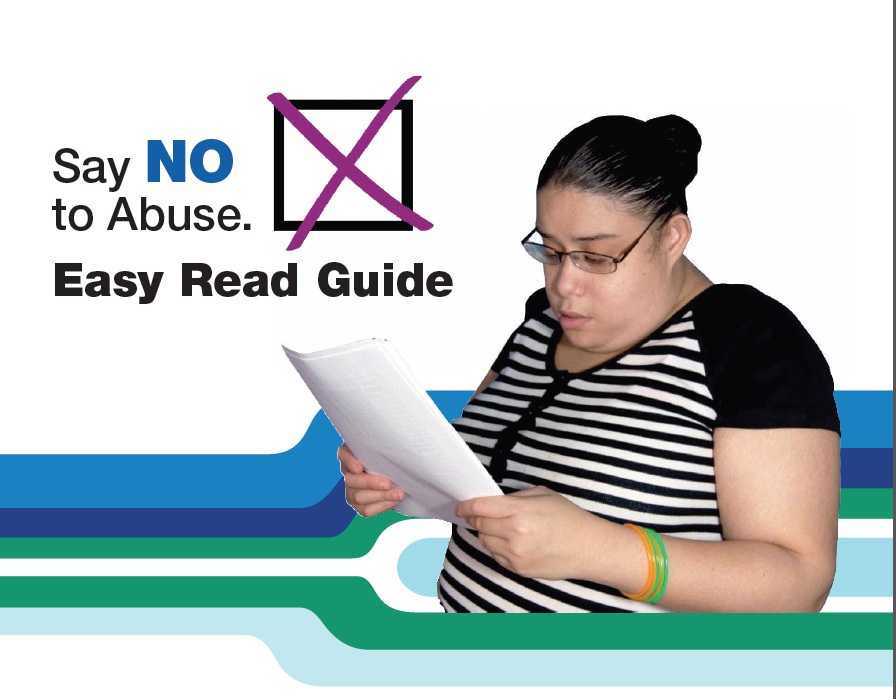
An easy ready guide about abuse and neglect was forwarded along to me (thank you, Jennifer). I think most agencies have adapted abuse and neglect information readily accessible to the individuals they serve and comparatively, I thought this one was nicely done. It’s made with a product called Symbols for Life. Essentially, it’s a picture package featuring individuals with developmental disabilities. One copy is $298.00 and then additional copies are discounted. A lot of times, I like to make things with pictures of the individual I’m working with, but there are times when that is inappropriate/unfeasible. I think this could be a good source for those occasions.
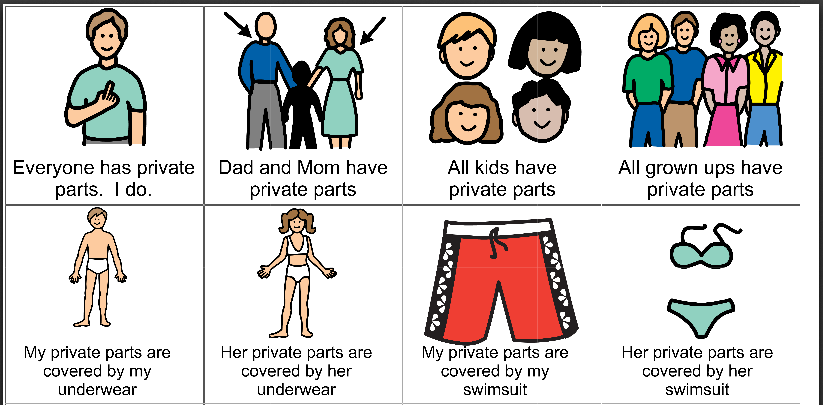
I wanted to put you in touch with a website called “Living Well with Autism“. They have several Board Maker Social Stories related to privacy.
While I think overall this site has some nice ideas, I’d be careful about using “Good Touch Bad Touch”. Good/Bad may bring up feelings of guilt, could be over generalized, and might be confusing as an assault often starts with touches that feel good then moves to touches that feel bad. Also, there are some studies that have shown that children understand the word touch differently than adults. For example they wouldn’t categorize people kissing as touching, because well, they’re kissing. I think this could be a problem for someone with an intellectual disability that doesn’t categorize well. I like the terms safe and unsafe touch. I also like saying touching makes you feel something. If a touch feels good, it’s probably safe. If a touch doesn’t feel good it’s probably not safe. Then you can teach specific kinds of touches. Having said that, the site gives you some good Social Stories to start with. Pictured left is part of one of their stories.
Just another note on language. There is a movement among abuse prevention advocates to alter some our terminology when talking about sexual abuse prevention. I mention in my workshop that we have to be careful when talking about using education to help prevent sexual abuse because it implies that the individual is responsible for reducing his or her own risk. Alternative terminology includes personal safety skills, abuse-response skills, or self-protection skills.
I’m just going to be honest. I think sex shops can be a little creepy. It really pushes my comfort zone to support someone purchasing sex toys not because I’m uncomfortable with the individual I’m working with’s sexual expression- I’m uncomfortable the sexual of expression of general patrons of the store. Usually the line between sexual exploitation and sexual affirmation is a nice, clear, thick, black line. But in a sex store it’s gets blurrier and it can be difficult to navigate. It pushes me to think about my own biases, but at the same time I don’t think all sex shops affirm sexuality equally.
That’s part of the reason I was so glad to stumble upon “Come As You Are”. The other reason is because they actually know things about serving people with disabilities. “Come As You Are” is a sex shop located in Canada (great for Torantoins, but less than great for Illinoisians). They have a wonderful website, are knowledgeable about people with all different abilities, and are responsive to questions. If you know of place that is safe and accessible or at least responsive to the needs of individuals with disabilities, please share.
The store was featured in this video which I found to be very enlightening in regards to things to consider when supporting someone with purchasing a sex toy. For one, I wasn’t really aware of some of the options out there. The video also goes into several was to match ability needs with sex toy functioning. I will warn you that streaming quality is not that great, but the content is excellent.
Another thing to think about is the use of wedges and ramps for sexual exploration and sexual expression. The Liberator is probably the most popular line of sexual furniture. They look just like the wedges used in the exercise room of our day program (except the ads all have beautiful scantily clad women on them). Using tools for sexual positioning may be the only way some individuals can participate in intercourse or other sexual activities. The how to use videos on their website are more erotic than instructional. There are videos online geared toward instruction. They are explicit, but the participants are fully clothed throughout. Click here for the male positioning and here for female positioning.
Individuals with physical, cognitive, or emotional disabilities have a right to education about sexuality, sexual health care, and opportunities for socializing and sexual expression. Healthcare workers and other caregivers must receive comprehensive sexuality education, as well as training in understanding and supporting sexual development, behavior, and related healthcare for individuals with disabilities. The policies and procedures of social agencies and healthcare delivery systems should ensure that services and benefits are provided to all persons without discrimination because of disability.
Human sexuality encompasses the sexual knowledge, beliefs, attitudes, values, and behaviors of individuals. Its various dimensions involve the anatomy, physiology, and biochemistry of the sexual response system; identity, orientation, roles, and personality; and thoughts, feelings, and relationships. Sexuality is influenced by ethical, spiritual, cultural, and moral concerns. All persons are sexual, in the broadest sense of the word.
From Sexuality Information & Education Council of the US, www.siecus.org
I know many of you are interested in writing a sexuality policy for your agency to help guide decisions around teaching human sexuality. Here is an example I thought might be helpful from Florida’s disability council.
What I really like about this policy is that they organized it around student responsibilities and educator responsibilities. I think this is a nice model for conceptualizing a sexuality policy. Below, I’ve highlighted the “Quick Reference Fact Sheet on Choice and Education Instruction” which is part of the policy.






 The Birds and The Bees