Guide For Gynecology and Testicular Exams

Testicular and gynecological exams are very important to the health of your reproductive organs. These exams help to play a critical role in early detections of cancer which can help to increase chances of successful treatment. Testicular exams are used to check for lumps, swelling or changes in the testicles and identify other issues like infections or injuries. Gynecological exams are used to examine the uterus, ovaries, and cervix for any abnormalities along with screening for cancers, infections or other health issues. Overall, these exams are an important part of sexual health. Make sure you are going to get one around once a year. Here is a step-by-step guide of what to expect during these exams.

Testicular Exams:

Purpose: The reason you should get one done is to help detect changes in the testicles early on such as lumps, swelling, or anything that is out of the normal that could indicate cancer or other conditions.

Who should be getting one: A person who has biological male reproductive parts. Men should start getting these around age 15 every year with a healthcare provider.

What to expect during this exam: First you will talk to the doctor. They will ask you questions such as family history and if you are sexually active. They will also ask if you have any concerns that you would like to address. After they will give you privacy to undress from the waist down. You are able to keep your shirt on during this. After the doctor will do a visual check of the scrotum and groin area. Lastly, they will feel each testicle using their fingers to check size, shape, tenderness, or if there are any lumps.

Always remember that at any time during this if you feel uncomfortable you can ask the doctor to stop. You are able to ask any questions you make like and have the doctors explain these steps to you as well.

Gynecology exam:

Purpose of these exams: These exams are important for maintaining reproductive health and catching early problems such as cervical or ovarian cancer. Gynecologists can also help you show your options for different birth control methods such as the pill, IUD, the patch and many others. 

Who should be getting one: Anyone with female reproductive organs should see a gynecologist. Most should start getting exams starting at 21 or sooner if you are sexually active. You can also start going younger if you have any concerns or irregular periods.

What to expect during these exams: Starting off the doctors will come in and discuss any general health concerns or questions you might have. They will ask if your menstrual cycle is regular or if you have concerns about this.

  1. External exam: the docotor will look at the outside of your vagina area to check for irritation, swelling, or any other visible concerns.
  2. Pelvic exam: The doctor will gently examine the internal organs (uterus and ovaries) They do this by inserting one or two gloved fingers while genetly pressing on the abdomen to feel for anything out of the normal.
  3. Speculum exam: It is a medical tool that is used to open the vaginal walls so the doctor can see the cervix. This should not be painful. It can be a little uncomfortable or have some pressure. During this the doctors may collect a small sample of cells from the cervis to screen for early signs of cervical cancer. This is called a pap smear and only takes a few seconds. 

Always remember that at any time during this if you feel uncomfortable you can ask the doctor to stop. You are able to ask any questions you make like and have the doctors explain these steps to you as well.

How to set up an appointment:
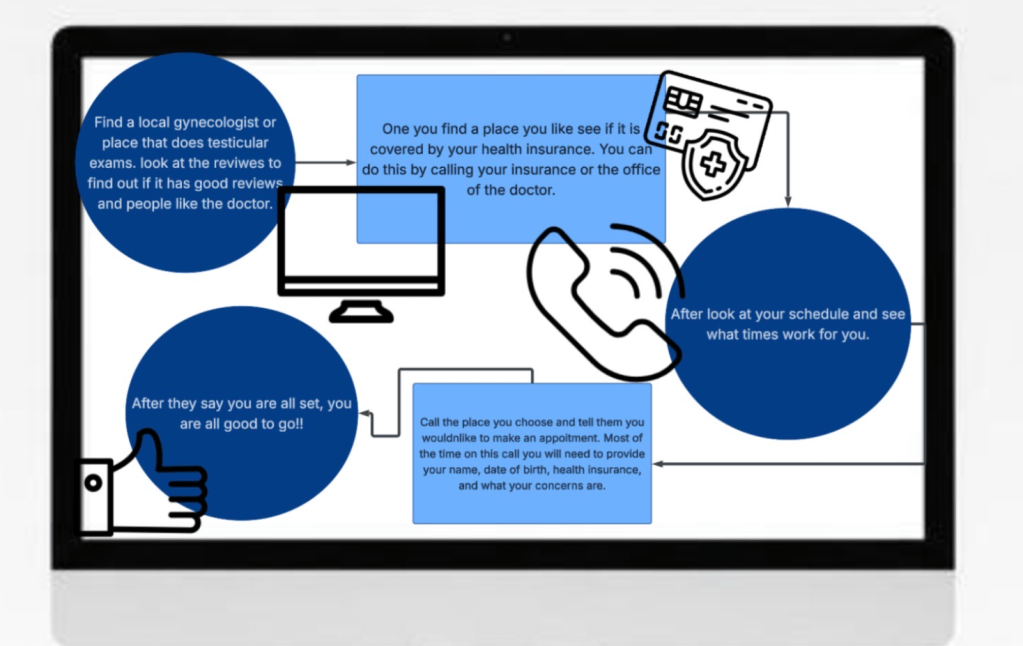
Find a local gynecologist or place that does testicular exams. look at the reviews to find out if it has good reviews and people like the doctor. One you find a place you like see if it is covered by your health insurance. You can do this by calling your insurance or the office of the doctor. Look at you schedule and see what times work for you. Call the place you choose and tell them you would like to make an appoitment. Most of the time on this call you will need to provide your name, date of birth, health insurance, and what your concerns are. After they say you are all set, you are all good to go!

Common concerns 

  1. They are painful: these exams should not be painful at all. If they are painful make sure you let your doctor know so they can help figure out what is going on.
  2. Only get these exams when you are sexually active: you definitely should get these exams while you are sexually active but you should also get them before if you have any concerns. Also get them if testicular or cervix/ovary cancer runs in your family. 

For more information about these exams click on the links below:

Testicular exam – Mayo Clinic

What Happens During a Gyno Exam, From Start to Finish – ScienceInsights

Overall testicular and gynecological exams are an important part of maintaining overall sexual and reproductive health. These exams help you have a peace of mind in early detection of cancers, infections, and any other concerns you may have. Although this can feel nerve-wracking to do, they are very quick, safe, and not painful. Make sure you talk to your doctor if you feel uncomfortable at any time.
Understanding Pregnancy Emotions

It is very normal to experience a range of emotions when you find out you are pregnant, since it is a major life event that brings about a lot of change. It’s important to remember that every experience is valid and part of the parenthood journey.

Common Reasons for Pregnancy Emotions

Hormones: There are significant hormonal shifts, which can have an intense impact on your emotions. Your estrogen and progesterone hormones fluctuate, which then influences the hormones that regulate your mood (serotonin and dopamine), leading to mood swings and heightened emotions.

Body and body image changes: Your body goes through a lot of physical changes (weight gain, changes in posture, changes in skin, etc.) which can sometimes provoke emotions about body image and self-esteem. Some expectant parents may feel proud that their body’s changing to nurture life, but others may experience feelings of discomfort or insecurity.

Stress: This is a very stressful time for parents, and you may feel stressed about finances, relationship adjustments, childbirth itself, and parenting. Your body heightens its stress response system (your cortisol levels) which can lead to feelings of anxiety, mood swings, and irritability.

Fatigue: Changing hormones, difficulty sleeping, and stress can cause fatigue and exhaustion, which is very common during pregnancy. This can further heighten feelings and make you emotional.

Emotional Changes Throughout Pregnancy

First trimester: Can bring on a lot of early pregnancy emotions and first-trimester mood swings. You may experience a whirlwind of feelings as you come to terms with the reality of being pregnancy, and may feel excited, anxious, and/or overwhelmed.

Second trimester: Experience a welcome break from intense emotions of early pregnancy. You may feel more stable and have more balanced emotions, but you may continue to feel anxious or stressed.

Third trimester: As you’re preparing for childbirth, it can evoke even stronger emotions. You may be fearful of the unknown, but also excited about the arrival of a child. Common feelings include anticipation and excitement, occasional impatience, and anxiety.

Managing Emotional Changes During Pregnancy

It’s important to be able to identify and label what you’re feeling, so that it can be addressed in healthy and effective ways. Be mindful of what you’re experiencing in the present moment. You also should practice self-compassion by acknowledging the work that your body is doing by being pregnant, and accepting these changes.

NewYork-Presbyterian provided some strategies to manage your emotional changes during pregnancy:

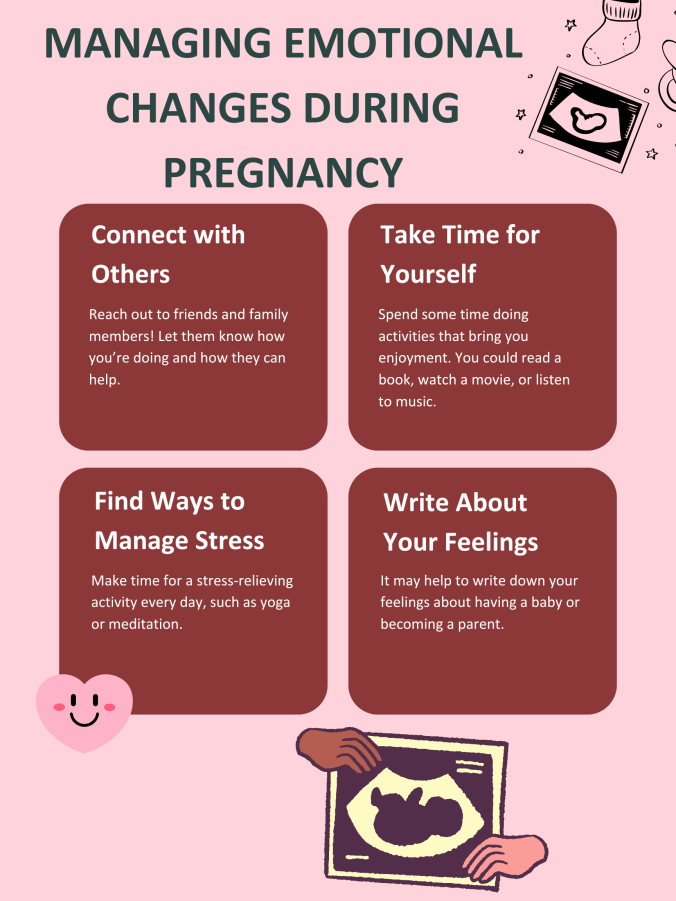
Title: Managing Emotional Changes During Pregnancy. On the top-right page, black and white clip art of an ultrasound and a sock. Two boxes on top, two below. Upper-left box: Connect with Others: Reach out to friends and family members! Let them know how you're doing and how they can help. Upper-right box: Take Time for Yourself: Spend some time doing activities that bring you enjoyment; You could read a book, watch a movie, or listen to music. Bottom-left box: Find Ways to Manage Stress: Make time for a stress-relieving activity every day, such as yoga or meditation. Bottom-right box: Write About Your Feelings: It may help to write down your feelings about having a baby or becoming a parent. At the bottom of the page, a clip art image of a person holding an ultrasound of a fetus.

When to Seek Help for Pregnancy Mood Swings

There is no shame in reaching out to a mental health professional when you’re struggling. Symptoms of depression can sometimes resemble pregnancy mood swings, but the American College of Obstetricians and Gynecologists (ACOG) recommends to speak to your provider if you have any of these signs for at least two weeks:

  • Depressed mood most of the day, almost every day
  • Loss of interest in work or other activities
  • Persistent feelings of guilt, hopelessness, or worthlessness
  • Difficulty sleeping or sleeping more than usual
  • Loss of appetite or other concerns around weight
  • Trouble paying attention, concentrating, or making decisions
  • Thoughts about death or suicide


Accessible Mental Health Services

Accessible mental health services can be a challenge for people with disabilities, as there can be a lack of specialized provider training and difficulties with financial costs. We are defining accessibility in terms of disability and financial costs. This post provides a few mental health services for people with disabilities, with some services offering in-person services and others offering both in-person and online services.

Envision Unlimited

Mission Statement: “Envision Unlimited is a certified Community Mental Health Provider offering a full complement of behavioral health services to people with a variety of mental health concerns. We are committed to assisting clients in their best and meaningful lives.”

  • Offers outpatient therapy services to adults and adolescents, both in person and via telehealth
  • Based in Chicago, Illinois

Envision Unlimited emphasizes that no one will be denied access to services due to an inability to pay, and a discount is available.

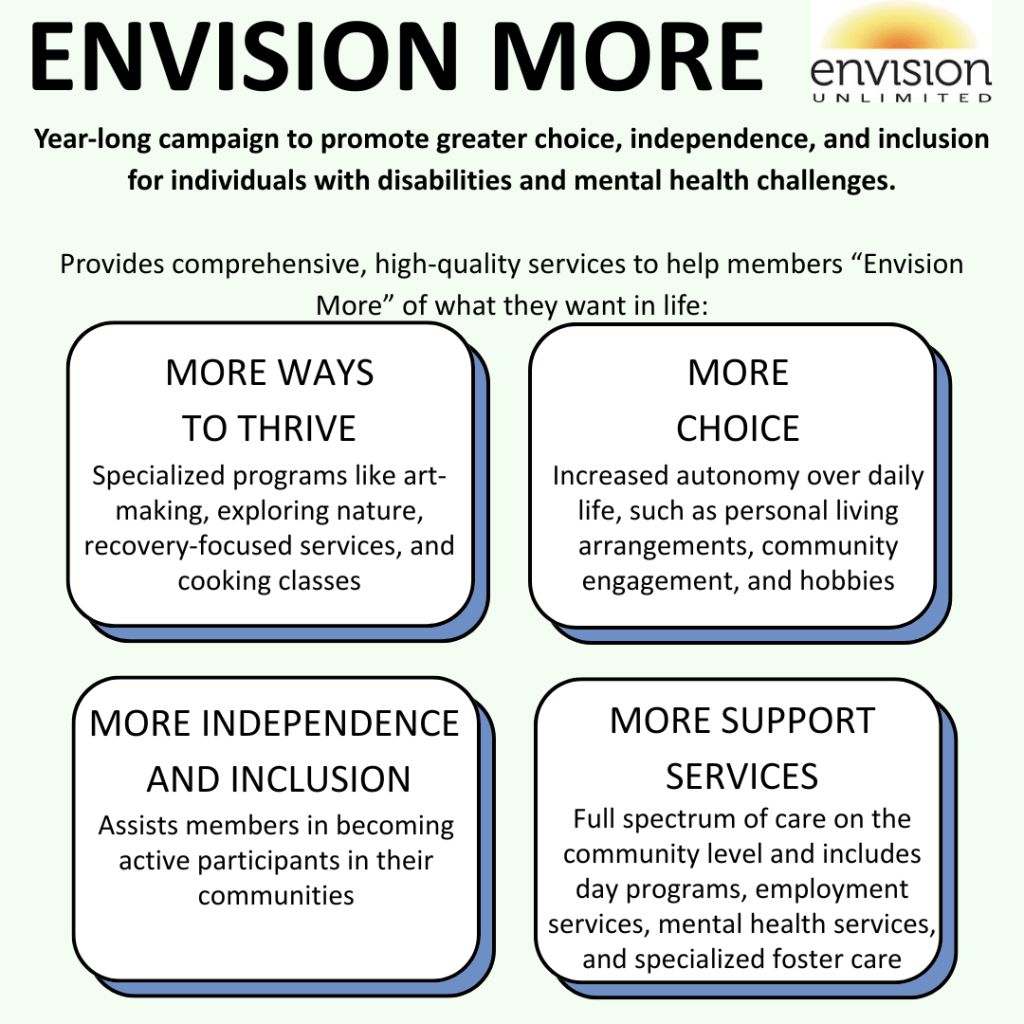
There is also a program called ENVISION MORE for people with disabilities.

Title: ENVISION MORE. Year-long campaign to promote greater choice, independence, and inclusion for individuals with disabilities and mental health challenges. Provides comprehensive, high-quality services to help members "Envision More" of what they want in life. Box 1: More Ways to Thrive; Specialized programs like art-making, exploring nature, recovery-focused services, and cooking classes. Box 2: More Choice; Increased autonomy over daily life, such as personal living arrangements, community engagement, and hobbies. Box 3: More Independence and Inclusion; Assists members in becoming active participants in their communities. Box 4: More Support Services; Full spectrum of care on the community level, and includes day programs, employment services, mental health services, and specialized foster care. The logo for Envision Unlimited is in the upper right-hand corner.

NYSTART (New York Systemic, Therapeutic, Assessment Resources and Treatment)/CSIDD (Crisis Services for Individuals with Intellectual and/or Developmental Disabilities)

Goal: “…to build relationships and support across service systems to help people remain in their homes and communities and enhance the ability of the community to support them.”

  • Offers crisis prevention and response services to people who have both developmental disabilities and complex behavioral needs, as well as to their families and those who provide supports
  • Services are available 24 hours a day, 7 days a week to OPWDD (The New York State Office for People with Developmental Disabilities) eligible individuals age 6 and over who meet NYSTART/CSIDD eligibility
  • Based in New York, must be a New York resident 

The Arc

The Arc company logo.

Mission Statement: “Promoting and protecting the human rights of people with intellectual and developmental disabilities and actively supporting their full inclusion and participation in the community throughout their lifetimes.”

Delaware Disability Resources and Advocacy Organizations

  • All of the following services are based in Delaware

NAMI (National Alliance on Mental Illness)

Mission Statement: “NAMI Delaware supports, educates, and advocates for an improved quality of life for individuals and families affected by mental health conditions.”

  • Offers a variety of signature programs, an annual education conference, and special events (for individuals, families, and professionals to receive support and information)
  • Shapes public policy, has a toll-free NAMI Delaware Helpline, and works with media, educators, healthcare professionals, and elected and appointed officials (to raise awareness, fight stigma, and encourage understanding)
  • This link is for Delaware’s NAMI program, however, there are more than 650 NAMI State Organizations and Affiliates across the country

Division of Substance Abuse and Mental Health

Mission Statement: “To improve the quality of life for Delaware’s citizens by promoting health and well-being, fostering self-sufficiency, and protecting vulnerable populations.”

  • Offers help for mental health issues (in which all services are free, and any referrals are available regardless of insurance), support groups and one-on-one counseling, suicide prevention resources, and other additional resources. 

Mental Health Association in Delaware

Mission Statement: “The Mental Health Association in Delaware strives to strengthen knowledge, resources and support around mental health and recovery.”

  • Offers education, support, and advocacy
  • Support: Offers wellness groups (one is a disability & chronic illness haven wellness group), mental health screening, and a peer support program with the mental health court (mental health court is available for people who have been charged with crimes because of a behavioral health disorder)

How to Set Healthy Boundaries

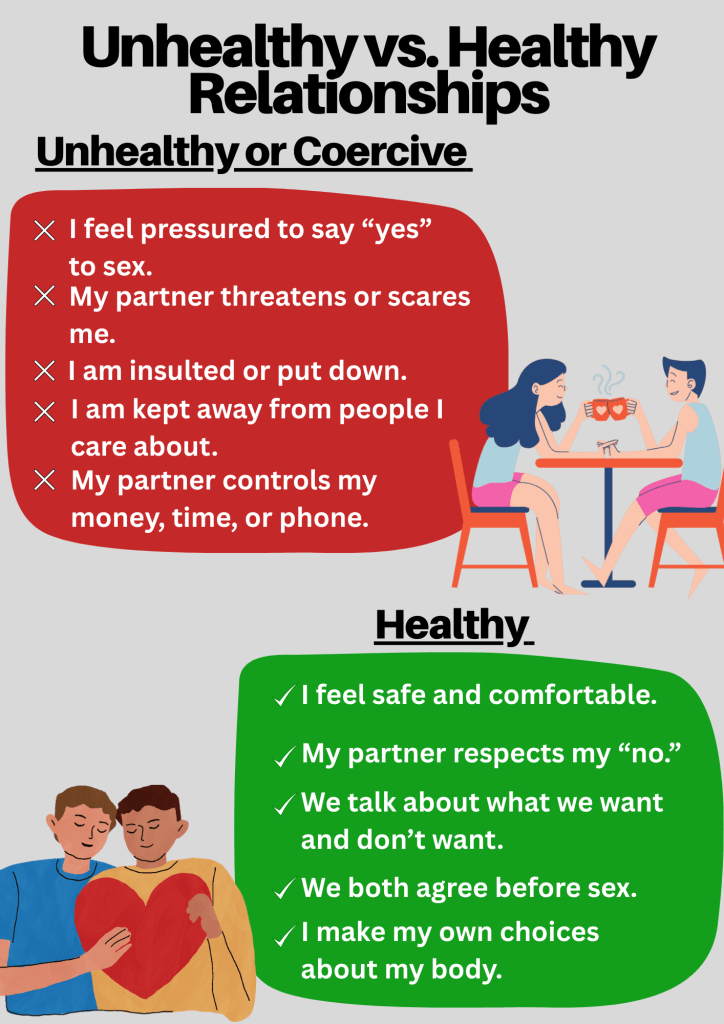
This photo contains a checklist that breaks down unhealthy vs. healthy relationships. In unhealthy or coercive relationships, a person may feel pressured to say yes to sex, they can be insulted or threatened, and kept away from people or belongings. In a healthy relationship, people feel safe and comfortable, respects when someone says no, agree before having sex, and have control over your own body. Two people are sitting at a table holding mugs in one corner while two other people are hugging and holding a heart to their chest.

Boundaries

To ensure that individuals do not experience types of coercion mentioned above, it is important that healthy boundaries are developed. Without healthy boundaries, relationships can become toxic and unsatisfying, and the individual’s well-being can suffer. Healthy boundaries are meant to [1]:

  • Encourage autonomy and reduce codependent habits
  • Set expectations when interacting with others
  • Give you a sense of empowerment and self-respect
  • Ensure your physical and emotional comfort
  • Clarity on individual responsibilities in a relationship
  • Clarify individual responsibilities in a relationship
  • Separate your wants, needs, thoughts, and feelings from those of others

Before getting into a relationship, it is imperative to develop personal boundaries and ensure that those boundaries are respected.

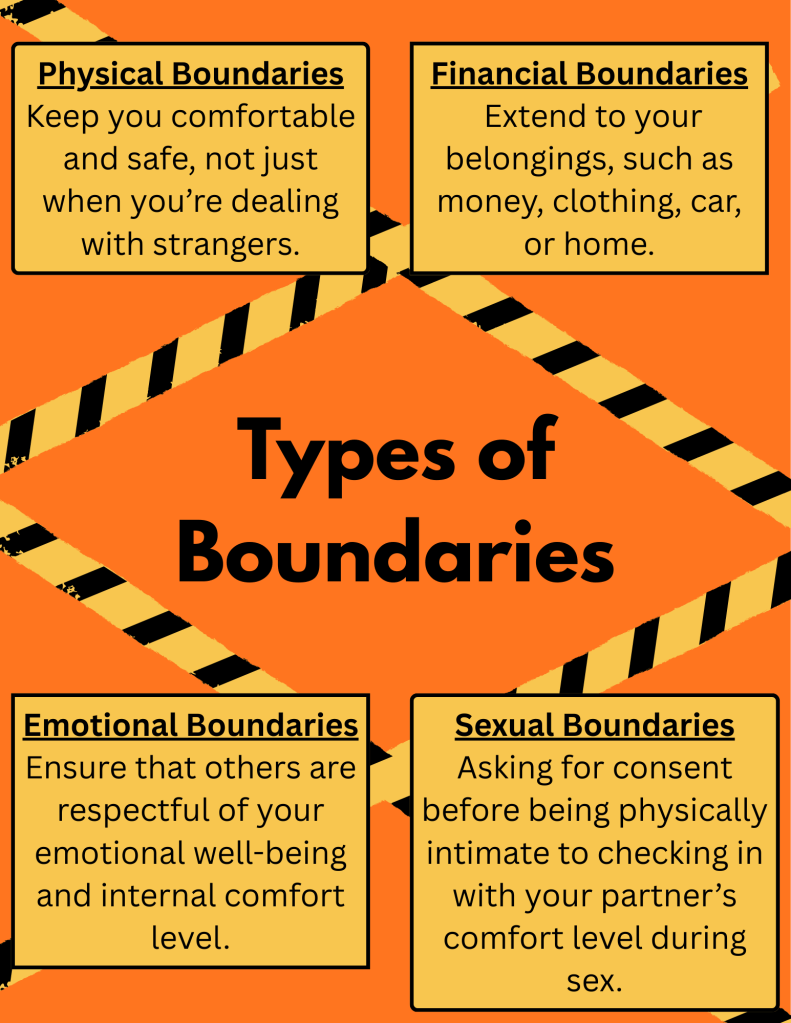
Orange box with danger tape running an "x" shape across it. The text describes the different types of boundaries: physical boundaries, financial boundaries, emotional boundaries, and sexual boundaries. Physical boundaries can be defined as those that keep you comfortable and safe. Financial boundaries are those that extend to your belongings. Emotional boundaries ensure that others are respectful of your well-being and internal comfort. Sexual boundaries require asking for consent before being physically intimate.

Sexual Readiness

An important thing to consider when discussing relationships is sexual readiness. Sexual readiness means thinking carefully about whether you are truly ready to engage in sexual activity with a partner [2].

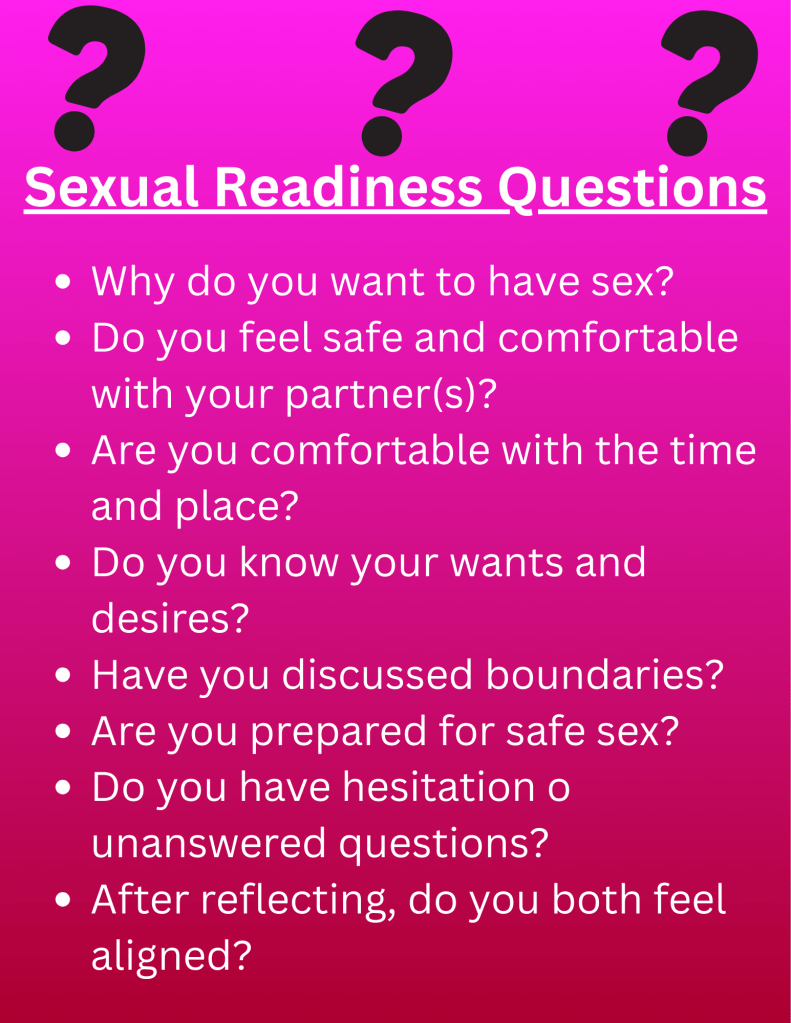
Pink infographic with a list of questions to ask how ready someone is to have sex: Why do you want to have sex? Do you feel safe and comfortable with your partner(s)? Are you comfortable with the time and place? Do you know your wants and desires? Have you discussed boundaries? Are you prepared for safe sex? Do you have hesitation or unanswered questions? Do you both feel aligned?

Coercion

In some relationships, individuals use a tactic called ‘coercion’ to ensure their partner does not leave the relationship. According to Webster’s dictionary, coercion is “to compel an act or choice” [3]. Regarding relationships, coercive control is seen through emotional abuse in intimate partner settings and may sometimes include physical force [4]. Types of coercive control include:

  • Assault – Assault is one of the most extreme versions of coercive control, as it involves physically forcing an individual to conduct an action. Assault includes hitting, choking, slapping, kicking, biting, using weapons, and exposure to dangerous situations.
  • Threats – Threats are declarations of impending consequences intended to create fear. Example statements include, ‘That better not stay that way, or you’ll regret it’, ‘The next time you do that, the dog is going to the shelter’, and ‘You’re going to be sorry you did that’.
  • Insults or Humiliation – When a partner insults or humiliates an individual, it can be done with the intention to break down the individual’s self-esteem and make them believe they cannot function without the partner. Some examples include making jokes at your expense, calling you names, and regularly making critical comments about your appearance.
  • Isolation – When a partner forbids an individual from interacting with others, it can inhibit the individual from being able to verify abusive relationship behaviors. Examples include making excuses why you can’t attend family events or social functions, using guilt to get you to stay at home, and making fun of your interests to discourage you.
  • Activity Monitoring – Activity monitoring is a tactic utilized to subtly remind an individual that their partner is always around, judging their behaviors. Examples include whole-home surveillance technology (including private areas like the bathroom), checking your internet usage and browser history, and using tracking technology on your phone or car.
  • Financial Control – When a partner scrutinizes, controls, or limits financial control, a situation is developed where an individual depends on that partner for basic needs. Examples include being restricted to an allowance, insisting on sharing financial account information, and running up debt under your name.
  • Sexual Coercion – When a partner makes an individual feel pressured, manipulated, or tricked into sexual interaction. For example, making you feel obligated to engage in sex, offering a reward for sex, or threatening consequences if you don’t engage in a sexual act.
  • Removing Autonomy – When someone takes away the freedom of personal choice. It is a form utilized to dismiss an individual’s feelings and make them feel inferior. Examples include insisting you use certain products (shampoo, body spray, soap, hygiene items), replacing your things with versions they feel are superior, regulating your sleep, eating, or bathroom activities.

Conclusion

No matter your attachment style, it’s important to regulate your emotions, take time to think before agreeing or initiating sex, and remember sex does not equal love or commitment [6]. If someone is pressuring you into sex, and you feel safe, be direct and firm with the individual [7]. Let the individual know that pressure will not change your mind or that you are not interested. If the pursuit continues, call individuals that you trust (family, friends, police). Some individuals to help you create an exit strategy from a coercive relationship include 1-800-799-7233, thehotline.org, and texting “START” to 88788.

Beyond The Myths: Inclusive Sex Education and Mental Health Awareness

Exploring your sexuality can be confusing, especially when you start engaging in sexual acts with other people for the first time. Virginity is the term used to describe the state of never having had sex, and “losing your virginity” can be nerve-wracking. Even the word “losing” is not the best description, because you should be gaining something from your experience instead. There are many misconceptions around sex that can contribute to feeling anxious about having sex for the first time. This is a guide that debunks myths and discusses the many ways you can have sex to help you feel a little more comfortable when engaging in sexual acts, and the importance of your mental wellbeing when it comes to this.

Sex Myths

Myth Reality 
You will feel different after having sex.People often believe after having sex for the first time it will instantly change everything and bring a complete happiness in your life. The truth is there is no “right” way to feel after having it. You can feel happy, anxious, calm, excited, nervous, or even the same. All of these reactions are completely normal. 
Pain is always present.First time sex can feel uncomfortable at first. The vagina is muscle so when it is being strecthed it comes along with discomfort. But with communication, patience, and enough foreplay with your partner the discomfort will last for only a little bit. If the pain is severe or ongoing it is a good idea to talk to a healthcare professional because sex is not supposed to hurt. 
It will be perfect and magical. Watching television they depict first time sex as something magical and smooth. In reality that is not always the case. First time sex can be awkward and nervewracking and that is okay! Learning and figuring things out with your partner is completely normal. It does not have to be perfect for it to be meaningful.  
Talking about boundaries will ruin the mood.This is absolutely not true. If there is something you do not feel comfortable with when about to have sex with your partner, make sure you say it. You saying it will not ruin the mood whatsoever. It will just make sure that you are being treated with respect and that you are not uncomfortable during the experience. When both partners feel safe and heard, it will create a more positive experience. 
Penetration is required. This is a myth because that statement limits the definition of sex to only penis-in-vagina orientation. Intimacy includes many forms such as oral sex, touching, mutual stimulation, and many other experiences. 

Diving Deeper into Inclusive Sex

As mentioned above, “penetration is required” for sex is a myth because of the many ways to be sexual, and based on your pain or mobility restrictions, sensory sensitivities, gender identity, and sexual orientation, sex may be different than how you imagined it. There is no one or “real” way to have sex; it is whatever you and your partner are comfortable with, so it’s important to talk to your partner about boundaries and what sex you would like to have.

There are many different ways people have sex:

  • Anal sex – a penis is inserted into another person’s anus
  • Oral sex – a person licks a person’s vulva, vagina, or clitoris or a person kisses/sucks a person’s penis
  • A person kisses and sucks the other person’s nipples
  • A person masturbates with another person
  • A person touches another person’s vagina or penis
  • Sex toys (ex: dildos…) are used

This fact sheet provides more information on having sex.

Being comfortable in your sexuality and expressing yourself sexually can help you understand yourself better and be in control of your own life. It can also give you confidence to have sex successfully (based on your own personal view of what “successful” sex is) and deepen your connection with your partners.

Resources To Promote Positive Mental Health

For LGBTQ+ individuals with disabilities, the LGBTQ+ community and spaces can act as a protective factor as it helps foster a sense of belonging, reduce isolation, and supports positive self-identity. However, LGTBQ+ people with disabilities also report higher rates of mental health concerns. The Trevor Project has a guide on their website for supporting LGBTQ+ people with disabilities, including direct links to resources that can be found on page 14 on the PDF format.

We wanted to attach some resources if you or someone you know is struggling with mental health concerns. The Cleveland Clinic provides more information about suicide and its warning signs on its website at https://my.clevelandclinic.org/health/articles/suicide.

The Never a Bother campaign is a youth suicide prevention awareness and outreach campaign for young people and their parents, caregivers, and allies. To get involved, please visit https://neverabother.org/