Boundaries
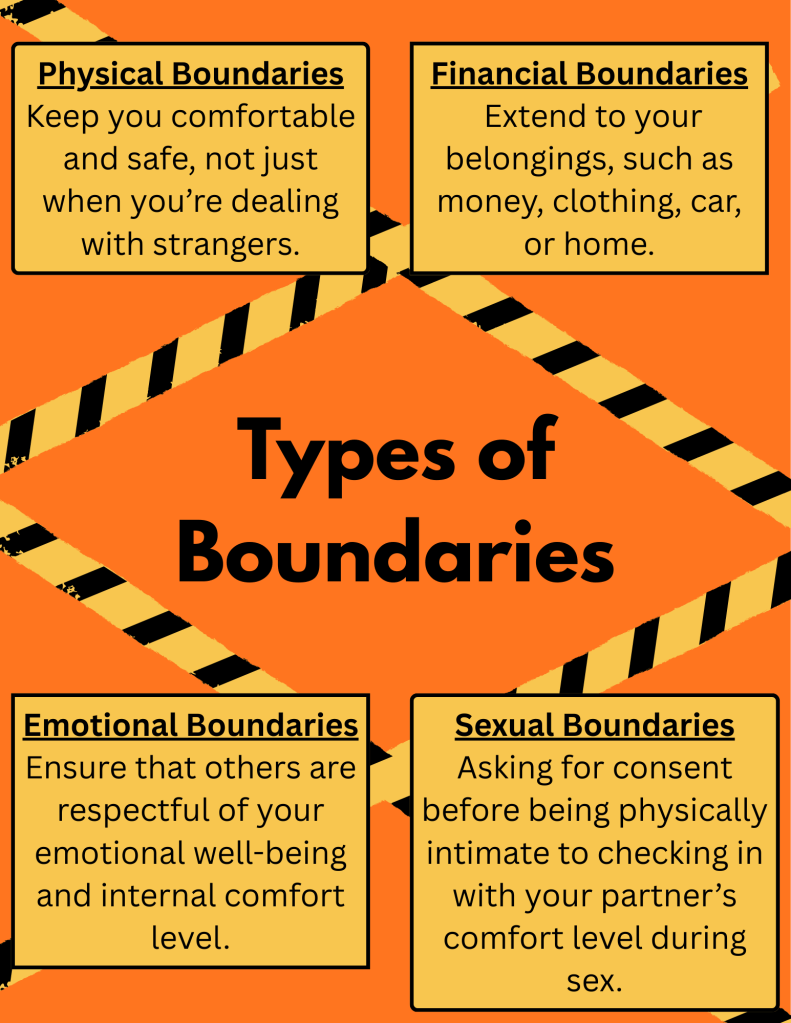
To ensure that individuals do not experience types of coercion mentioned above, it is important that healthy boundaries are developed. Without healthy boundaries, relationships can become toxic and unsatisfying, and the individual’s well-being can suffer. Healthy boundaries are meant to [1]:
- Encourage autonomy and reduce codependent habits
- Set expectations when interacting with others
- Give you a sense of empowerment and self-respect
- Ensure your physical and emotional comfort
- Clarity on individual responsibilities in a relationship
- Clarify individual responsibilities in a relationship
- Separate your wants, needs, thoughts, and feelings from those of others
Before getting into a relationship, it is imperative to develop personal boundaries and ensure that those boundaries are respected.
Sexual Readiness
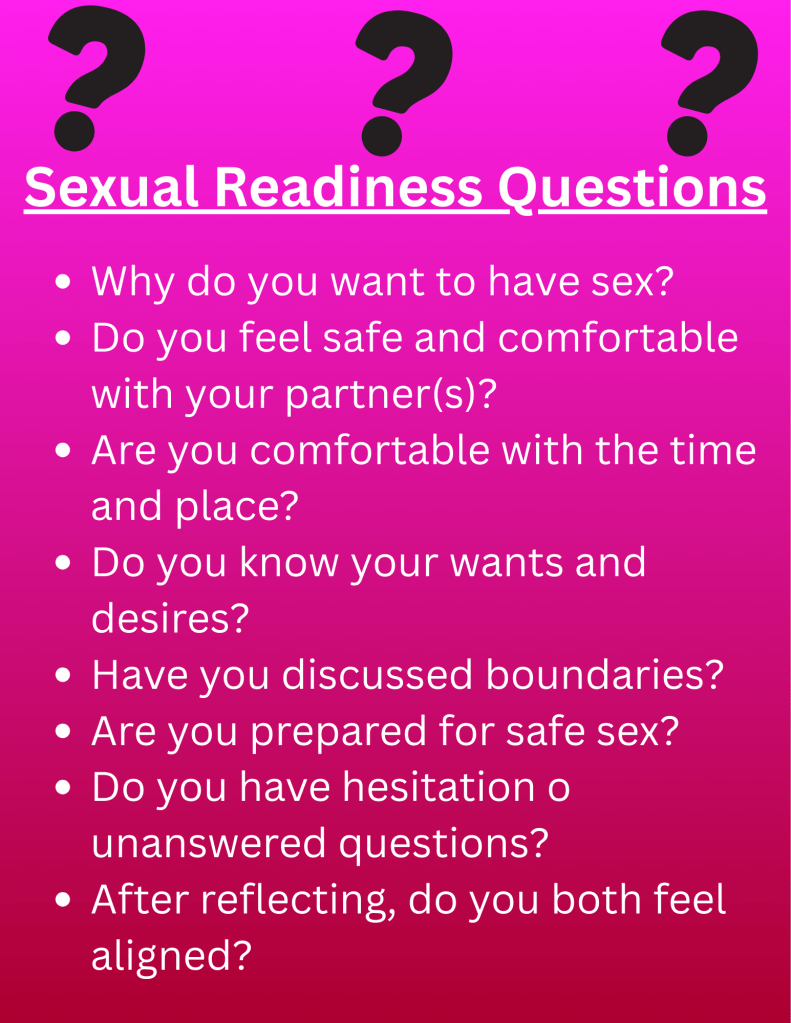
An important thing to consider when discussing relationships is sexual readiness. Sexual readiness means thinking carefully about whether you are truly ready to engage in sexual activity with a partner [2].
Coercion
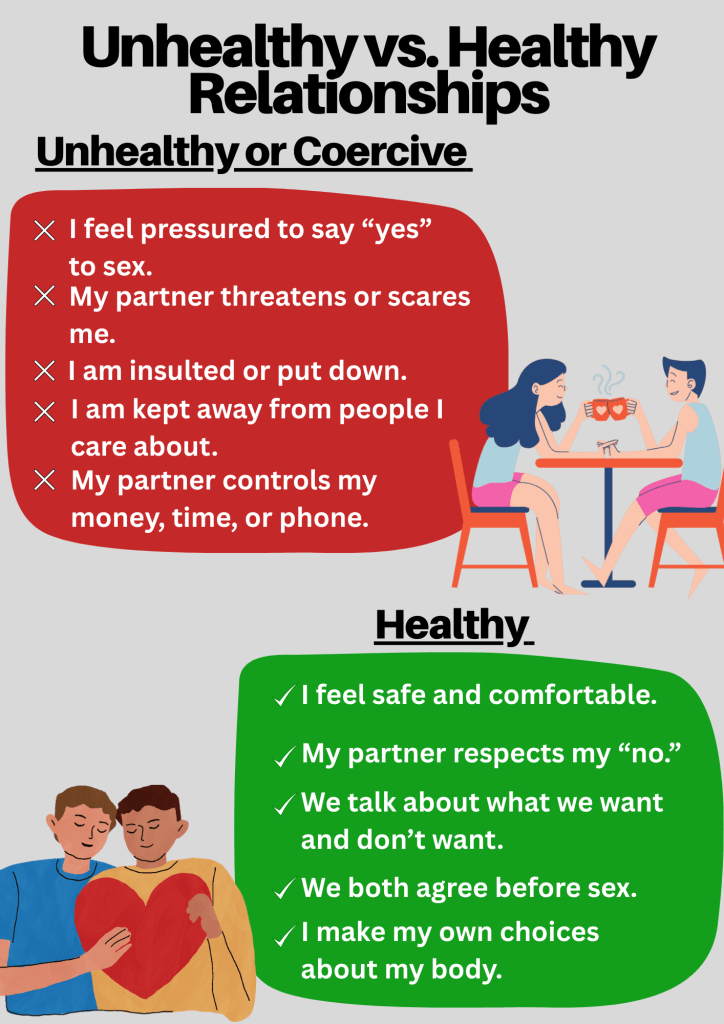
In some relationships, individuals use a tactic called ‘coercion’ to ensure their partner does not leave the relationship. According to Webster’s dictionary, coercion is “to compel an act or choice” [3]. Regarding relationships, coercive control is seen through emotional abuse in intimate partner settings and may sometimes include physical force [4]. Types of coercive control include:
- Assault – Assault is one of the most extreme versions of coercive control, as it involves physically forcing an individual to conduct an action. Assault includes hitting, choking, slapping, kicking, biting, using weapons, and exposure to dangerous situations.
- Threats – Threats are declarations of impending consequences intended to create fear. Example statements include, ‘That better not stay that way, or you’ll regret it’, ‘The next time you do that, the dog is going to the shelter’, and ‘You’re going to be sorry you did that’.
- Insults or Humiliation – When a partner insults or humiliates an individual, it can be done with the intention to break down the individual’s self-esteem and make them believe they cannot function without the partner. Some examples include making jokes at your expense, calling you names, and regularly making critical comments about your appearance.
- Isolation – When a partner forbids an individual from interacting with others, it can inhibit the individual from being able to verify abusive relationship behaviors. Examples include making excuses why you can’t attend family events or social functions, using guilt to get you to stay at home, and making fun of your interests to discourage you.
- Activity Monitoring – Activity monitoring is a tactic utilized to subtly remind an individual that their partner is always around, judging their behaviors. Examples include whole-home surveillance technology (including private areas like the bathroom), checking your internet usage and browser history, and using tracking technology on your phone or car.
- Financial Control – When a partner scrutinizes, controls, or limits financial control, a situation is developed where an individual depends on that partner for basic needs. Examples include being restricted to an allowance, insisting on sharing financial account information, and running up debt under your name.
- Sexual Coercion – When a partner makes an individual feel pressured, manipulated, or tricked into sexual interaction. For example, making you feel obligated to engage in sex, offering a reward for sex, or threatening consequences if you don’t engage in a sexual act.
- Removing Autonomy – When someone takes away the freedom of personal choice. It is a form utilized to dismiss an individual’s feelings and make them feel inferior. Examples include insisting you use certain products (shampoo, body spray, soap, hygiene items), replacing your things with versions they feel are superior, regulating your sleep, eating, or bathroom activities.
Conclusion
No matter your attachment style, it’s important to regulate your emotions, take time to think before agreeing or initiating sex, and remember sex does not equal love or commitment [6]. If someone is pressuring you into sex, and you feel safe, be direct and firm with the individual [7]. Let the individual know that pressure will not change your mind or that you are not interested. If the pursuit continues, call individuals that you trust (family, friends, police). Some individuals to help you create an exit strategy from a coercive relationship include 1-800-799-7233, thehotline.org, and texting “START” to 88788.
 The Birds and The Bees