Understanding Pregnancy Emotions

It is very normal to experience a range of emotions when you find out you are pregnant, since it is a major life event that brings about a lot of change. It’s important to remember that every experience is valid and part of the parenthood journey.

Common Reasons for Pregnancy Emotions

Hormones: There are significant hormonal shifts, which can have an intense impact on your emotions. Your estrogen and progesterone hormones fluctuate, which then influences the hormones that regulate your mood (serotonin and dopamine), leading to mood swings and heightened emotions.

Body and body image changes: Your body goes through a lot of physical changes (weight gain, changes in posture, changes in skin, etc.) which can sometimes provoke emotions about body image and self-esteem. Some expectant parents may feel proud that their body’s changing to nurture life, but others may experience feelings of discomfort or insecurity.

Stress: This is a very stressful time for parents, and you may feel stressed about finances, relationship adjustments, childbirth itself, and parenting. Your body heightens its stress response system (your cortisol levels) which can lead to feelings of anxiety, mood swings, and irritability.

Fatigue: Changing hormones, difficulty sleeping, and stress can cause fatigue and exhaustion, which is very common during pregnancy. This can further heighten feelings and make you emotional.

Emotional Changes Throughout Pregnancy

First trimester: Can bring on a lot of early pregnancy emotions and first-trimester mood swings. You may experience a whirlwind of feelings as you come to terms with the reality of being pregnancy, and may feel excited, anxious, and/or overwhelmed.

Second trimester: Experience a welcome break from intense emotions of early pregnancy. You may feel more stable and have more balanced emotions, but you may continue to feel anxious or stressed.

Third trimester: As you’re preparing for childbirth, it can evoke even stronger emotions. You may be fearful of the unknown, but also excited about the arrival of a child. Common feelings include anticipation and excitement, occasional impatience, and anxiety.

Managing Emotional Changes During Pregnancy

It’s important to be able to identify and label what you’re feeling, so that it can be addressed in healthy and effective ways. Be mindful of what you’re experiencing in the present moment. You also should practice self-compassion by acknowledging the work that your body is doing by being pregnant, and accepting these changes.

NewYork-Presbyterian provided some strategies to manage your emotional changes during pregnancy:
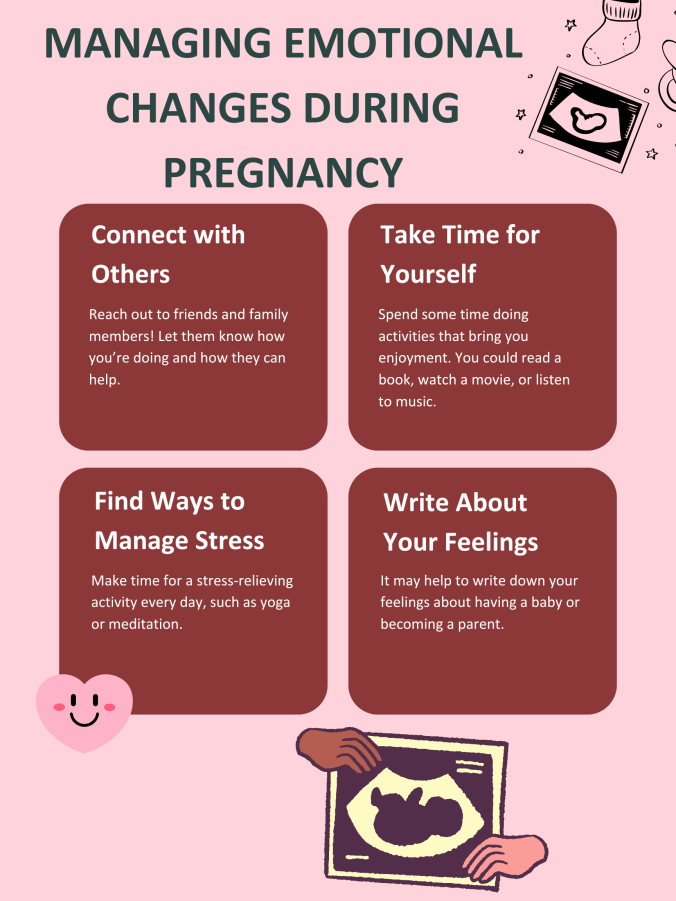
Title: Managing Emotional Changes During Pregnancy. On the top-right page, black and white clip art of an ultrasound and a sock. Two boxes on top, two below. Upper-left box: Connect with Others: Reach out to friends and family members! Let them know how you're doing and how they can help. Upper-right box: Take Time for Yourself: Spend some time doing activities that bring you enjoyment; You could read a book, watch a movie, or listen to music. Bottom-left box: Find Ways to Manage Stress: Make time for a stress-relieving activity every day, such as yoga or meditation. Bottom-right box: Write About Your Feelings: It may help to write down your feelings about having a baby or becoming a parent. At the bottom of the page, a clip art image of a person holding an ultrasound of a fetus.

When to Seek Help for Pregnancy Mood Swings

There is no shame in reaching out to a mental health professional when you’re struggling. Symptoms of depression can sometimes resemble pregnancy mood swings, but the American College of Obstetricians and Gynecologists (ACOG) recommends to speak to your provider if you have any of these signs for at least two weeks:

  • Depressed mood most of the day, almost every day
  • Loss of interest in work or other activities
  • Persistent feelings of guilt, hopelessness, or worthlessness
  • Difficulty sleeping or sleeping more than usual
  • Loss of appetite or other concerns around weight
  • Trouble paying attention, concentrating, or making decisions
  • Thoughts about death or suicide


Accessible Mental Health Services

Accessible mental health services can be a challenge for people with disabilities, as there can be a lack of specialized provider training and difficulties with financial costs. We are defining accessibility in terms of disability and financial costs. This post provides a few mental health services for people with disabilities, with some services offering in-person services and others offering both in-person and online services.

Envision Unlimited

Mission Statement: “Envision Unlimited is a certified Community Mental Health Provider offering a full complement of behavioral health services to people with a variety of mental health concerns. We are committed to assisting clients in their best and meaningful lives.”

  • Offers outpatient therapy services to adults and adolescents, both in person and via telehealth
  • Based in Chicago, Illinois

Envision Unlimited emphasizes that no one will be denied access to services due to an inability to pay, and a discount is available.

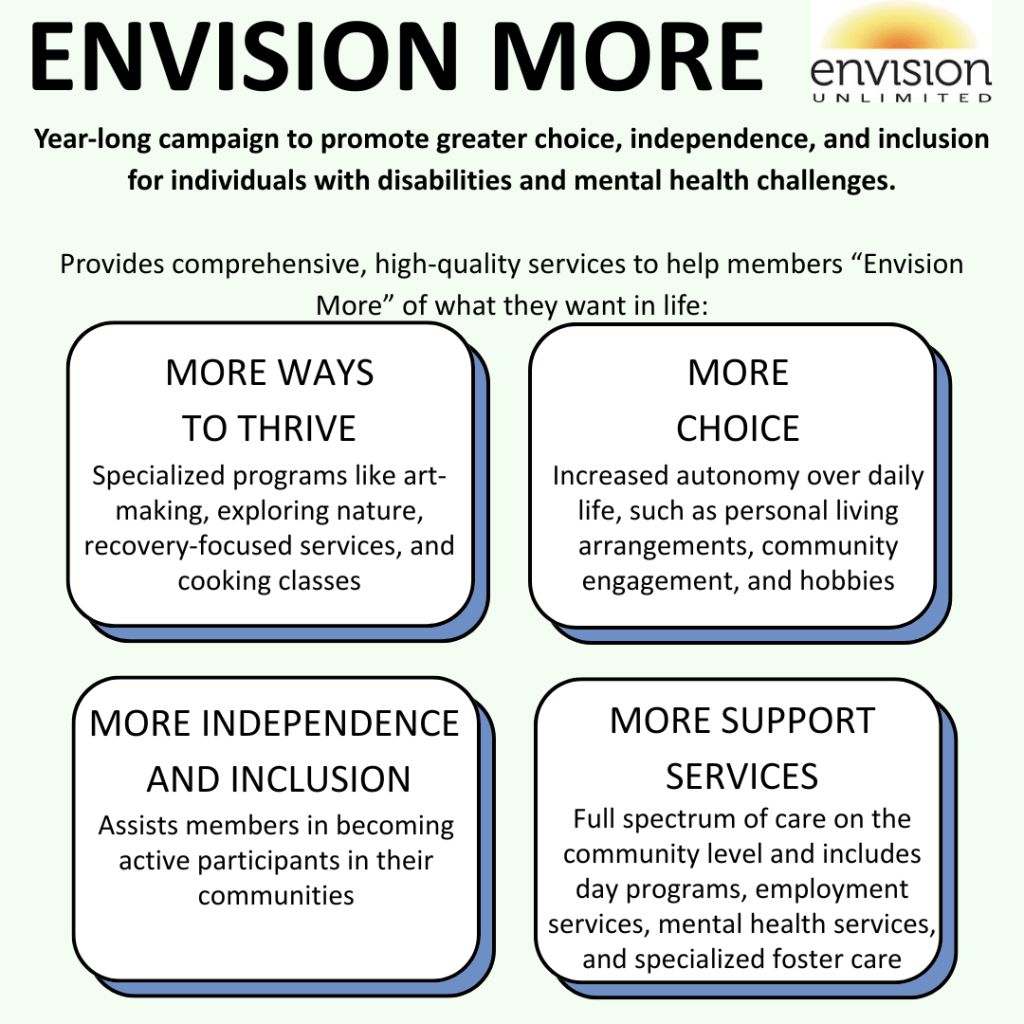
There is also a program called ENVISION MORE for people with disabilities.

Title: ENVISION MORE. Year-long campaign to promote greater choice, independence, and inclusion for individuals with disabilities and mental health challenges. Provides comprehensive, high-quality services to help members "Envision More" of what they want in life. Box 1: More Ways to Thrive; Specialized programs like art-making, exploring nature, recovery-focused services, and cooking classes. Box 2: More Choice; Increased autonomy over daily life, such as personal living arrangements, community engagement, and hobbies. Box 3: More Independence and Inclusion; Assists members in becoming active participants in their communities. Box 4: More Support Services; Full spectrum of care on the community level, and includes day programs, employment services, mental health services, and specialized foster care. The logo for Envision Unlimited is in the upper right-hand corner.

NYSTART (New York Systemic, Therapeutic, Assessment Resources and Treatment)/CSIDD (Crisis Services for Individuals with Intellectual and/or Developmental Disabilities)

Goal: “…to build relationships and support across service systems to help people remain in their homes and communities and enhance the ability of the community to support them.”

  • Offers crisis prevention and response services to people who have both developmental disabilities and complex behavioral needs, as well as to their families and those who provide supports
  • Services are available 24 hours a day, 7 days a week to OPWDD (The New York State Office for People with Developmental Disabilities) eligible individuals age 6 and over who meet NYSTART/CSIDD eligibility
  • Based in New York, must be a New York resident 

The Arc

The Arc company logo.

Mission Statement: “Promoting and protecting the human rights of people with intellectual and developmental disabilities and actively supporting their full inclusion and participation in the community throughout their lifetimes.”

Delaware Disability Resources and Advocacy Organizations

  • All of the following services are based in Delaware

NAMI (National Alliance on Mental Illness)

Mission Statement: “NAMI Delaware supports, educates, and advocates for an improved quality of life for individuals and families affected by mental health conditions.”

  • Offers a variety of signature programs, an annual education conference, and special events (for individuals, families, and professionals to receive support and information)
  • Shapes public policy, has a toll-free NAMI Delaware Helpline, and works with media, educators, healthcare professionals, and elected and appointed officials (to raise awareness, fight stigma, and encourage understanding)
  • This link is for Delaware’s NAMI program, however, there are more than 650 NAMI State Organizations and Affiliates across the country

Division of Substance Abuse and Mental Health

Mission Statement: “To improve the quality of life for Delaware’s citizens by promoting health and well-being, fostering self-sufficiency, and protecting vulnerable populations.”

  • Offers help for mental health issues (in which all services are free, and any referrals are available regardless of insurance), support groups and one-on-one counseling, suicide prevention resources, and other additional resources. 

Mental Health Association in Delaware

Mission Statement: “The Mental Health Association in Delaware strives to strengthen knowledge, resources and support around mental health and recovery.”

  • Offers education, support, and advocacy
  • Support: Offers wellness groups (one is a disability & chronic illness haven wellness group), mental health screening, and a peer support program with the mental health court (mental health court is available for people who have been charged with crimes because of a behavioral health disorder)

Beyond The Myths: Inclusive Sex Education and Mental Health Awareness

Exploring your sexuality can be confusing, especially when you start engaging in sexual acts with other people for the first time. Virginity is the term used to describe the state of never having had sex, and “losing your virginity” can be nerve-wracking. Even the word “losing” is not the best description, because you should be gaining something from your experience instead. There are many misconceptions around sex that can contribute to feeling anxious about having sex for the first time. This is a guide that debunks myths and discusses the many ways you can have sex to help you feel a little more comfortable when engaging in sexual acts, and the importance of your mental wellbeing when it comes to this.

Sex Myths

Myth Reality 
You will feel different after having sex.People often believe after having sex for the first time it will instantly change everything and bring a complete happiness in your life. The truth is there is no “right” way to feel after having it. You can feel happy, anxious, calm, excited, nervous, or even the same. All of these reactions are completely normal. 
Pain is always present.First time sex can feel uncomfortable at first. The vagina is muscle so when it is being strecthed it comes along with discomfort. But with communication, patience, and enough foreplay with your partner the discomfort will last for only a little bit. If the pain is severe or ongoing it is a good idea to talk to a healthcare professional because sex is not supposed to hurt. 
It will be perfect and magical. Watching television they depict first time sex as something magical and smooth. In reality that is not always the case. First time sex can be awkward and nervewracking and that is okay! Learning and figuring things out with your partner is completely normal. It does not have to be perfect for it to be meaningful.  
Talking about boundaries will ruin the mood.This is absolutely not true. If there is something you do not feel comfortable with when about to have sex with your partner, make sure you say it. You saying it will not ruin the mood whatsoever. It will just make sure that you are being treated with respect and that you are not uncomfortable during the experience. When both partners feel safe and heard, it will create a more positive experience. 
Penetration is required. This is a myth because that statement limits the definition of sex to only penis-in-vagina orientation. Intimacy includes many forms such as oral sex, touching, mutual stimulation, and many other experiences. 

Diving Deeper into Inclusive Sex

As mentioned above, “penetration is required” for sex is a myth because of the many ways to be sexual, and based on your pain or mobility restrictions, sensory sensitivities, gender identity, and sexual orientation, sex may be different than how you imagined it. There is no one or “real” way to have sex; it is whatever you and your partner are comfortable with, so it’s important to talk to your partner about boundaries and what sex you would like to have.

There are many different ways people have sex:

  • Anal sex – a penis is inserted into another person’s anus
  • Oral sex – a person licks a person’s vulva, vagina, or clitoris or a person kisses/sucks a person’s penis
  • A person kisses and sucks the other person’s nipples
  • A person masturbates with another person
  • A person touches another person’s vagina or penis
  • Sex toys (ex: dildos…) are used

This fact sheet provides more information on having sex.

Being comfortable in your sexuality and expressing yourself sexually can help you understand yourself better and be in control of your own life. It can also give you confidence to have sex successfully (based on your own personal view of what “successful” sex is) and deepen your connection with your partners.

Resources To Promote Positive Mental Health

For LGBTQ+ individuals with disabilities, the LGBTQ+ community and spaces can act as a protective factor as it helps foster a sense of belonging, reduce isolation, and supports positive self-identity. However, LGTBQ+ people with disabilities also report higher rates of mental health concerns. The Trevor Project has a guide on their website for supporting LGBTQ+ people with disabilities, including direct links to resources that can be found on page 14 on the PDF format.

We wanted to attach some resources if you or someone you know is struggling with mental health concerns. The Cleveland Clinic provides more information about suicide and its warning signs on its website at https://my.clevelandclinic.org/health/articles/suicide.

The Never a Bother campaign is a youth suicide prevention awareness and outreach campaign for young people and their parents, caregivers, and allies. To get involved, please visit https://neverabother.org/