Beyond The Myths: Inclusive Sex Education and Mental Health Awareness

Exploring your sexuality can be confusing, especially when you start engaging in sexual acts with other people for the first time. Virginity is the term used to describe the state of never having had sex, and “losing your virginity” can be nerve-wracking. Even the word “losing” is not the best description, because you should be gaining something from your experience instead. There are many misconceptions around sex that can contribute to feeling anxious about having sex for the first time. This is a guide that debunks myths and discusses the many ways you can have sex to help you feel a little more comfortable when engaging in sexual acts, and the importance of your mental wellbeing when it comes to this.

Sex Myths

Myth Reality 
You will feel different after having sex.People often believe after having sex for the first time it will instantly change everything and bring a complete happiness in your life. The truth is there is no “right” way to feel after having it. You can feel happy, anxious, calm, excited, nervous, or even the same. All of these reactions are completely normal. 
Pain is always present.First time sex can feel uncomfortable at first. The vagina is muscle so when it is being strecthed it comes along with discomfort. But with communication, patience, and enough foreplay with your partner the discomfort will last for only a little bit. If the pain is severe or ongoing it is a good idea to talk to a healthcare professional because sex is not supposed to hurt. 
It will be perfect and magical. Watching television they depict first time sex as something magical and smooth. In reality that is not always the case. First time sex can be awkward and nervewracking and that is okay! Learning and figuring things out with your partner is completely normal. It does not have to be perfect for it to be meaningful.  
Talking about boundaries will ruin the mood.This is absolutely not true. If there is something you do not feel comfortable with when about to have sex with your partner, make sure you say it. You saying it will not ruin the mood whatsoever. It will just make sure that you are being treated with respect and that you are not uncomfortable during the experience. When both partners feel safe and heard, it will create a more positive experience. 
Penetration is required. This is a myth because that statement limits the definition of sex to only penis-in-vagina orientation. Intimacy includes many forms such as oral sex, touching, mutual stimulation, and many other experiences. 

Diving Deeper into Inclusive Sex

As mentioned above, “penetration is required” for sex is a myth because of the many ways to be sexual, and based on your pain or mobility restrictions, sensory sensitivities, gender identity, and sexual orientation, sex may be different than how you imagined it. There is no one or “real” way to have sex; it is whatever you and your partner are comfortable with, so it’s important to talk to your partner about boundaries and what sex you would like to have.

There are many different ways people have sex:

  • Anal sex – a penis is inserted into another person’s anus
  • Oral sex – a person licks a person’s vulva, vagina, or clitoris or a person kisses/sucks a person’s penis
  • A person kisses and sucks the other person’s nipples
  • A person masturbates with another person
  • A person touches another person’s vagina or penis
  • Sex toys (ex: dildos…) are used

This fact sheet provides more information on having sex.

Being comfortable in your sexuality and expressing yourself sexually can help you understand yourself better and be in control of your own life. It can also give you confidence to have sex successfully (based on your own personal view of what “successful” sex is) and deepen your connection with your partners.

Resources To Promote Positive Mental Health

For LGBTQ+ individuals with disabilities, the LGBTQ+ community and spaces can act as a protective factor as it helps foster a sense of belonging, reduce isolation, and supports positive self-identity. However, LGTBQ+ people with disabilities also report higher rates of mental health concerns. The Trevor Project has a guide on their website for supporting LGBTQ+ people with disabilities, including direct links to resources that can be found on page 14 on the PDF format.

We wanted to attach some resources if you or someone you know is struggling with mental health concerns. The Cleveland Clinic provides more information about suicide and its warning signs on its website at https://my.clevelandclinic.org/health/articles/suicide.

The Never a Bother campaign is a youth suicide prevention awareness and outreach campaign for young people and their parents, caregivers, and allies. To get involved, please visit https://neverabother.org/
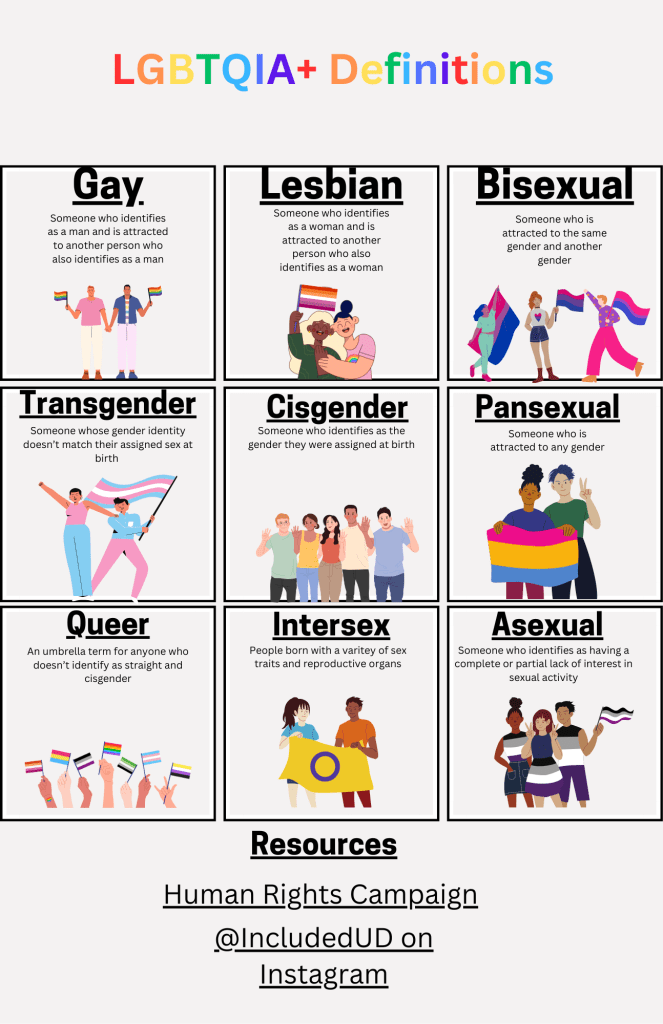
LGBTQIA+ Definitions Plain Language Guide

Below is a plain language guide. This resource allows for individuals to easily access and understand LGBTQIA+ identities, and can be used for educational purposes. The definitions were sourced from @IncludedUD on Instagram, as well as the Human Rights Campaign (HRC). These two links will take you to the Instagram and to the HRC’s glossary of LGBTQIA+ terms respectively.

***plain text language***

Image text is duplicated below. Pictures show happy queer individuals, couples, and groups with symbolic LGBTQIA+ flags

Below is an screen-reader friendly Plain Language Guide without images.

LGBTQIA+ Plain Language Guide

Gay
Someone who identifies as a man and is attracted to another person who also identifies as a man.

Lesbian
Someone who identifies as a woman and is attracted to another person who also identifies as a woman.

Bisexual
Someone who is attracted to the same gender and another gender.

Transgender
Someone whose gender identity doesn’t match their assigned sex at birth.

Cisgender
Someone who identifies as the gender they were assigned sex at birth.

Pansexual
Someone who is attracted to any gender.

Queer
An umbrella term for anyone who doesn’t identify as straight and cisgender.
Intersex
People who are born with a variety of sex traits and reproductive organs.
Asexual
Someone who identifies as having a complete or partial lack of interest in sexual activity.

Adult Human Sexuality Week 9- Gender Roles

gender rolesIt was really fun teaching about gender roles.  Gender roles and gender identity were difficult concepts.  Most of the people in the group talked about wearing a dress as if it made you a women.  So we talked a lot about biology and society and how those both influence people and gender.  We also talked a lot about gender stereotypes and how they can put limits on how people act.

Our big activity this week was making gender stereotype collages.  We found images from magazines that we thought reflected gender stereotypes and made them into a collage.  We talked about which stereotypes were easy to break and which ones were hard to escape.  The men found a lot of images they thought were more realistic depictions of women.  In the future, I think it could be fun to structure that into the activity.

Throughout the entire session, one of the things that was really difficult is that there are gender roles, gender stereotypes, and gender identities.  They influence each other but they’re different.  It’s not so critical that folks in the class understand the precise definitions, but it might have been helpful to walk through that a little bit more concretely.  On the other hand it led to really nice discussion questions, for example one participant asked “What makes a person their gender?”

We used a couple videos in class.  The first video focused on gender identity.  It shows person in the process of gender reassignment.  Over the three year period you can see how their external appearance reflects gender identity more and more.

The second video is more about gender stereotypes and gender roles.  One of our participants brought up how boys don’t like to play with “girl toys” and I remembered having seen this and pulled it up (it’s nice when it works out like that!).

If you want to take a stab at teaching this on your own, hear are the materials we used.

Additional Materials

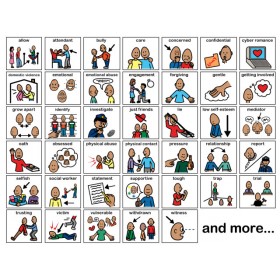
Communicating About Sexuality Adaptively

f1mj421_02_1

It can be a little overwhelming to start thinking about communicating pictorially about human sexuality topics, but there are some supports available.

Many of you already use Board Maker (computer software that helps make visual supports and PECS).  They have a “Communicating About Sexuality” add on that is very useful and only costs $15.00 (but you have to already have Board Maker).

If you would like some guidelines on how to approach augmentative and alternative communication (AAC) in regards to sexuality Speak Up has resources that you may find useful.  Speak Up is a group dedicated to preventing sexual abuse/victimization among people who use alternative communication.  They have guidelines, suggestions for communication displays, and information about building sexual vocabulary.  This group surveyed individuals who use AAC and found that ACC users say they need:

  • People who recognize that they are sexual
  • Information about sexuality
  • Vocabulary to communicate about sexuality
  • People to communicate with about sexuality
  • Accessible resources and services

Sounds pretty darn reasonable to me.


The Circles of Sexuality

No, these aren’t the circles we usually talk about related to levels of intimacy and based on the Circles curriculum.  These circles developed by Dr. Dennis Dailey, focus on Sensuality, Sexualization, Intimacy, Sexual Identity, and Sexual Health.  I think these might make a good framework for a 5 module course or could be used to introduce the concept of sexuality.  Click here for a full explanation of The Circles of Sexuality

Gender Identity and Disability

During the workshop we talk a little bit about gender identity and gender fluidity but I thought it might make sense to talk about this topic more in depth.  Parks, Hall, and Taylor* looked at gender dysphoria (discontent with with biological sex) with individuals with cognitive disabilities and suggest “Developing a gender dysphoria or wanting to cross-dress usually has ramifications for the person’s family and social network, perhaps more so with people with intellectual disability, who may be more dependent on family and paid caregivers and have less choice about who is in their network. They may experience more hostility and gain less appropriate support from their network.”  But there is still very little information about how common it is, why for some individuals gender is more fluid (have a wide flexible range of gender expression), and how best to support individuals with disabilities with issues related to gender.   This topic also raises issues related to guardianship and self determination.  Some individuals start going on puberty suppressants and hormone replacement starting in adolescence so their bodies can match the gender they express and the gender they identify with.  For people with disabilities, who gets to make that choice?

Could having a developmental disability lead to difficulties with gender identity?

This is a little difficult to answer.  There are very few studies ask this question.  In Holland they looked at co-morbidity of ASD and gender disorders * and did find more individuals with ASD coming to their clinic then you would expect.  However individuals with ASD may be tapped into to services which might account for this difference.  When individuals with disabilities seek support they may be unable to give an accurate history and professionals in this area may be unfamiliar with working with people with disabilities which could lead to false impressions.

Given how little is known, where can I go for more information?

There are new clinical guidelines that address how clinicians should assess and support individuals with autism and persistent gender dysphoria. The new clinical guidelines (there haven’t been any in the past) affirm the right of individuals with autism to obtain gender realignment. It also affirms that many individuals with autism experience gender outside the male-female binary. Check out a reader friendly overview of the guidelines on Spectrum News.

Gender Spectrum is a great place to start looking for more information.  This is a website that can link families with medical, mental health, social, and legal services.  The have great definitions of all the different terminology and a great overview of gender development.

Here is also a This American Life podcast that features interviews with two little girls who were born as biological males and their families.  For me, it was really eye opening and helped me connect this topic to real people.

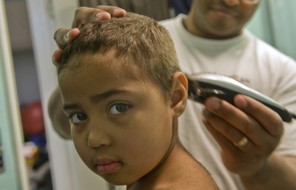
On May 19th the Washington Post published an article on this topic (which I thought was really well done) featuring a little boy named Tyler.  The story had almost 2,500 comments 5 days later.  They published a follow up article about the response on May 21st, “I heard from transgendered senior citizens who lamented their decades living a lie.  I got e-mails from confused parents who had their aha moment when they read Tyler’s story.  And sure, I heard from the haters”.  This article not only has nice information but also speaks to the relevance and controversy surrounding this topic.

*This links to the abstract of the article.  Unfortunately, the full text of the article is not available for free online.