Songs for Your Body is a curriculum comprised of, you guessed it, songs. They cover hygiene, abuse, masturbation, contraception, sexually transmitted infections, and sexual health. You can preview the songs on their website- I liked the masturbation songs. In general, they’re a little hokey but I think it’s a good example of thinking outside the box. The CD is $15.41 including shipping and handling and comes with a booklet of lyrics and activities.
Resources
Resources to support with teaching human sexuality and also for learning about teaching human sexuality.
Human Sexuality 101 Week 3- Puberty
I have to say, the puberty session went great! It was just at the right level. Here are the activities we did…
Defining Puberty: This was the language we used to define puberty: puberty is your body changing from a child’s body to an adult’s body. It causes changes to your body inside and outside. Everyone goes through puberty but it might happen at different times and people’s bodies change to look different. Puberty is a time when you start to get sexual feelings. You don’t have control over going through puberty, but you do have control over how you react to it. It’s normal to have mixed feelings, some good feelings and some negative feelings. This definition highlights several key features of puberty (it’s in some ways different and some ways the same for everyone, it’s a natural biological process, it can be an adjustment).
They Tell Me I’m Going Through Puberty: This is a story told from the point of view of a teenager about the changes that are happening during puberty. This exercise helps students to understand that many of the changes that are happening in puberty happen to both boys and girls. The narrative format may help students relate to the changes that are occurring.
Boys/Girls/Both: In this activity, participants were given a series of cards each with a change that happens during puberty. They decide if these changes happen to boys, girls, or both. Again, this exercise helps students to understand that many of the changes that are happening in puberty happen to both boys and girls. Many of these changes are repeated from the first exercise although more are introduced. Each card separates out each change as concrete steps.
Puberty Worksheet: This worksheet is a check in on the changes participants have experienced, how they feel about these changes, and changes they anticipate. The worksheet was designed to help students anticipate some of the changes that will happen during puberty and help them to be aware of the changes that are happening in their own body. We use both open ended and multiple choice questions to stimulate different levels of thinking.
Diversity:We showed power point slides with pictures of several people showing a diversity of bodies and ages. Students were asked, “Which ones are going through puberty?”. This activity reinforces the concept that puberty is in some ways different and some ways the same for everyone. One thing that became evident was that the students had difficulty understanding that children hadn’t gone through puberty but the were quick to grasp onto the idea that adults are finished going through puberty. We used a few favorite characters to help the kids get a little excited about the topic.
Click on the Links Below to AccessMaterials
Anatomical Models and Drawings
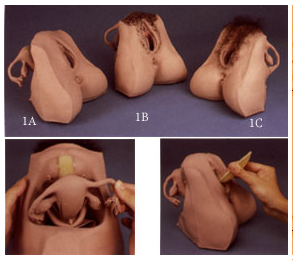
These models are from http://jimjacksonanatomymodels.com/ It can be a little difficult to find the kind of anatomical model that you want for a sexual education class. I’ve used these models and I think they are very instructive. They are realistic so it may not be appropriate for all audiences but a lot of folks need things this concrete. If you’re teaching condom use, make sure to use vinyl condoms (latex condoms can hurt the models). The cost of the models ranges from $180 – $660 depending on what you’re getting. It’s an investment, but a great teaching tool. WebMD has nice anatomical line drawings that are okay to print for free. http://www.medscape.com/features/ald/repro Once you get into color photos, they usually ask you to pay. You can probably find some on the internet that don’t have water marks (like on webmd or mayo clinic ) but they are usually copyrighted. This site will give you a lot of options available for purchase http://www.fotosearch.com/photos-images/reproductive-system.html This site has more medically technical options (they also have online interactive models, but those are pretty technical too). http://catalog.nucleusinc.com/generateexhibit.php?ID=9591
New Research Regarding Autism and Sexuality
Sandra Byers, Shana Nicholas, Susan Voyer, and Georgianna Reilly have an paper coming out in Austim this month. They survied 141 men and women with “high functioning autism and/or Aspergers syndrome” (AQ score of 26 or greater) about their sexual wellbeing. You can read the abstract of the article for free or pay for the entire article but I’ve summarized the interesting findings below.
Gender Differences: The men had greater sexual well being but less sexual knowledge. They weren’t different in all areas; for example, they were the same in terms of sexual activity and sexual self esteem. They were different in areas such as arousability and sexual desires (this is pretty consistent with neurotypical gender differences).
Autism Symptomatology: Folks who reported less autism symptomatology had better sexual well being but not necessarily more sexual activity (both with partners and alone). The folks who reported more autism symptomatology reported more difficulty with the other parts of sexual life like assertiveness and desire.
Relationship Status: Folks in romantic relationships relationships reported better sexual well being. Everyone in the study had been in a relationship at some point so this is comparing the folks currently in a relationship from those not in a relationship at this time.
So how did they define sexual well being?
The looked at sexual well being in two main domains: dyadic (with another) and solitary (on your own). In these domains they examined affection, genital activity, sexual assertiveness, sexual satisfaction, arousability, sexual desire, sexual thoughts, sexual anxiety, and sexual problems.
One of the take home recommendations for education relates to the two domains. These reachers highlighted the importance of sexuality education that teaches about partnered sexual expression and solitary sexual expression. They also recommended that sexuality education specifically focus on developing a positive sexual self-image. I can’t disagree with them there!
Video Teaching Tool- The Body Story
I came across this looking for educational resources for teaching about puberty. It is not specifically designed for students with intellectual and/or developmental disabilities but is very well done and could serve as a basis for instruction. It’s available to stream free on YouTube and I’ve posted it here. You can also find it available for purchase if you would prefer a DVD.
This is the puberty episode…
The series also has a reproduction episode but it’s presented with the baby as a “body snatcher” which I think would be very confusing.
Parent Newsletters and Research about Sexual Behavior and DD
This series of parent news letters is available in English and Spanish. They provide guidelines for families in regards to talking about sexuality topics. They are not adapted for children with special needs, but I thought they could be useful regardless (especially the more general issues). On this page the also have a fact sheet (English only) that has a lot of data about teens sexual behavior. There is very little (almost no) information about the sexual behavior of adolescents or adults with developmental disabilities but I’ve summarized the research that is available below. (You would need access to an academic library to read the full articles cited below for free). Despite the limited research, most people (be they parents or professionals) come to my workshop because they already know people with disabilities have sexual intersts!
There have been several studies that suggest that individuals with ASD have a desire for intimate relationships (Henault & Attwood, 2002; Van Bourgondien, Reichle, & Palmer, 1997; Ousley & Mesibov, 1991). These studies may define “interest” as instances of sexual behavior. For example, one study that reports the majority of 89 individuals with ASD living in group homes in North Carolina displayed some sort of sexual behavior (Van Bourgondien, Reichle, & Palmer, 1997). Other studies define “interest” as self-reports of sexual activity and knowledge (Ousley & Mesibov, 1991). In both cases they are reacting to earlier studies that reported that individuals with ASD (and other disabilities) had no interest for intimate relationships with others (Despert,1971; Rumsey, Rapoport, Sceery,1985) and common myths that report individuals with ASD to be asexual (Irvine, 2005).
Despite the trend to move toward a more accepting view of sexual interest among individuals with ASD and other developmental disabilities, there remain questions as to what extent individuals with disabilities are interested in sexual activity. For example, most studies look at sexual behavior however individuals may be interested in intimate relationships even if they are not displaying sexual behavior. Some studies have shown that individuals with more knowledge are less likely to want to engage in sexual activity (Konstantareas & Lunsky,1997); however it seems that the relationship between access to sexuality education and the desire for support with relationship development remains unclear.
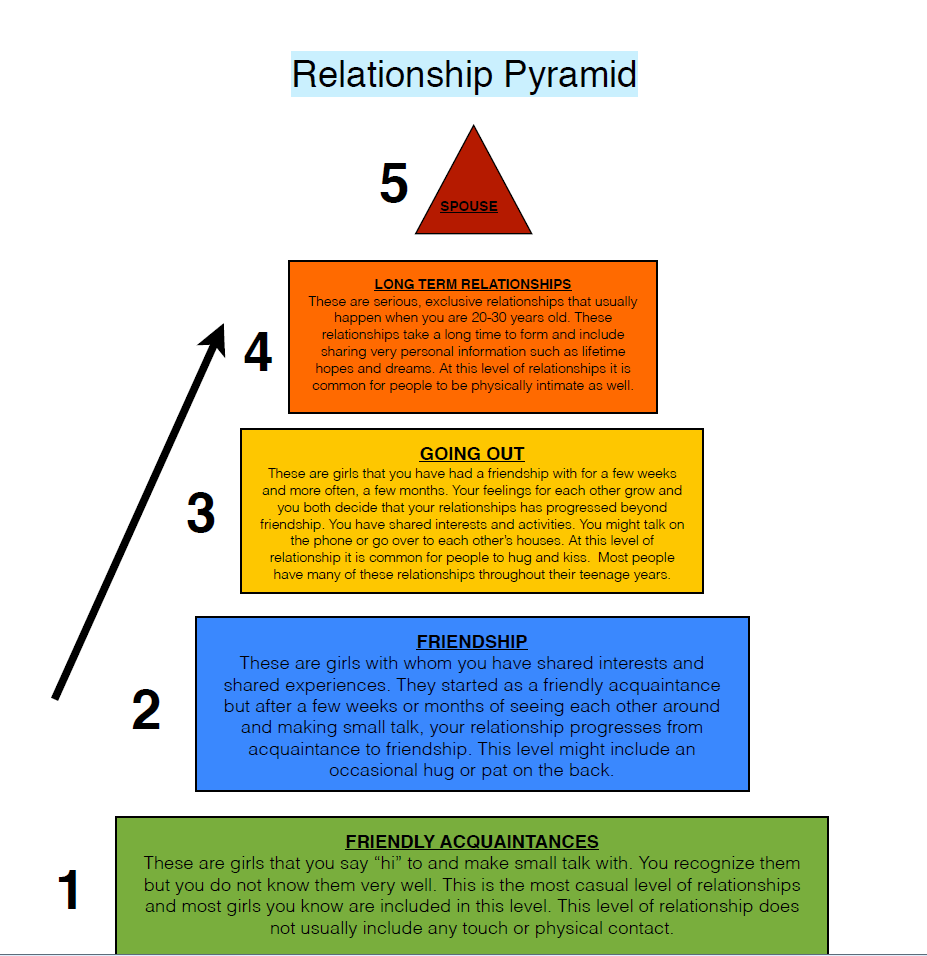
Relationship Pyramid
Here is an example of a five point scale that was developed by April Keaton, LCSW, to explain the different levels of relationships. The pyramid shape was used to convey that you might have a lot of “friendly acquaintances” but much fewer “long term relationships”. It was important for this person to connect the level of the relationship with the level of intimacy so you see examples of intimate behaviors at each level of the pyramid. There’s also an element of time built into the descriptions. You wouldn’t have to start with pyramid filled out. You could start with a blank pyramid and support an individual with filling in the levels. You could add names of individuals at each level. You can download the pdf of this image by clicking here.
How to be in Middle School
In the crushes unit of Human Sexuality 101 for middle school, we used this video on handling a crush. We were talking about this during The Birds and the Bees workshop in Champaign today and it reminded me that I should probably highlight this resource on its own.
The How to be in Middle School series covers topics such as how to invite someone to a dance, how to go to a dance, first kiss, handling kissing games, and many more topics (including less relationshipy videos like how to clean your room quickly). The videos present clear rules and how to guides. We planned an activity around the rules in our group.
Sexuality Education Policy- An Example
I know many of you are interested in writing a sexuality policy for your agency to help guide decisions around teaching human sexuality. Here is an example I thought might be helpful from Florida’s disability council.
What I really like about this policy is that they organized it around student responsibilities and educator responsibilities. I think this is a nice model for conceptualizing a sexuality policy. Below, I’ve highlighted the “Quick Reference Fact Sheet on Choice and Education Instruction” which is part of the policy.
Free Curriculum and Parent Resources
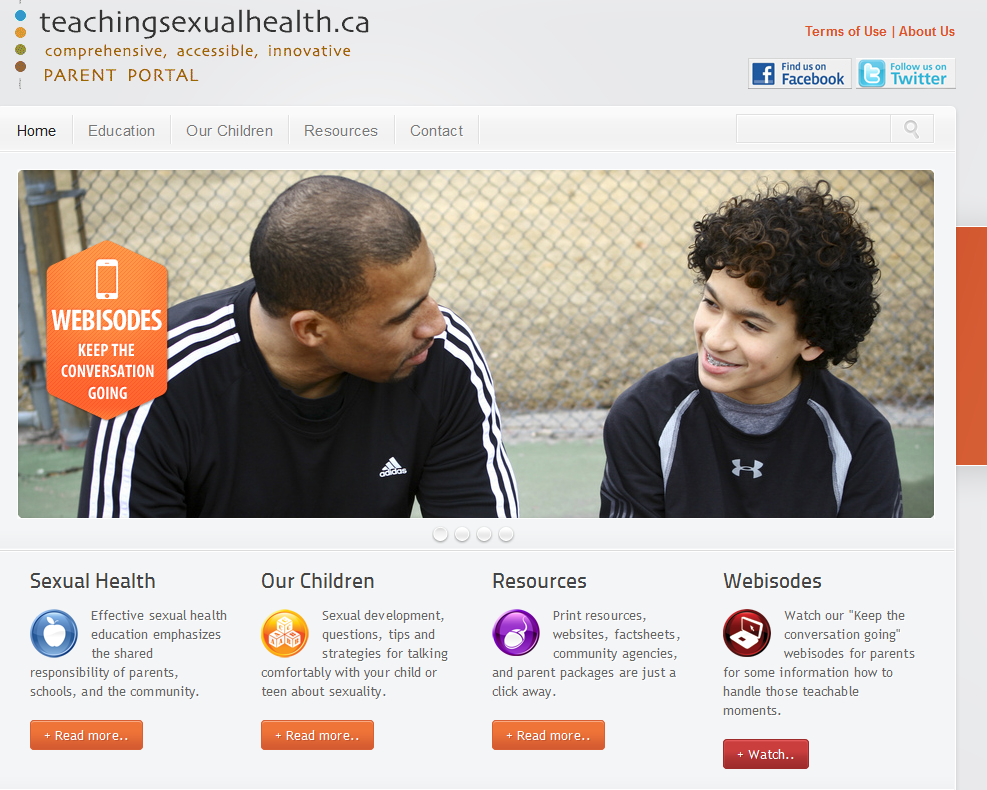
A lot of the curriculum we used for the puberty unit of our Human Sexuality 101 group was adapted from “Teaching Sexual Health“. They are a group out of Canada that provides support for teachers and parents. I used their general curriculum but they also have a curriculum for students of differing ability levels. They have great resources for parents including “webisodes” that give examples of parents talking to kids about sexuality topics. The website is very well organized and easy to use!
Menstruation Plan
In preparing for the puberty section of Human Sexuality 101 I was looking at research on methods for teaching young girls with ASD about menstruation and came across an article using Social Stories (only a preview of the article is available for free).
In short, here’s the Four P Plan for Period Support
1. Prepare a period kit
2. Preinstruct (perhaps using social stories)
3. Practice
4. Plan for pain relief
Klett & Turan used a combination of three Social Stories adapted from Mary Warbol’s “Taking Care of Myself: A Hygiene, Puberty, and Personal Curriculum for Young People with Autism” (this book is not just for girls). They implemented the social stories before menarche (first period) and then planed to revisit them after menses began. These stories focused on growing up, what a period is, and how to take care of a period (I would reprint them but you have to be careful about Social Stories and their copy rights). They also used simulations with the girls using red syrup so they could practice changing a “used” menstrual pad. They reviewed the social stories over several days and completed simulations over several days. They also used different types of menstrual pads in case the girls did not always have access to the same type. They also asked the children questions about menstruation to check for comprehension (such as “What is the blood from your vagina called?” and “Do you need to wear a pad when you don’t have your period?”). This method proved effective in these case studies and the parents who implemented the plans where happy with it.
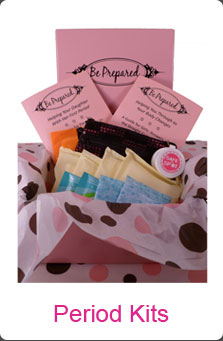
I have a good friend who made a menstrual kit for his daughter to start keeping in her book bag around age 11. In a zip lock bag he placed a change of underwear, menstrual pads, Tylenol, a change of shorts, and bathroom wipes. That way, if her first period was at school, she had everything she needed and wouldn’t need to ask for support unless she wanted to. I personally think this is a wonderful idea and wish my mom had thought of it when I was middle school! This idea has caught on because you can buy premade kits. Also, they make underwear that help keep menstrual pads in place.
I have heard that some families also preemptively use pain relief to support with discomfort and PMS. Not all girls associate the physical discomfort with their period or are able to communicate “I feel bloated” or “I have cramps.” Although these are phrases that you can teach and prompt, some families just start using an over the counter painkiller two or three days before they anticipate the start of the period. This isn’t foolproof because, especially when girls first start getting their period, they may have irregular cycles.
Teaching Videos
There are many videos out there that are excellent for instruction and also for expanding your personal understanding of sexuality topics. I have a few on my resource list but wanted review a couple that are available. Click on the link to be taken to the page where it can be purchased. I’ve included previews and prices (you can get the videos cheaper for personal use- these are the instructional prices).
Is Love Enough? Is a documentary about parenting with disabilities. It’s $195.00
Monica and David is a documentary about a couple with Down Syndrome. $200 (but sometimes is on sale for $100).
The Kiss is a 52 second video featuring two actors with Down Syndrome. It is short and poignant.
Bumblebees is a short video made by an individual with autism following his first date.
Bumblebees from Jenna Kanell on Vimeo.
Despite being told as a child he would never speak or walk, Vance accomplished what doctors thought was impossible. But now he has a new challenge: dating.
Made for the 48 Hour Disability Film Challenge.
Prerequisites:
Genre – Romantic Comedy
Setting – Living room / park
Elements – Comb / balloon
Theme – A reunion
When I see “Sexuality and the Arts” on the SIECUS topics list, I admit, I can get a little overwhelmed with trying to explore this topic in a way that is relevant to individuals with intellectual and developmental disabilities. But I think the Sprout Movie festival is a great place to start. Here is one of their Poetic Shorts, “How do I know?”
Sex Ed in the News
ABC just did an article about teaching human sexuality to students with intellectual disability. They focus on a New York school that has incorporated teaching sexuality into their mission. One of my favorite lines from the article is that “Sex ed is not a goal, but a process.” They mention in the article that New York City schools mandate sexuality education and I just wanted to comment on this, based on my experience in Illinois.
Although there is not specific information that addresses the willingness of school administrations to offer comprehensive sexuality education to individuals with ASD, there is information available for offering this type of education in general. As part of the Affordable Health Care Act federal funding was opened up for comprehensive sexuality education called PREP- Personal Responsibility Education Program as well as Title V- abstinence only education meaning that states get to choose the type of sexuality education offered and may offer both (SIECUS, n.d.). For fiscal year 2010, 43 states applied for PREP funding which means their sexuality education must cover abstinence, contraception use, healthy relationships, adolescent development, finical responsibility, educational and career success, and healthy life. Until PREP funding was aproved funding was only available for Title V abstinence only education.
Even if comprehensive sexuality education is being offered in the schools, that does not mean it is being offered to individuals with disabilities. Under the Individuals with Disabilities Education Act, students with Individual Education Plans have access to adapted general education curriculum. At this point, my understanding is that, in Illinois this means a student can participate in a general education sexuality class room unsupported, with an aide, or opt out. If the student (or more accurately, the student’s guardian), opts out, then the child’s special educator is required to adapt the curriculum with parental permission. There are no standards for what that adaptation must cover. Teachers may be working with professionally developed curriculum for individuals with disabilities, independently adapting a general education curriculum, or may be creating their own curriculum from scratch. Due to the diverse needs and strengths among individuals with students with disabilities there may be great variability in how long it takes to cover various topics, to what depth topics can be covered, and what further adaptations may be needed.
Autism Now- A Resource
Autism Now isn’t specifically focused on topics related to sexuality but they do have some great resources I thought I could highlight.
They have a series of webinars related to sexuality topics. If you click on the link you’ll be taken to a registration box that you have to fill out to view the material. I’ve also included links to the slides- this is a direct link, you don’t need to register.
Slides: “Sex is when people use their bodies together to share love and pleasure.”
Slides: “Research says that the IQ has to be below 50 before you can say IQ and parenting skill are connected (Feldman& Tymchuk, 2002).”
And they just had one on May 15th, but you’ll have to keep an eye on the archive list because it’s not up yet- “Let’s Talk About Sex: Discussing the Topics of Sex, Protection, and/or Sexuality from Three Unique Viewpoints”
In addition to the webinars they have some general “fact sheet” style info that might be helpful on topics such as dating, marriage, divorce, relationships, sexuality, parenting, and friendships. These include general information as well as parent tips.
I was really impressed by the quality and quantity of ASD related resources on a variety of topics so it’s a good one to have in your tool belt.
I just wanted to link to one other power point presentation that I thought had a lot of good information. “Sexuality & Sexuality Instruction with Learners with Autism Spectrum Disorders and Other Developmental Disabilities” by Peter F. Gerhardt, Ed.D., Director The McCarton Upper School