Accessible Sex Toys

While many other household items are changing and being developed more accessibly, any industries regarding sex often stay avoided. Sex is such a taboo topic in general, even more so in the disabled community. There are many rumors and assumptions made about sexuality in the disabled community, the most prevalent myth is that people with any type of disabilities don’t have sex or experience sexual pleasure. However, that’s not true. Sex is a basic human function, and everyone, regardless of ability, is entitled to it. Many times, sex toys are extremely inaccessible for people with physical and intellectual disabilities. Whether they’re not easy to physically work with, or they’re too stimulating, sex toys aren’t usually designed with all types of bodies in mind.

Come As You Are is an online business specializing in high-quality, ethically sourced, and affordable sex toys for all ability levels. This company has a wide variety of sex toys that are designed to work for people with all types of disabilities. When making their toys, they keep topics like mobility, privacy, fatigue, and many others in mind when creating sex toys. They are very transparent about how their toys are made, and they take suggestions about how to better improve their toys and make them more inclusive. They say, “It’s our experience that doesn’t come ‘naturally’ to everyone. We consider it our responsibility to do the hard work that makes it easier to explore.”

On top of this, their website has many articles and resources that talk about inclusivity in the sex industry. Their articles discuss choosing the right sex toy depending on your ability, information about condoms, and many other aspects of sexuality. They encourage embracing sexuality healthily, despite your skill level, and are pushing the sex industry in a more inclusive direction!

The website’s home page is linked below:

https://www.comeasyouare.com/

Also, here’s more information from our team about the importance of affirming sexual expression! (article linked below)

https://asdsexed.org/2013/02/01/affirming-sexual-expression-accessible-sex-toys/
Oak Hill Positive Choices

Oak Hill Center for Relationship and Sexuality Education (CRSE) looks to educate and increase access to important sexual health information through various preventative programs. They also aim to decrease the vulnerability to sexual abuse that the intellectual/developmental disability community endures. They offer different curriculums, workbooks, parent/caregiver workshops, professional development workshops and therapeutic education.

Their most recent curriculum, Positive Choices, is designed for secondary students and aims to improve critical judgement about sexual health and relationship safety. On top of this, students will learn life skills, safe boundaries, women’s and men’s health, healthy relationships, and sexuality. This curriculum can be purchased on the Oak Hills website and costs $430. The teacher’s manual can be purchased for $180, and the student workbook is $25. Information is linked below: http://relationshipandsexuality.oakhillct.org/positive-choices/

Open Future Learning

Open Future Learning is a company that offers a wide variety of online training for staff, or anyone else working with individuals with disabilities. They offer modules in abuse prevention, communication, advocacy, and many more topics. They have staff training modules, 30 minute programs, and an audio learning module. Membership can range from $112-$2263 per month, depending on the amount of active users. Linked below is Open Future’s Homepage.

https://www.openfuturelearning.org/index.cfm?fuseaction=login.home

Sexual Safety Series Resource Flyers

These resource flyers range from sex education to online safety. Some of the resources are Delaware specific but email us if you’d like one updated for your area. You can download PDFs here:

Elevatus Training: Online and In-Person Training to be a Sexuality Educator

Elevatus offers a variety trainings staff, direct support professionals, educators, self-advocates and parents to teach sexuality education to children and adults with developmental disabilities. In addition to their trainings, Elevatus has a sex education curriculum that can be purchased.

Here are examples of some of their trainings and the costs:

  • For Staff and Professionals – Developmental Disabilities and Sexuality 101 ($397)
  • For Parents/Guardians – Talking With Your Kids: Developmental Disability and Sexuality ($47)
  • In-service/live workshops and a 3-Day Certificate Training ($725) for anyone who wants to lead sexuality education classes with people with developmental disabilities.

To get more information about Elevatus Training:-https://www.elevatustraining.com/

Friendship & Dating Program: Helping Children and Adults to Acquire Relationship Skills

The Friendships & Dating Program (FDP) offers inclusive teaching plans for individuals with intellectual and developmental disabilities. A unique aspect of this program is its emphasis on preventing interpersonal violence. There is a version of this program for youth with serious emotional disturbance. The FDP focuses on skill development through experimental learning and group activities with an interactive 10-week curricular plan. Interested groups can purchase the curriculum on its own ($600) or purchase the curriculum in combination with a train the trainer support provided live online ($1,800). You can find more information about the FDP from the below link. Some module illustrations are available on the website.

https://www.fdprogram.org/

More Info. Less Weird. AMAZE Takes the Awkward Out of Sex Ed

These days, it is hard to find an age appropriate content about sex, dating and abuse. Children have questions about their bodies, gender and reproduction. Teenagers worry if their bodies are developing normally or not while older adolescents struggle with peer pressure, changing relationships and emerging sexual feelings. AMAZE is an amazing website for parents and educators which helps them to expose their child to age appropriate content about sex through short videos. The website provides an insight to young people to successfully understand puberty, healthy body image, distinguish between healthy and unhealthy relationships, concepts of consent and mutual respect. Video topics are designed to meet the learning objectives outlined in the National Sexuality Education Standards.

Parents are the primary sexual educators of their children. By answering children’s questions, a parent let them know that you are “askable” and establishes an open line of communication that will serve you and your children well as they mature into sexually healthy young adults.

AMAZE also has resources for younger children like the parents’ playlist from amaze jr. It is designed to help parents become comfortable and confident talking to their children openly and honestly at any age.

https://amaze.org/

There are some videos for parents reference.

This video will help parents to know when to talk about sexuality with their kids.

Do you think so playing “doctor – doctor” is safe or not? Check this video out which helps you to communicate your thinking and others about this game.

This video will model to the adolescents with disabilities to learn about manage their relationships with person they like or have attractions. This video guide them to deal with peer pressure and make healthy relationship.

This video helps your child to understand their body parts, difference between a male and female, and similarities between boy and girl.

https://youtu.be/wW627gpkWbw

Sex Education for Individuals with I/DD

Sexual Education is known to be a vital part of education that many people with disabilities do not receive. The National Council on Independent Living (NCIL) developed an excellent series of youtube videos aimed to help close this gap. The sex ed for individuals with I/DD project is a 10 part video series that can be seen on youtube. The project contains videos that discuss a range of important sexual information from healthy relationships and consent to how to use a condom. The videos also contain self advocates. Understanding that individuals with disabilities are sexual beings and informing such individuals on all sexual topics is extremely important. The NCIL’s video series is an amazing resource. Linked below is the introduction video to the series. The videos can also be accessed though the Nation Council on Independent Living youtube channel.

NCIL Sex Education for Individuals with I/DD Project video one

Guardianship and Sexuality

This is one of the most common questions  regarding sexuality and disability…

If you are a guardian of an individual with a developmental disability what is your role and legal authority regarding decisions on sexual activity?

According to the National Guardianship Association:

Guardians should apply the professional judgment of qualified clinicians in developing individualized plans. These plans for services and supports should address competencies which the ward possesses, areas where education and
training are required, and current incompetencies which may implicate a duty to protect the individual. What this means in practical terms for professional guardians can be stated in four simple principles:

  1. Know the law and regulations in the jurisdictions of your practice.

  2. Know the bounds of your decision-making authority within your professional standards and ethics.

  3. Know the extent and/or limitations of your decision-making authority imposed by the court.

  4. Utilize treatment teams and ethics committees whenever possible.

One of the important pieces of these guidelines is understanding the law and regulations in your individual state.  Sterilization and abortion are two major sexuality related decisions that often have specific laws and regulations regarding their practice.  These have evolved from a long history of forced sterilization of individuals with disabilities and there continues to be controversy today (for example this recent case).  Other decisions such as access to sexuality education, use of contraceptives, marriage,  procreation, and access to sexual activity are often outside of the purview of the courts.  In these cases  guardians are instructed to use their own judgement based on:

  1.  The decision as the ward would when the ward’s wishes are known or can be established by interviewing the ward, their friends and family, or through a preference stating document such as a living will. Or…

  2. The representatives values and beliefs in order to make the decision they feel would best serve the ward.

And must follow this stipulation:

The surrogate decision maker cannot give consent for sexual activities, but
must protect the rights to privacy for their wards when dealing with issues such as contraception or marriage, if the situation is appropriate.

Healthy Realationships and Autism

healthy relationships and autismA new curriculum called “Healthy Relationships and Autism” is now available from Wesley Spectrum (a behavioral health organization with several locations in the Pittsburgh, PA area). It was designed to teach skills to adolescents and young adults with Autism Spectrum Disorder or cognitive challenges in the areas of self care, sexuality, and relationship development.  Their website has an example lesson to help you determine if it would be right for your students.  They do not publish their pricing information (you have to email them for more information but they will send you a sample packet).

I have not used this curriculum but there is some evidence of it’s effectiveness.  A study published in School and Educational Psychology evaluated this program with six students.  These students showed increases in sexual knowledge which they retained one month after completing the class.

PEERS Program

The Program for the Education and Enrichment of Relational Skills (PEERS) was originally developed at UCLA by Dr. Elizabeth Laugeson, Founder and Director of the UCLA PEERS Clinic, and Dr. Fred Frankel in 2005 and has expanded to locations across the United States and the world. PEERS is a manualized, social skills training intervention for youth with social challenges.

There are four options for getting training in PEERS. (1) The PEERS Certified Training Seminar last two days and is hosted at UCLA.  It is designed specifically for mental health professionals and educators interested in learning and/or implementing the PEERS intervention into their clinical practice. (2) PEERS provides off-site training seminars, presentations or talks for a variety of agencies based on their specific needs.  These may range from 1-4 days, with varying costs. (3) The PEERS Certified School-based Training for Educators is designed exclusively for teachers, school psychologists, counselors, speech and language pathologists, administrators, and school-based professionals who are interested in learning to implement The PEERS Curriculum for School-based Professionals. Attendees will obtain 24 hours of training over 3 days and this training also takes place at UCLA. And (4) PEERS provides off-site School-based training seminars, presentations or talks for a variety of agencies based on their specific needs.  These may range from 1-4 days, with varying costs.

The PEERS program naturally lends itself to sex ed instruction.  For example, the adolescent program focuses on

  • How to use appropriate conversational skills
  • How to find common interests by trading information
  • How to appropriately use humor
  • How to enter and exit conversations between peers
  • How to be a good host during get-togethers
  • How to make phone calls to friends
  • How to choose appropriate friends
  • How to be a good sport
  • How to handle arguments and disagreements
  • How to change a bad reputation
  • How to handle rejection, teasing, and bullying
  • How to handle rumors and gossip

This video features a program that uses PEERS for sex ed

Sexual Safety Resource: Chicago Children’s Advocacy Center

Chicago Children’s Advocacy Center is a program for sexual abuse prevention and response to crisis. They have supports specifically for children with disabilities. They recommend creating a family safety plan, teaching children about sex and sexuality, learning about sexual development, taking to caregivers/program staff about issues of sexuality, and watching others’ behaviors.I like this resource because the focus in on prevention through increasing the viability of sexuality.

ccac-header-logo

The culture that makes it inappropriate to talk about healthy sex and sexuality creates a hidden space where dangerous sexual behavior can take place.  Whenever we’re talking about prevention, I think that it is important to highlight that children and often adults with developmental disabilities cannot prevent their own abuse. Adults and older children with more power and more control manipulate to create situations where they can abuse. Prevention looks like trying to eliminate those spaces and creating opportunities for reporting.  This agency seems to focus on that method and minimize language that blames the victim.

Here is a webinar which aired live on December 9th, 2015 on Safety & Autism: Helping caregivers and providers talk about sexual abuse and prevention.

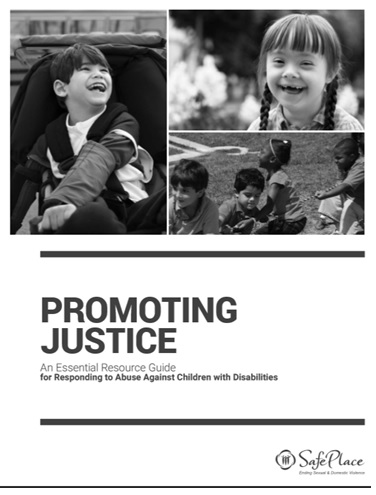
Promoting Justice: An Essential Resource Guide for Responding to Abuse Against Children with Disabilities

We came across a great resource from Safe Place concerning abuse, including sexual abuse, and children with a myriad of disabilities, including neurodevelopmental (ASD,ADHD, intellectual disability), physical and sensory (blindness, deafness), brain injury, and mental health disabilities. This guide poses many questions about communicating and interacting with children with disabilities who may suffer from abuse or neglect. It also offers many suggestions to caregivers, family members, and educators about how to understand specific disabilities in the context of abuse.

You can find the guide here.

8 Week Middle School Human Sexuality Curriculum

Over the summer, I did a 8 week sexuality class with middle school students with autism (3 boys and 3 girls).  I’ve posted each lesson from the curriculum, but I thought I’d link all the posts together so you could get to them in one place.  For each session there is a lesson plan, parent letter, and power point slides.  Some lessons also have worksheets.  I’ve also commented about how the lessons went and some ideas for adaptation.  Click on the links below to go to the posts and access the materials.

Human Sexuality 101 topic

*We sent home a workbook with follow up/supplemental material during this lesson.  The workbook is available on the post.

High School Human Sexuality 101 Week 3: Body Image Lesson Plan

IMG_20120718_152104This lesson plan revolved around teaching what body image means, understanding that people feel differently about their bodies, and that people change how they feel about their bodies over time.  After doing several knowledge based activities, we moved to exploring how the students felt about their own bodies.

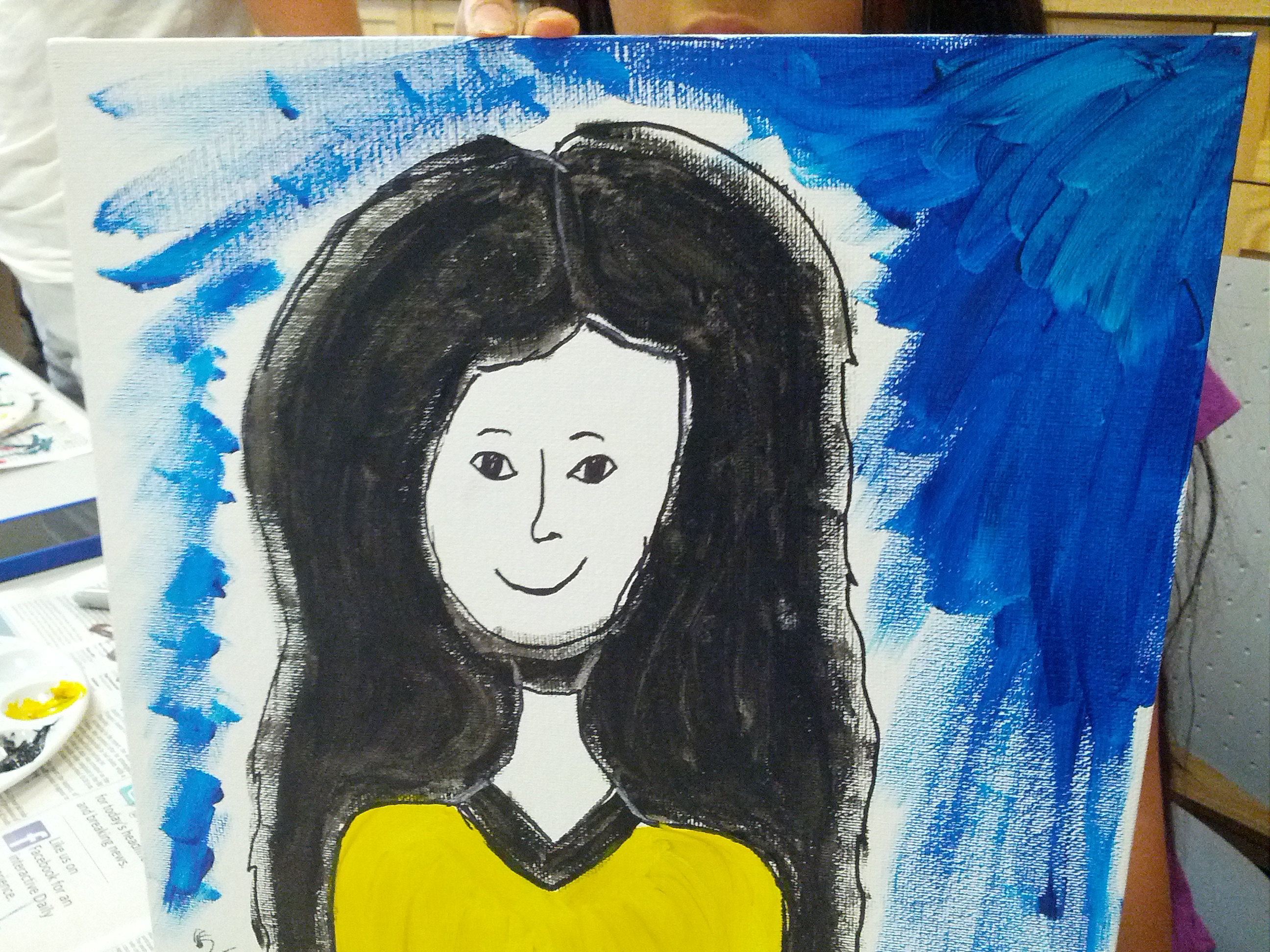
There was one theme that was really relevant for the student we were working with.  She was really interested in her perception of self and others perception of her.   In her self-portrait, she focused on the things that make her her; most of these were things you couldn’t see.

We also read body stories.  Each had a picture of a body.  Just seeing the images was really moving.  We were planning mostly for girls, but I included a story that might be more appropriate for a male audience.  The young woman chose to read the story about the women who was the most traditionally beautiful (not really a big surprise).  This was a story about a woman with chronic illness.  Serendipitously, the body story resonated concepts that this student was working through.

Materials

Lesson Plan

Slides

Parent Letter

Body Stories (all female) from This is Who I Am by Rosanne Olson (her website is http://bodyimagebook.com)

Body Story (male)

Dove Clip