Discover Intimacy Coaching: Reclaiming Connection and Pleasure

Intimacy coaching is a specialized type of relationship coaching that focuses on helping emotional and physical intimacy. Intimacy and connection are essential parts of being human. Everyone deserves the chance to experience it fully. Intimacy coaching offers a supportive, judgement-free space to help individuals or couples explore and deepen their capacity for emotions, physical, and even spiritual intimacy. An intimacy coach helps you reconnect with your desires and communicate your needs. If you’re looking to bring back the spark, try something new, or simply understand your needs/desires better, intimacy coaching is the perfect way to go. 

To learn more about what intimacy coaching does, watch this video.

Here are some intimacy coaches that have great reviews and cater towards people with disabilities. 

Joslyn Nerdahl: Certified Sex Coach and Clinical Sexologist, Physical Disabilities

Joslyn Nerdahl is an intimacy coach who specialize in working with people with physical disabilities. She believes that communication and consent are the foundation of healthy intimacy. She has a passion for helping people learn how to talk about sex openly and provides a safe space for her clients to explore their needs and desires. Her services include intimacy coaching, sex education, and sexual rehabilitation. Learn more about her: Services – Joslyn Nerdahl

Grace Myhill: Intimacy Coach, Neurodiverse Couples Coaching

Grace Myhill is a couples coach and educator who specializes in working with couples where on or both partners are a person with autism. She focuses on each partner experience and validating each other their perspectives. She wants to help both partners work together to build emotional and relation skills. If you want to know more about her work visits her website: https://www.gracemyhill.com/

Dr. Mitchell Tepper: Sex Coach and Educator for People with Physical Disabilities

Dr. Mitchell Tepper is an educator who specializes in working with individuals with disabilities and chronic conditions to help reclaim pleasure and intimacy. His approach focuses on empowerment, inclusion, and accessibility. He emphasizes that everyone, regardless of physical ability deserves access to intimacy, pleasure, and love. To explore his work and resources visit his website: Coaching – Dr. Mitchell Tepper

Amy Gravino: Autism and Sexuality Advocate, Speaker, and Relationship Coach

While Amy Gravino is not an intimacy coach, she still advocates for autism sexuality. She is an educator who empowers autistic adults to embrace healthy relationships, self-advocacy, and sexual expression. If you want to learn more about her advocacy or watch one of her videos visit: A.S.C.O.T Consulting

I think intimacy coaching is a great way to explore yourself, your relationship, and spice things up.

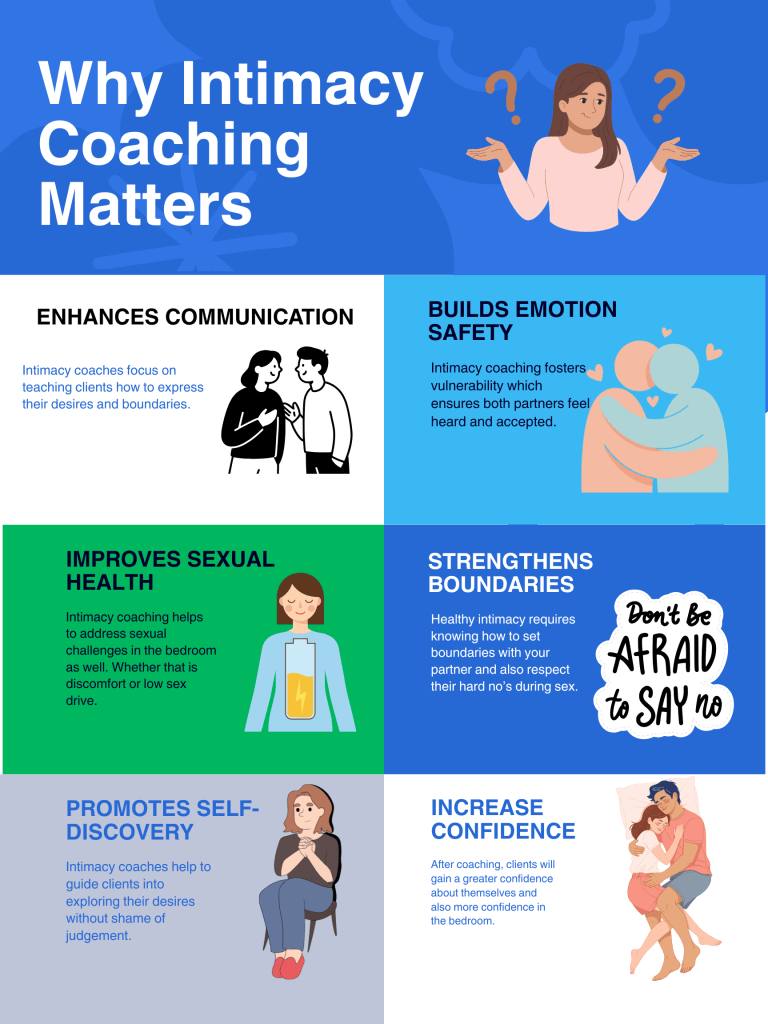
Why intimacy coaching matters. Enhances communication. Intimacy coaches focus on teaching clients how to express their desires and boundaries. Builds emotion safety. Intimacy coaching fosters vulnerability which ensures both partners feel heard and accepted. Improves sexual health. Intimacy coaching helps to address sexual challenges in the bedroom as well. Whether that is discomfort or low sex drive. Strengthen boundaries. Healthy intimacy requires knowing how to set boundaries with your partner and also respect their hard no’s during sex. Promote self discovery. Intimacy coaches help to guide clients into exploring their desires without shame of judgement. Increase confidence. After coaching, clients will gain greater confidence about themselves and also more confidence in the bedroom.

How to Guide on Flirting Online

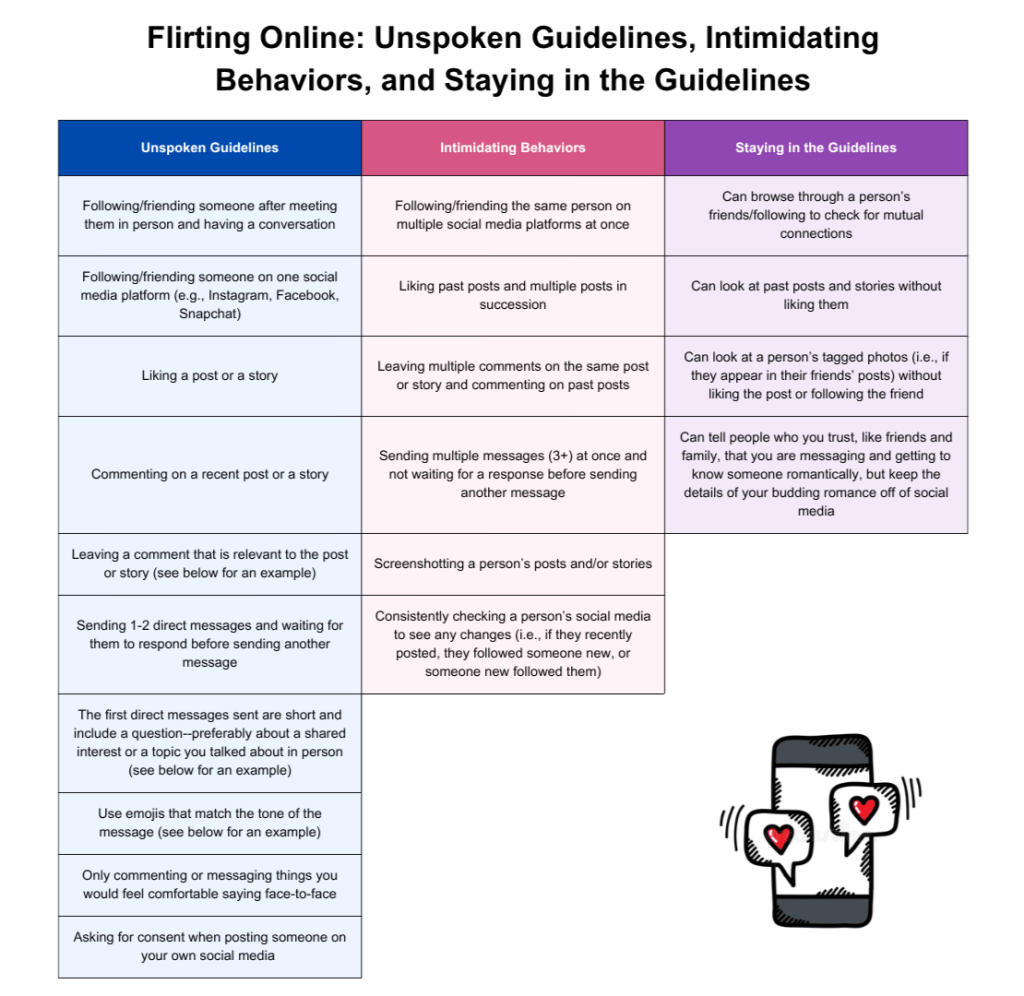
Social media can be difficult to navigate as there are unknown “rules” and behaviors that are widely followed when first interacting with others, especially those you are interested in romantically. This aid demonstrates several unspoken guidelines, intimidating behaviors, and tips on staying within the guidelines on social media when trying to flirt. It is worth mentioning that this is not a comprehensive list of all guidelines and intimidating behaviors, but rather a guide to help you talk to your crush online in a fun, respectful way that keeps everyone comfortable. As a 21-year-old who has been online from a young age, some of these guidelines are based on my own experiences and knowledge.

Table of unspoken guidelines, intimidating behaviors, and tips on staying in the guidelines. From top going down, unspoken guidelines: following/friending someone after them meeting in person, following/friending someone on one social media platform, liking a post/story, commenting on recent post/story, leaving relevant comments on posts/stories, sending 1-2 direct messages and waiting for a response before sending another message, the first direct messages are short and include a question, use emojis that match message tone, only commenting/messaging things you can say face-to-face, and ask for consent when posting someone. From top going down, intimidating behaviors: following/friending someone on multiple social media platforms at once, liking past posts and multiple posts in succession, leaving multiple comments and commenting on past posts, sending multiple messages at once and not waiting for a response before sending another message, screenshotting posts and stories, and consistently checking a person's social media for any changes. From top going down, staying in the guidelines: can browse through a person's friends/following, can look at past posts and stories without liking them, can look at a person's tagged photos without liking the post or following the friend, and can tell people who you trust, like friends and family, that you are getting to know someone, but keeping the details of your budding romance off of social media.

Example of a relevant comment: Someone posts a photo of them graduating school and you comment, “Congratulations!”

Example of a direct message: You talked to someone last week about a book series and sent this message: “Hi! It’s [your name], we talked last week about [book series]. I started reading it and really liked it. Do you have any other recommendations?”

Examples of using emojis: (1) You are messaging your crush about a movie that you both recently watched and talking about a scene that left you in disbelief: “I can’t believe that happened 😭 I was not expecting it at all!” (2) You made plans to hang out with your crush in person and sent this message: “I’m excited to hang out on Saturday 😊 See you then!”

Teen Vogue has a list of questions to keep the conversation going with your crush, whether you’re looking for something low-pressure, flirty, deep, random, interesting, or just plain fun.

The Napoleon Cat Blog gives some tips for commenting on someone’s post, showing different examples for different post scenarios. Some of them are intended for friends, but can still be used for your crush’s posts. Their 35 Short Comments for Instagram section is best used when you first start commenting, as they are simple, not intimidating, and friendly.

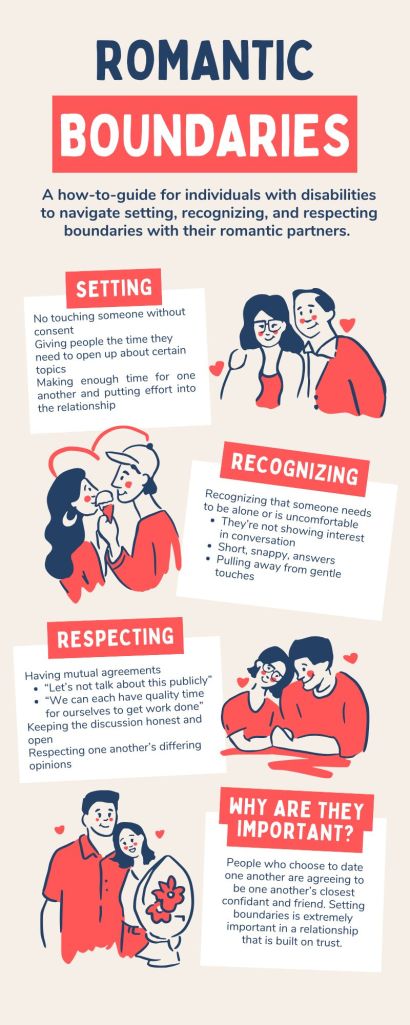
Guide to Romantic Boundaries

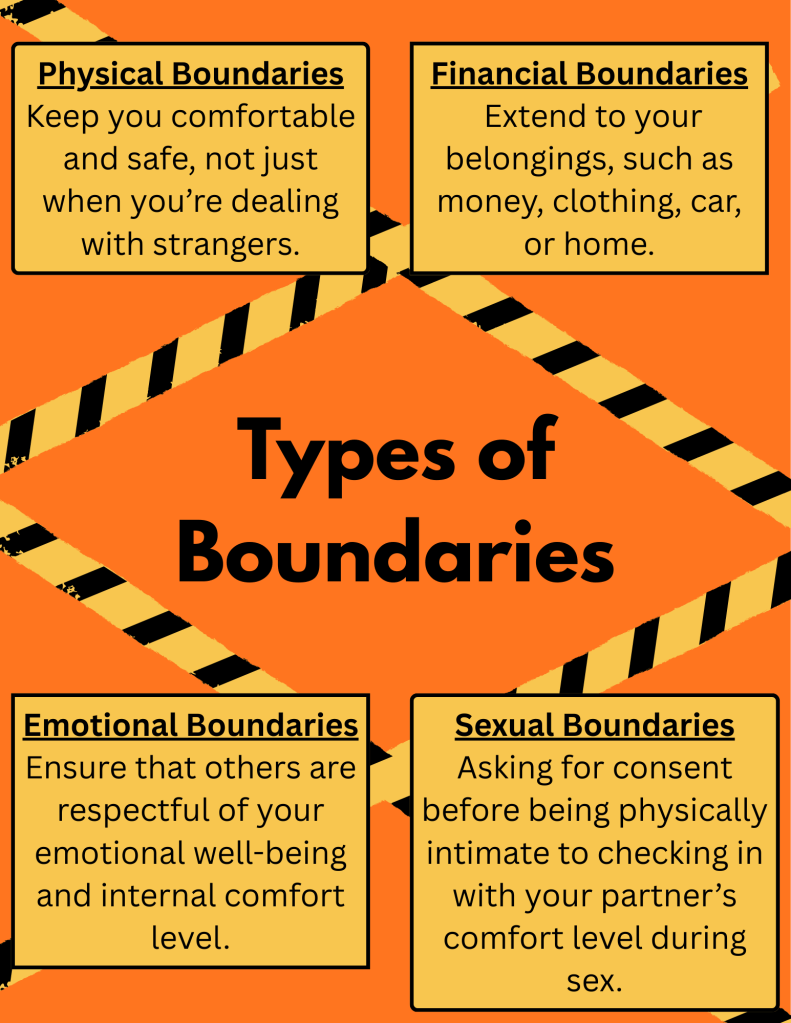
Red and white infographic: a how-to-guide for individuals with disabilities to navigate setting, recognizing, and respecting boundaries with their romantic partners.

We have created a how-to-guide for individuals with disabilities to navigate setting, recognizing, and respecting boundaries with their romantic partners.

The setting in which you touch someone matters. Do not touch someone without their consent. It is also important to give people time to open up about certain topics and give people time to put in effort into a relationship.

Recognizing that someone needs to be alone or is uncomfortable can take time to learn. If someone is not showing interest in a conversation, if they are giving short, snappy answers, or if someone is pulling away from gentle touches are all signs that someone may be uncomfortable or want to be left alone.

Respecting one another’s differing opinions is very important. Keep a discussion honest and open, and have mutual agreements on when and were to have certain conversations.

Finally, setting boundaries are important because you want to build trust in a relationship. This post includes an infographic that can support someone’s quest in finding and maintaining romantic relationships and boundaries.

To support teaching these concepts, we have created a presentation and lesson plan that are free to use.

How to Handle Rejection: Tips, Resources, and Lesson Plans

Listed below are a slideshow, worksheet, and plain-language guide designed to help people understand and cope with rejection. These resources explain what rejection can look like and explore how people react when they feel rejected. You’ll also find ways to cope and work through those feelings in healthy ways.

Resources:

Part 1: Slideshow Rejection 101

Part 2: Rejection worksheet

Part 3: Plain Text Rejection Guide (No formatting)

Supporting Resource: 10 tips for dealing with romantic rejection

Rejection is a normal part of life, and it’s something everyone goes through. You don’t have to run away from it, you can face it and grow stronger from it.

Resources for Conversations about Consent

What is consent?

According to Planned Parenthood, sexual consent is “an agreement to participate in sexual activity. Consent lets someone know that sex is wanted.”

Sexual activity can be a lot of different types of activities, from kissing to sexual intercourse to oral sex.

Judging consent between partners, as well as self-reflection about consent, is crucial for sexual activity. This article will provide resources for accessing and reflecting on consent, and ensure that consent is an easier conversation.

A very helpful tool to gauge consent is the Verbal Informed Sexual Consent Assessment Tool. This source shares important reflection questions to analyze whether someone can give consent, giving a checklist as well as examples of questions to ask.

For more information about legality and restrictions about consent, refer to our webpages article about the Capacity to Consent to Sexual Activity.

The Conversation of Consent

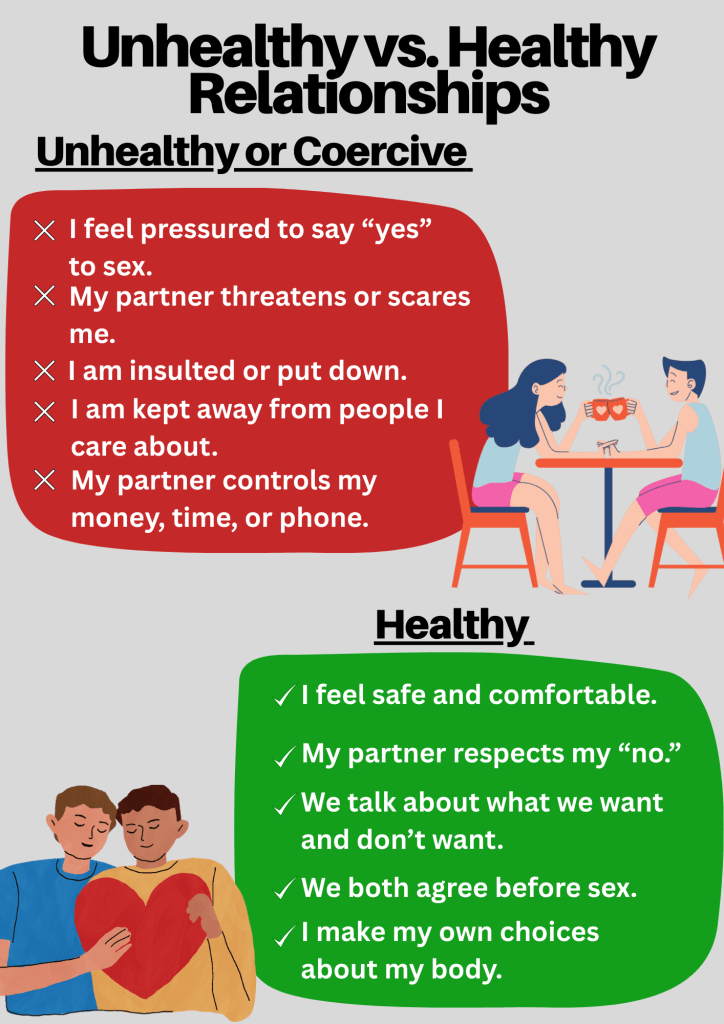
Consent can be a very simple conversation. Once you know that you and your partner are capable, informed, and confident in making decisions about sexual behaviors, have a conversation with your partner. Ask your partner what their boundaries are, and what sexual behaviors are okay with them. Sexual behaviors are a continuous conversation, that is that the conversation will continue to come up, and the result of the conversation can change. If you or your partner consents to kissing one day, and says “no” to kissing the next day, consent is being taken away and kissing shouldn’t continue to happen until consent is given again. For tools about how to revoke consent, refer to our webpage graphic about Ways to Say No .

This website from Planned Parenthood gives more examples of how to talk with your partner about consent, including examples such as how to check in on consent.

These two videos explain consent and boundaries. The second video also gives an example!

ASL Sex Education Resources from Planned Parenthood

Last year, Planned Parenthood released a series of 4 videos that cover 4 different topics: consent, body image, identity, and birth control/sexually transmitted infections. These videos are linked below, and are available for free on Youtube. The group of friends in each video communicate in American Sign Language, and closed captioning is available in Spanish and English.

This first video is about consent. Ciara and Dev are getting into a relationship, and Ciara discusses with her friends how to set boundaries without feeling “mean”, by being honest, clear, and kind.

This second video is about birth control and sexually transmitted infections. One of the friends, Ciara, tells Ava that she is ready to have sex with Dev, and Ava and Ciara discuss the steps to follow before having sex. First, they discuss STI testing before having intercourse, and then acquiring birth control. Dev, Em, and Bo also talk about condom use, and Em explains that when at the doctor, they are legally required to provide an interpreter for those that are Deaf or hard of hearing.

This third video discusses identity; sexual orientation, gender identity, and Deaf identity. There is a conversation about pronouns as well as owning a Deaf identity between a group of high-school-aged friends.

This final video discusses body image. Two of the high-school-aged friends in the group struggle with their body image, one of which is also struggling with what to wear to a pool party as a transgender person.

Woodbine House

While the mainstream is becoming increasingly aware and accepting of disabilities, there is still a lack of representation. People with both physical and intellectual disabilities rarely ever see people like them in books, movies, on TV, or in many other forms of entertainment. On top of this, resources regarding sexual health, relationships, and puberty for disabled individuals practically don’t exist.

Woodbine House is a publishing company that specializes in informational books for individuals with intellectual disabilities. They have many books aimed at all different age groups that provide information on an array of topics pertaining to disabilities. On their website, they have different sections for Down Syndrome, Autism, and ADHD/ADD. Some of their sexual health based books include: Teaching Children With Down Syndrome About Their Bodies, Boundaries and Sexuality, Boyfriends & Girlfriends: A Guide to Dating for People with Disabilities, and A Boys/Girls Guide to Growing Up. These books help teach people to identify body parts, how to identify/express emotions, personal hygiene, dealing with puberty, relationship safety and many other things.

Every one of their books features people with the disability they’re discussing, and they provide accurate and accessible books for all ages. These books are non-clinical and easy to read, and they are intended for everyday use. On top of this, they’re extremely accessible and informational. This company consistently provides parents and children with informational books that are practical, empathetic and empowering, and they push disabled issues into the public eye. It is a great example of increasing representation and inclusivity in media!

The website is linked below:

https://www.woodbinehouse.com/

Sex Ed Rescue

Properly educating children on sex, puberty, and many other related topics can be challenging for parents. Many parents struggle with how they should speak to their child about these topics, and when the time is right. Sex Ed Rescue is a YouTube channel designed to educate parents on how to talk to their kids about these topics. This channel includes instructional videos, Q&A’s, children’s book reviews, and many other educational resources. It is a great resource to help parents educate their children on sex. It also helps to create a more age-appropriate environment for the child, and encourages comfortable communication between the child and the parent.

Linked below is the channel’s introduction video and the channel’s homepage.

Sex Ed Rescue: Homepage

Wait, What: A Comic Book Guide to Relationships, Bodies, and Growing Up

The recently released comic book, “Wait, What: A Comic Book Guide to Relationships, Bodies, and Growing Up” by Heather Corinna and Isabelle Rotman gives insight to a sexuality, gender, and related issues in an inclusive and fun format. From the publishers:

“Join friends Malia, Rico, Max, Sam and Alexis as they talk about all the weird and exciting parts of growing up! This supportive group of friends are guides for some tricky subjects. Using comics, activities and examples, they give encouragement and context for new and confusing feelings and experiences.

Inclusive of different kinds of genders, sexualities, and other identities, they talk about important topics like:

– Bodies, including puberty, body parts and body image
– Sexual and gender identity
– Gender roles and stereotypes
– Crushes, relationships, and sexual feelings
– Boundaries and consent
– The media and cultural messages, specifically around bodies and sex
– How to be sensitive, kind, accepting, and mature
– Where to look for more information, support and help

A fun and easy-to-read guide from expert sex educators that gives readers a good basis and an age-appropriate start with sex, bodies and relationships education! The perfect complement to any school curriculum.”

Healthy Realationships and Autism

healthy relationships and autismA new curriculum called “Healthy Relationships and Autism” is now available from Wesley Spectrum (a behavioral health organization with several locations in the Pittsburgh, PA area). It was designed to teach skills to adolescents and young adults with Autism Spectrum Disorder or cognitive challenges in the areas of self care, sexuality, and relationship development.  Their website has an example lesson to help you determine if it would be right for your students.  They do not publish their pricing information (you have to email them for more information but they will send you a sample packet).

I have not used this curriculum but there is some evidence of it’s effectiveness.  A study published in School and Educational Psychology evaluated this program with six students.  These students showed increases in sexual knowledge which they retained one month after completing the class.

8 Week Middle School Human Sexuality Curriculum

Over the summer, I did a 8 week sexuality class with middle school students with autism (3 boys and 3 girls).  I’ve posted each lesson from the curriculum, but I thought I’d link all the posts together so you could get to them in one place.  For each session there is a lesson plan, parent letter, and power point slides.  Some lessons also have worksheets.  I’ve also commented about how the lessons went and some ideas for adaptation.  Click on the links below to go to the posts and access the materials.

Human Sexuality 101 topic

*We sent home a workbook with follow up/supplemental material during this lesson.  The workbook is available on the post.

High School Human Sexuality 101 Week 4- Crushes

 During week 4, we focused on understanding crushes.

There were three activities for the participants this week:

Crushes

What is a crush? 

The participants first brainstormed things that a person with a crush might feel or think. Participants had different levels of understanding on what having a crush meant to them. The purpose of this activity was to help the participants to understand that crushes are a special set of thoughts and feelings about another person. We later discussed thoughts and ideas that the group may have that may be unsafe when it comes to having a crush.

How to deal with a crush?

We used three videos to help the participants to understand how to deal with a crush. The videos covered these topics: What if you like a friend, How to tell if a guy likes you, and How to get a guys attention. These videos give concrete ways to deal with a crush.

Turning someone down

We used a video about how to say no to deal with a variety of situations when it comes to turning someone down.

For more information and activities on crushes visit our Human Sexuality 101 Week 5- Crushes and Adult Human Sexuality Week 3- Crushes curriculum

This Week’s Material

Week 4 Powerpoint

High school Human Sexuality 101 Week 5- Intimacy

Intimacy Intimacy was the focus of week 5. This concept can be difficult to understand because it is very broad so this is how we talked about it in our class.

We talked about how intimacy can be divided into two parts: physical and emotional. Physical intimacy involves expressing ones feelings for another person through a physical manner (holding hands, hugging, kissing, and sexual activity). While emotional intimacy involves the feelings towards another person. It is based on how comfortable you are with someone and how much you can share with them. It is important to understand that there are levels to intimacy and that it is not necessarily just for two people in a dating relationship.

For this week’s activities, we opened up with a discussion on the numerous ways to have intimacy with someone.  During group time, our plan was for participants to create a “Intimacy Chart”.

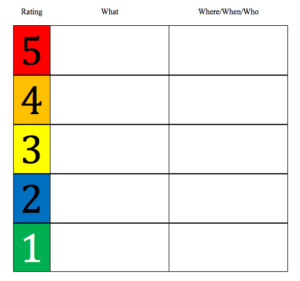
Intimacy Chart

We provided them with pictures displaying different types of intimacy ( holding hands, hugging, etc.) and asked them to write down how each of the pictures made them feel. After that we arranged the picture in order to what we felt would be the natural progression of relationships. To finish off the activity we categorized  each picture based on whom we are comfortable doing those actions with. The main purpose of the “Intimacy Chart” is to help the participants to visualize the different types of intimacy.

Although this was the plan, one of our students had a different idea of how she should do this activity.  She asked for a folder and then decorated it with her boyfriends name.  She then put the different acts of intimacy she felt comfortable with in the folder.  At first, she didn’t want to share which behaviors she had chosen, but then she decided that she would share.  What a great spontaneous adaption!

For more information on intimacy visit our Intimacy Activities and Adult Human Sexuality Week 6- Physical Intimacy and Human Sexual Response

This Week’s Material

Parent Letter Week 5

Intimacy Powerpoint

Adult Human Sexuality Week 3- Crushes

Where do you meet_1why notice_2to talk or not to talk _3approach _4Intersted or not _5road map _6say no _7

The main activity this week was a series of worksheets designed around walking participants through the steps of having a crush: places to meet someone, why you notice someone, deciding to talk to them or not, signs of being interested, approaching someone, asking out on a date, and saying “No”.   Probably the most difficult question on the worksheets was, “why do you notice this person?”  Many of the participants focused on things the would like if they got to know someone.  It took several prompts, but they were able to start thinking about the things they notice about others, the things that draw their attention.  When we got to different ways to approach someone there were many questions on bar etiquette.  We talked about buying drinks for others, when it’s expected to approach people and when it’s not, and the difference between the bar sitting area and table sitting area.  We didn’t get to our final activity, but were were going to sequence the road map with pictures of couples at different stages.  We have a little bit of a time management problem because there’s no clock in the room.  It’s the little things!

We gave them two additional resources this week.  First we sent them to a website on how to build self confidence.  We also suggested the book, What Men With Asperger Syndrome Want to Know About Women, Dating and Relationships by Maxine Aston.

Get all the materials for this weeks lesson

Adult Human Sexuality Week 4- Dating

worksheetThe previous week focused on crushes so this week’s topic, dating, was a natural extension.  We did a lot of role playing and it went wonderfully.  We were able to pull out parts of the role play to reinforce many of the different concepts.  The last time I had done role playing was with middle school students- adults are just so much different to work with.  They took the role plays very seriously and put a lot of effort in.  One of the actors did turn out to have a comedic streak so the activity was fun as well as thoughtful.

We also did an activity where we asked participants to think about the characteristics in a relationship that were most important to them.  We had a couple red flags on the list (like one about physical mutuality) and they were all tuned into why that is important.  This activity lead to a nice open discussion where we talked about other items on the list that were important to us.  For the most part, people in the group are really centered on having similar interests and values.

Free free to use the materials we’ve developed.

Materials for this week