Adult Human Sexuality Week 5- Power in Relationships

power in relationshipsFor those of you who have come to a workshop, this activity was similar to what we did in the workshop.  We thought about power and control in relationships and specifically the benefits of having more power, benefits of having less power, drawbacks to having more power, and the drawbacks to having less power.  Once we got it all up on the board we used put a circle in the center and talked about how different situations would be red flags that a relationship would be unsafe.  We also did a shortened version of the “What Should I do Worksheet” and role played some of the different scenarios (like one friend calling another friend because her boyfriend just told her there was a greater age difference than she assumed).

We want more people to get good sexuality education so feel free to use our materials.  If you improve on them, let me know!

This Weeks Materials

One of the participants in our group loves to do trainings and so we included a online training program to identity dating violence in teen relationships. You may find this site really useful too.   Dating Maters offers a 1 hour and 20 minute training that will allow you to identify examples of teen dating violence and understand the consequences of teen dating violence.  The training will teach you the risk factors, protective factors, warning signs, and challenges for seeking help for teen dating violence.  The material is a good starting place for adult relationships too.

Intimacy Activity

This activity can be used to teach about different intimate activities, either alone or with a partner. All of the actions come in a word list form and in a visual form. The activity includes a continuum worksheet in which  activities can be classified as “less intimate” and “more intimate”.

One way to use this activity is to teach what sex is.  We often assume that people understand what sex is, but people have difficulty with understanding sex even when it is explained.  First list the acts of intimacy in a continuum and then discuss “where sex starts” or “which activities are sex and which ones are not.  This is more difficult than it seems.  For example, it is not uncommon for students to start with thinking that “kissing above the waist over the clothes” is sex. When we teach this activity, we encourage students to express their own understanding of what is more or less intimate but because the concept of a spectrum is difficult, we guide them at the anchors of what is the most inmate and least intimate.  By seeing sex in the context of different sexual activities it helps fill in some of the gaps.

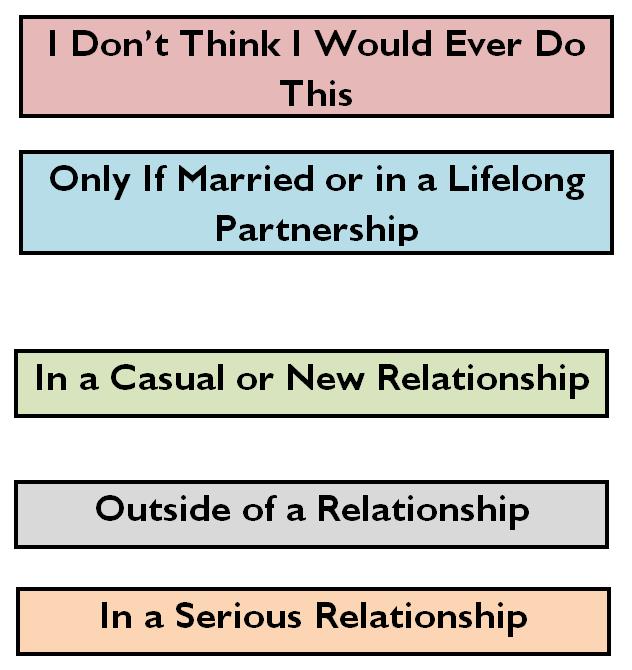
Instead of a continuum you could use categories- the categories we use help reinforce the idea of a continuum as well.  There is also a list of different levels of intimacy that can be used to classify these activities. Using the activity in this way is consistent with the concept of postponement- postponing intercourse until a relationship is more serious of formalized.

Sometimes when people see all the different acts of intimacy  they are surprised but it is important to be inclusive of all different forms of sexual expression.  We also don’t use all the different acts with every group, but we’ve given you a pretty comprehensive list that you can tailor to meet your student or child’s needs.

Download the intimacy activity intimacy activity pictures or with just words.

Levels of Intimacy

Levels of Intimacy

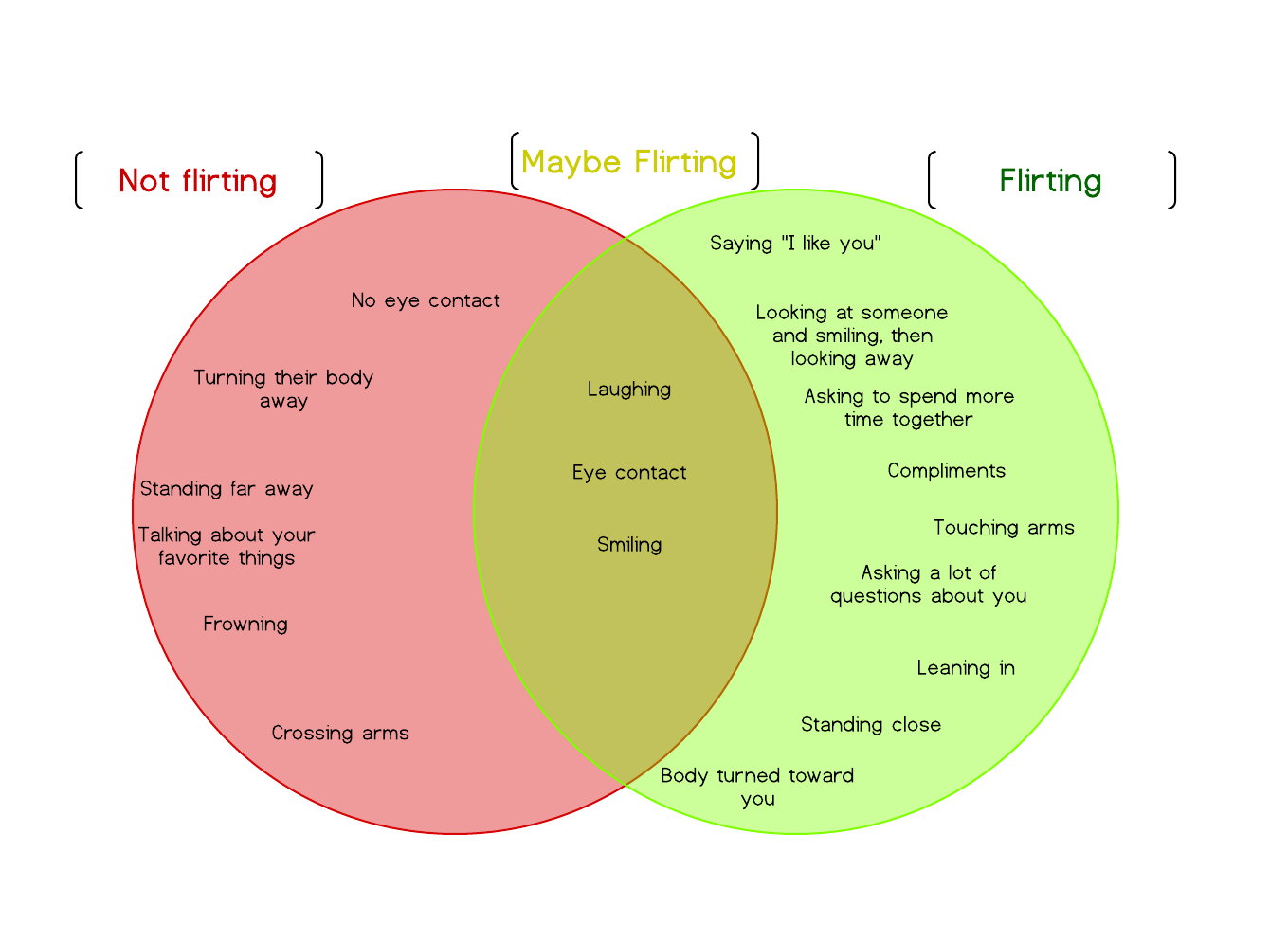
Signs of Flirting

Flirting can be a difficult subject to talk about because it always varies. This aid has some typical behaviors that are flirting, maybe flirting, and not flirting. It’s important to note that this is not a exhaustive list and that some of these behaviors are not guarantees of flirty or not flirty behavior, but it is a great place to start the conversation.  This activity can be used to steer a conversation about how and when flirting occurs, and the fluidity of these behaviors.

Download the signs of Flirting activity here.

Facilitated Sex

What is facilitated sex?  This brief video explains what facilitated sexual activity is and some of the considerations.

Dr. Mitchel Tepper is an expert in the area of sexual health, disabilities, and medical conditions with a specific focus on physical disabilities.  His website can connect you with a lot of great information (I especially like his blog).

Some things to keep in mind about facilitated sex…

  • Facilitated sex is a continuum.  Dr. Sarah Earle suggests it might include providing sex education, fostering an environment that allows intimacy, the procurement of sexual goods,  and arranging for paid-for sexual services.
  • Many individuals with disabilities would be unable to participate in many parts of sexual expression without some level of facilitation.
  • It’s not that abuse and victimization aren’t concerns- they are!  It is also important to consider how to support individuals with exploring sexual pleasure and sexual facilitation is part of that picture.

Making Visuals

There are many different ways to make visuals: cut and paste from magazines, jot down words and images, use Boardmaker, use power point…

For each method there are different pros and cons and a lot can be said for something that’s just plain easy to use.  I also don’t think there’s anything wrong with a visual that has been made quickly- if it gets the message across, it doesn’t have to look nice.

But sometimes it is important for for a visual to be ascetically pleasing- and I wanted to share a free tool that’s available for making infographics (what marketers and advertisers call visual supports).  It’s not particularly easy to use and it takes more time, but in the end you have a nice looking product.  I would use this I wanted to make something I could use over and over (it’s worth the time) or if I was working with someone who thinks my regular visuals are “babyish”.  You have to be careful about resisting the temptation to over clutter.  There are several different generators, but for no cost, this one has the most flexibility and is relatively easy to use.  http://www.easel.ly/

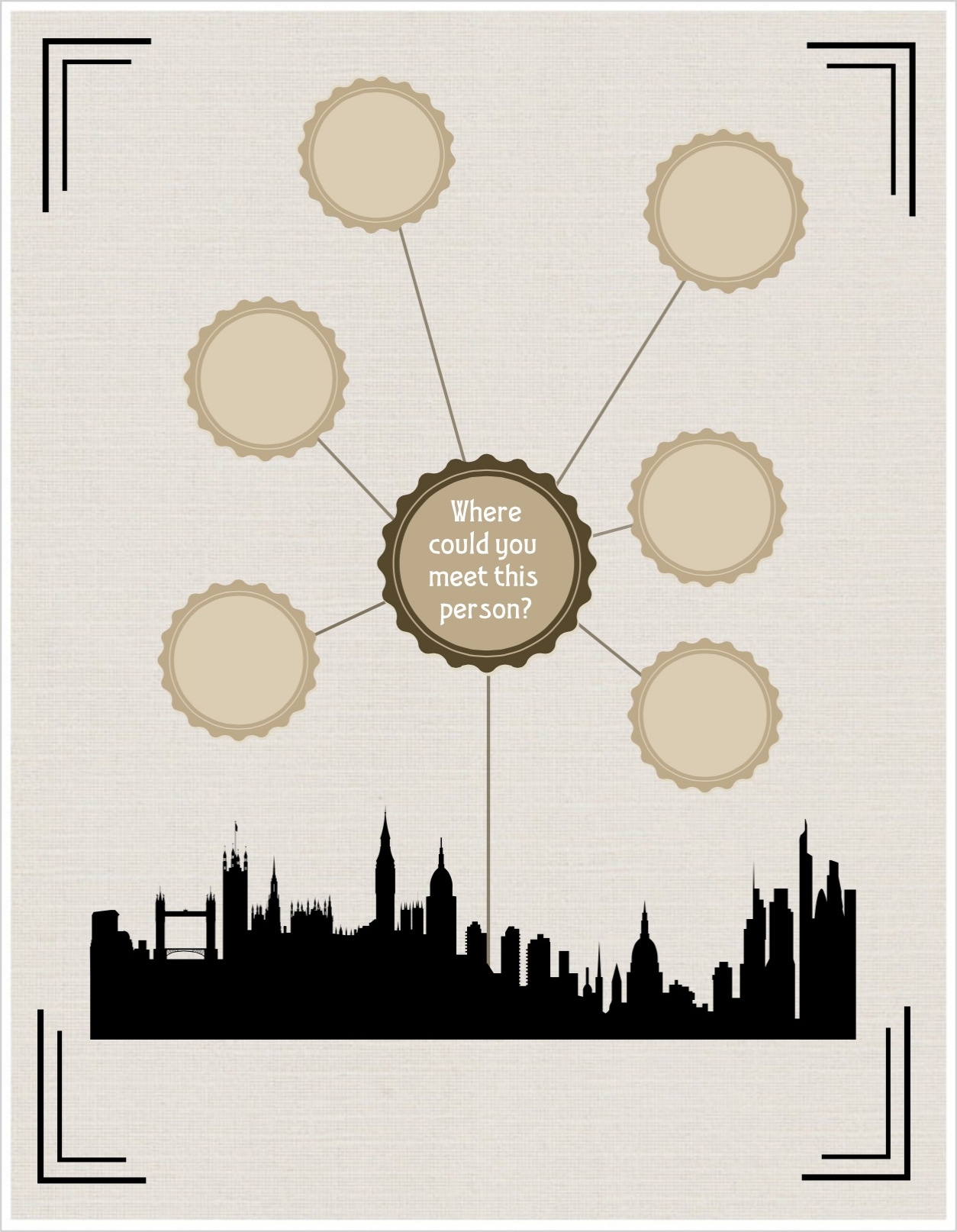
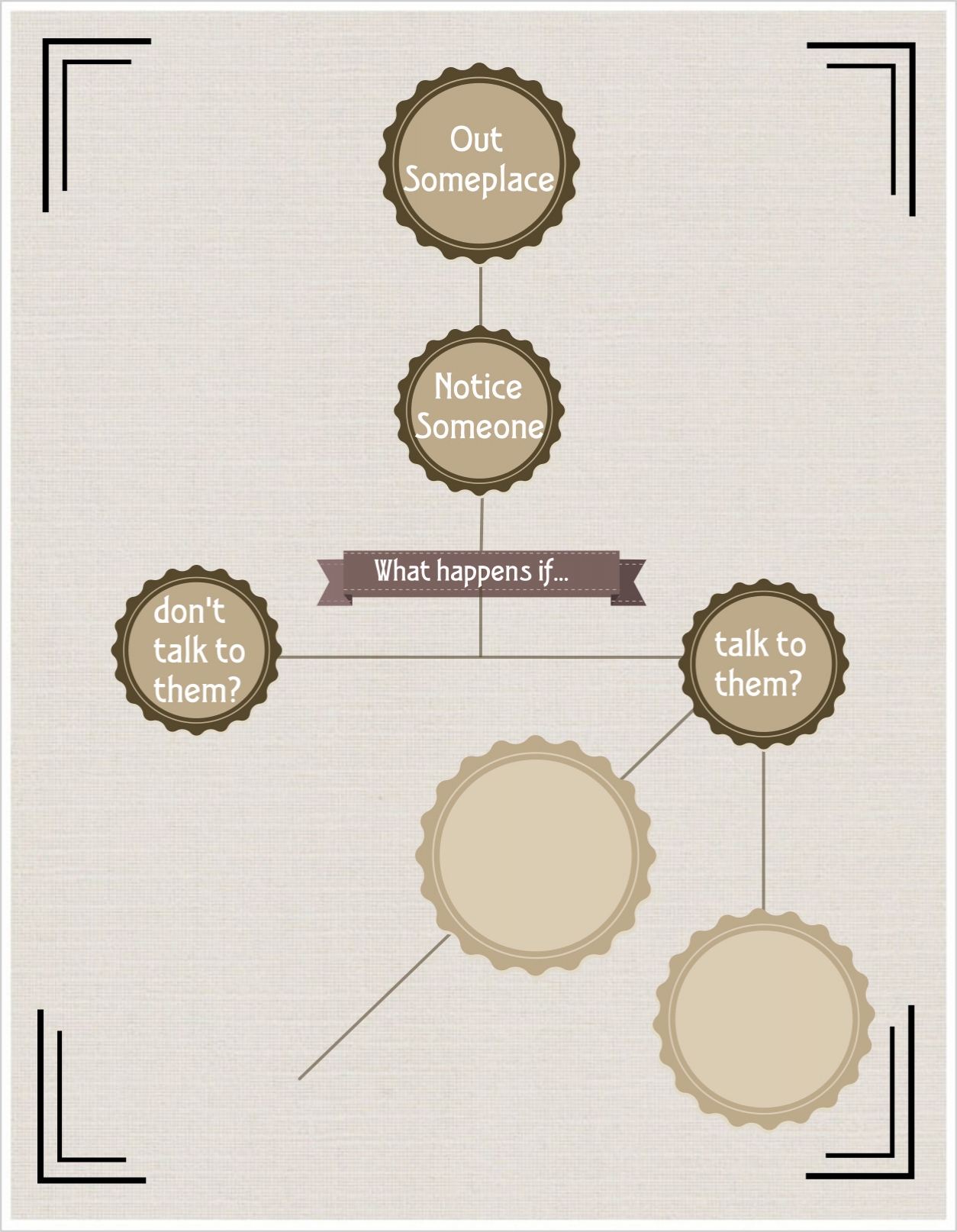
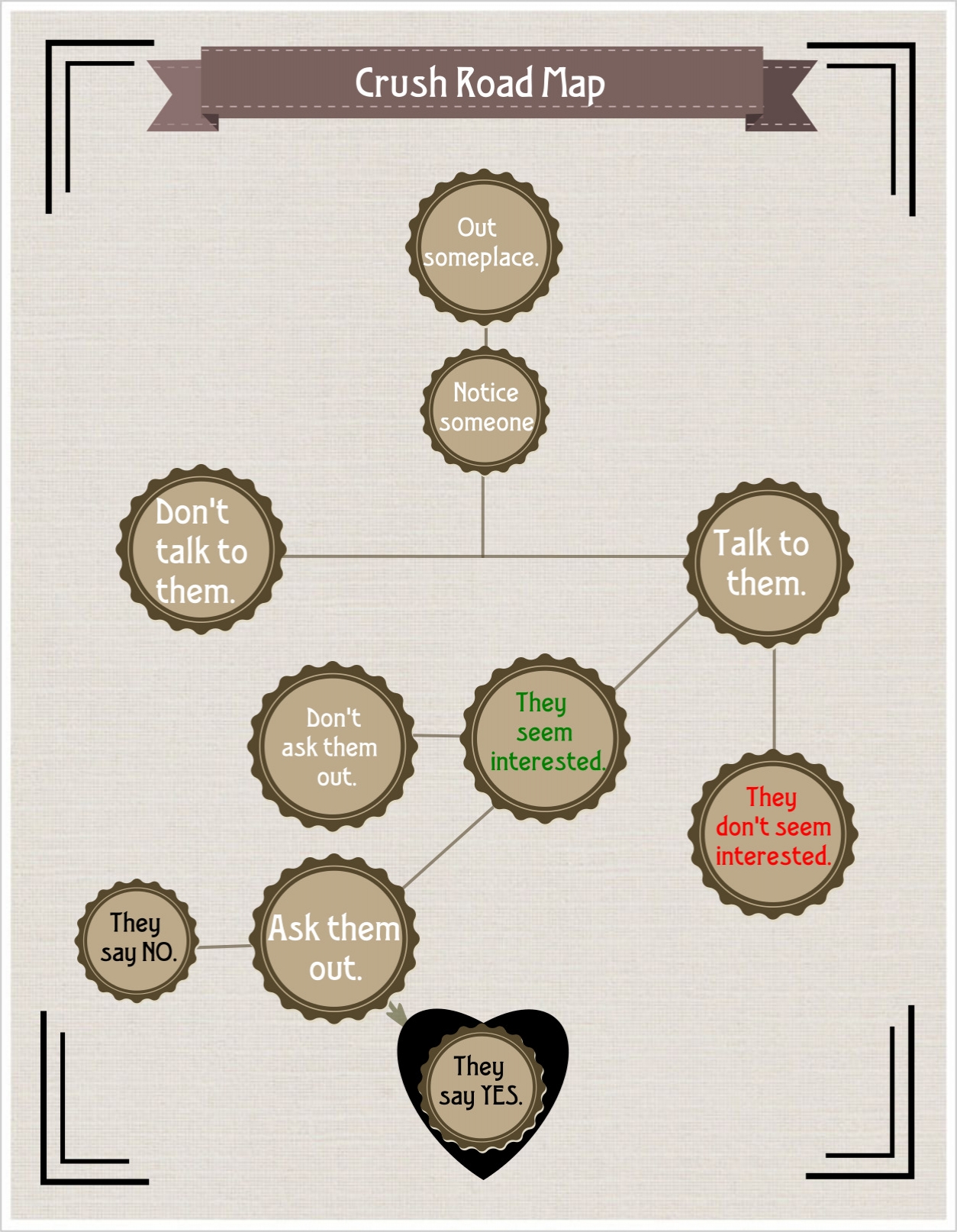
This visual goes along with the “What Should I do?” exercise we did during the workshop.  You can download this visual as a PDF.

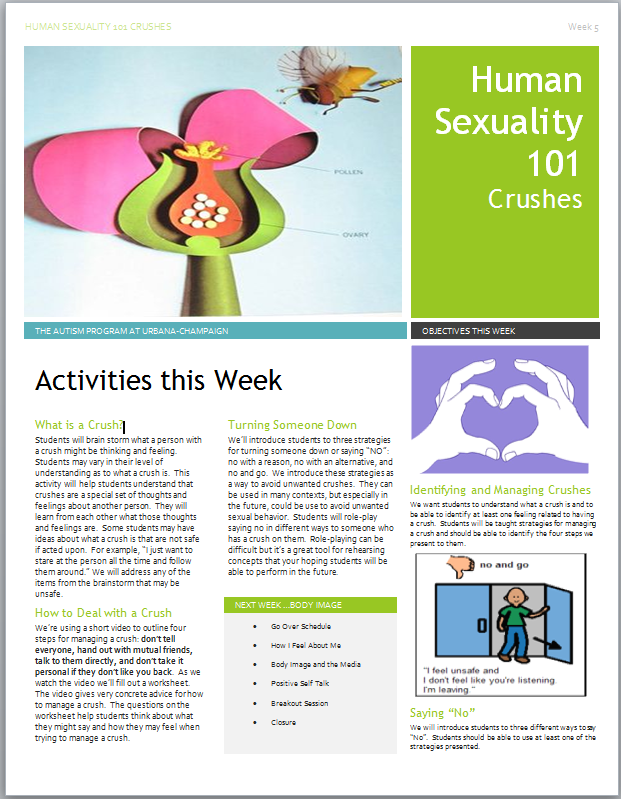
Human Sexuality 101 Week 5- Crushes

This topic generated a lot of good discussion.  Our group was a little distracted today (maybe because we had a week break).  For next week we’re going to try a few different classroom management strategies so we can try to spend more time focused.  We’re going to simplify the rights and the responsibilities and give them 3 rules (no talking when I’m talking, no hitting, and no mean comments).  We’ll also use a visual stop sign for if the group gets out of control.  I’ll keep you posted how it goes!  Having said that, despite distractions, I’m confident the group did learn a few things about crushes.

Activities this week…

What is a crush?

Students brainstormed what a person with a crush might be thinking and feeling.  Students varied in their level of understanding as to what a crush is.  This activity helped students understand that crushes are a special set of thoughts and feelings about another person.  They will learned from each other what those thoughts and feelings are.  None of the students in our group expressed ideas about what a crush is that would not be safe if acted upon (I was thinking someone might say something like, “I just want to stare at the person all the time and follow them around.”) We were ready to address any of the items from the brainstorm that were unsafe.   In later discussion we labeled some ideas as unsafe.

How to deal with a crush

We’re used a short video to outline four steps for managing a crush: don’t tell everyone, hang out with mutual friends, talk to them directly, and don’t take it personal if they don’t like you back.  As we watched the video we filled out a worksheet.  The video gives very concrete advice for how to manage a crush.  The questions on the worksheet helped students think about what they might say and how they may feel when trying to manage a crush.

This is where they got a little distracted.  In the future, I would shorten the worksheet so there is only one question per tip.  I would maybe have them work on answering the questions with a partner, then sharing with the group.

Turning someone down

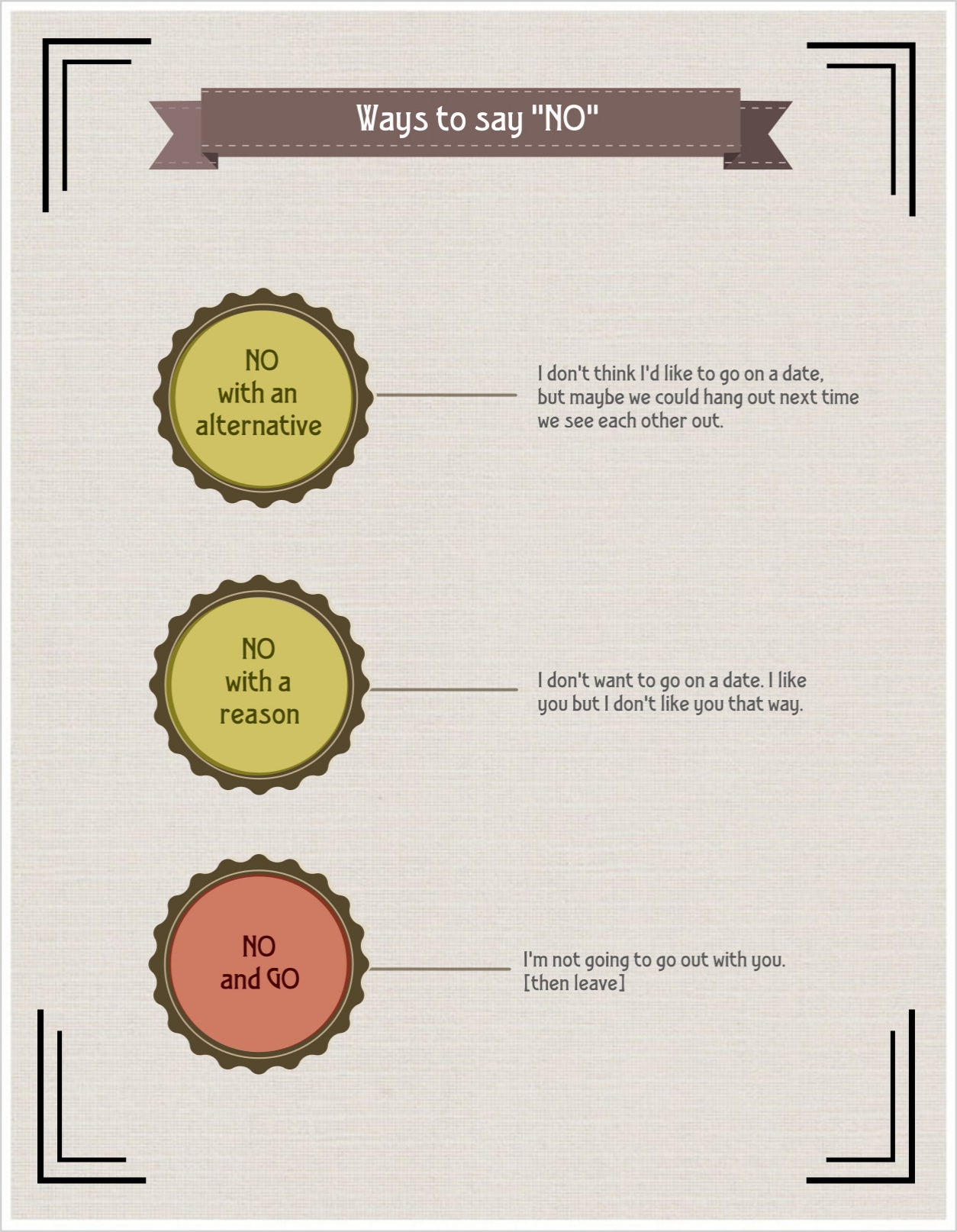
We introduced students to three strategies for turning someone down or saying “NO”: no with a reason, no with an alternative, and no and go.  We introduced these strategies as a way to avoid unwanted crushes.  They can be used in many contexts, but especially in the future, could be use to avoid unwanted sexual behavior.  Students role-played saying no in different ways to someone who has a crush on them.  The role-plays worked really well!  Role-playing can be difficult but it’s a great tool for rehearsing concepts that your hoping students will be able to perform in the future. 

Materials for this week

Social Signals- Curriculum

Social Signals ($159.oo) is a series of  videos and curriculum are designed to teach adolescent students with autism and intellectual disability about safe relationship skills.  There is also a parent curriculum for $23.99.  They have a sample video and lesson available for free so you can preview before you purchase.  I liked the video.  I like to teach about expected and unexpected behaviors and I think these videos could be a good tool.  There are also sample lessons that accompany the videos.

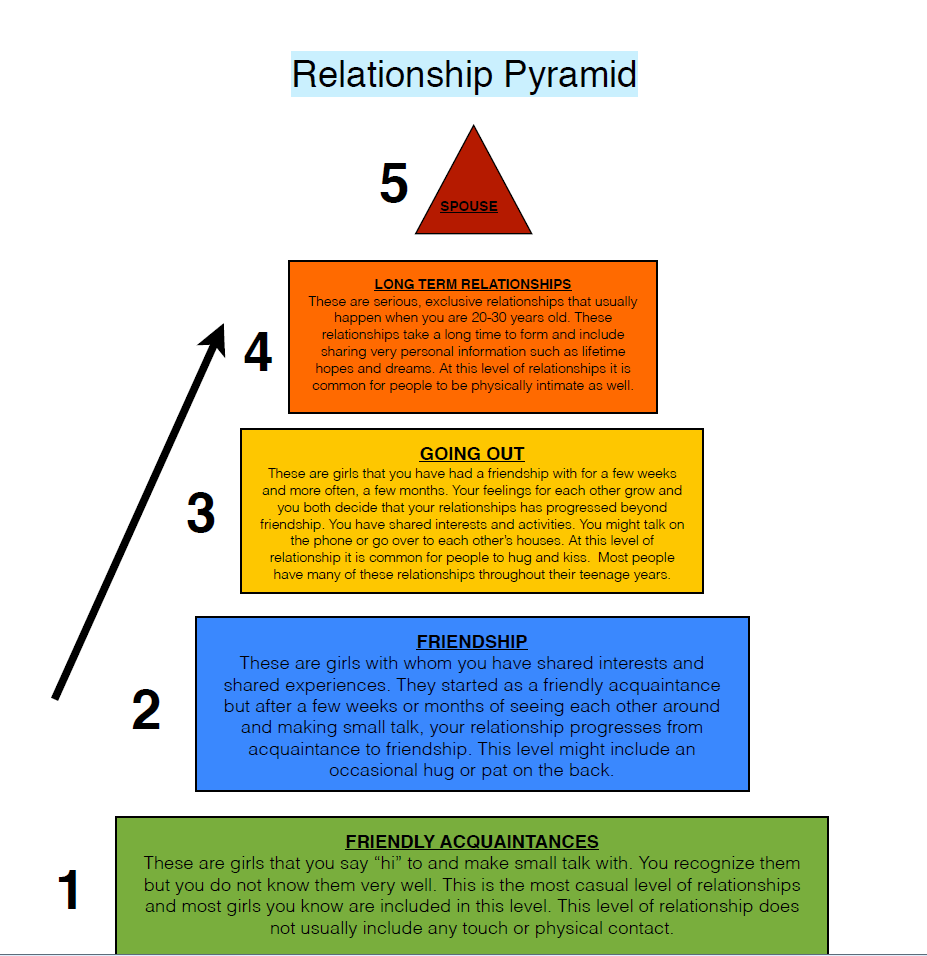
Relationship Pyramid

Here is an example of a five point scale that was developed by April Keaton, LCSW, to explain the different levels of relationships.  The pyramid shape was used to convey that you might have a lot of “friendly acquaintances” but much fewer “long term relationships”.  It was important for this person to connect the level of the relationship with the level of intimacy so you see examples of intimate behaviors at each level of the pyramid.  There’s also an element of time built into the descriptions.     You wouldn’t have to start with pyramid filled out.  You could start with a blank pyramid and support an individual with filling in the levels.  You could add names of individuals at each level.  You can download the pdf of this image by clicking here.

Impact: A Newsletter

A workshop participant put me in touch with this awesome resource (thanks Cate!).  Impact is a newsletter from the University of Minnesota’s Institute on Community Integration which is part of their Center for Excellence in Developmental Disabilities.  They have many products and services that you may find useful (many of which are available online or at little cost).  Their newsletters contain ” strategies, research, and success stories in specific focus areas related to persons with intellectual, developmental, and other disabilities. ”

The sexuality issue has several interesting articles written by individuals with disabilities, service providers, family, and community members.  In addition to the articles, the newsletter provides information about additional resources in several areas: education, parent support, advocacy, sexual health, and sexual safety.

The story in Impact that touched me the most was one about two men who were harshly punished for their love for one another while institutionalized but were finally able to be married.  Once they were both living in group homes and reunited…”they decided they would not live together, they would not have sex, until they were married.  They had been punished so often, told continuously that they were dirty, sinful, hateful creatures, that they needed to get married ‘liked other people.'”  Dave Hingsburger* commented “How we hate the hearts of people with disabilities!  We have caged their bodies, disfigured their genitals, drugged their thoughts.  But we have never, ever captured their hearts or controlled their spirits.”

*The link in the text is to Dave Hingsburger’s blog.  He is the author of several resources for teaching human sexuality and abuse prevention to individuals with intellectual and developmental disabilities.  The resources can be found at Diverse City Press.

Teaching Videos

There are many videos out there that are excellent for instruction and also for expanding your personal understanding of sexuality topics.  I have a few on my resource list but wanted review a couple that are available.  Click on the link to be taken to the page where it can be purchased.  I’ve included previews and prices (you can get the videos cheaper for personal use- these are the instructional prices).

Is Love Enough? Is a documentary about parenting with disabilities.  It’s $195.00

Monica and David is a documentary about a couple with Down Syndrome. $200 (but sometimes is on sale for $100).

The Kiss is a 52 second video featuring two actors with Down Syndrome.  It is short and poignant.

Bumblebees is a short video made by an individual with autism following his first date.

Bumblebees from Jenna Kanell on Vimeo.

Despite being told as a child he would never speak or walk, Vance accomplished what doctors thought was impossible. But now he has a new challenge: dating.

Made for the 48 Hour Disability Film Challenge.

Prerequisites:
Genre – Romantic Comedy
Setting – Living room / park
Elements – Comb / balloon
Theme – A reunion

When I see “Sexuality and the Arts” on the SIECUS topics list, I admit, I can get a little overwhelmed with trying to explore this topic in a way that is relevant to individuals with intellectual and developmental disabilities.  But I think the Sprout Movie festival is a great place to start.  Here is one of their Poetic Shorts, “How do I know?”

Autism Now- A Resource

Autism Now isn’t specifically focused on topics related to sexuality but they do have some great resources I thought I could highlight.

They have a series of webinars related to sexuality topics. If you click on the link you’ll be taken to a registration box that you have to fill out to view the material.  I’ve also included links to the slides- this is a direct link, you don’t need to register.

Slides:  “Sex is when people use their bodies together to share love and pleasure.”

Slides: “Research says that the IQ has to be below 50 before you can say IQ and parenting skill are connected (Feldman& Tymchuk, 2002).”

And they just had one on May 15th, but you’ll have to keep an eye on the archive list because it’s not up yet-  “Let’s Talk About Sex: Discussing the Topics of Sex, Protection, and/or Sexuality from Three Unique Viewpoints”

In addition to the webinars they have some general “fact sheet” style info that might be helpful on topics such as dating, marriage, divorce, relationships, sexuality, parenting, and friendships.  These include general information as well as parent tips.

I was really impressed by the quality and quantity of ASD related resources on a variety of topics so it’s a good one to have in your tool belt.

I just wanted to link to one other power point presentation that I thought had a lot of good information.  “Sexuality & Sexuality Instruction with Learners with Autism Spectrum Disorders and Other Developmental Disabilities” by Peter F. Gerhardt, Ed.D., Director The McCarton Upper School

Free Curriculum- Parent Version, Teacher Version, Spanish Version

ImageI’m really excited about this free curriculum, “Sexuality Across the Lifespan” by: DiAnn L. Baxley and Anna L. Zendell.  It has versions for educators, teachers, and Spanish speakers.  You can view the curriculum by clicking on the links below.

What makes this special?  They do a nice job at adjusting lessons for different age groups, giving ideas for supplemental activities, and giving ideas for incorporating the topics into routines.  The parent version really focuses on how to reinforce healthy sexual development through interactions and daily routines.

This curriculum in not comprehensive but does have sections on social skills, dating, sexual abuse, puberty, and anatomy.  I hope you find this useful!

Let’s Talk About Ability and Sexuality

http://vimeo.com/17317232

This video was filmed at the Healthy Relationships and Sexuality Conference in California 2010. What’s special about this conference is that it was organized by people with disabilities (and their allies) for people with disabilities.

I’ve highlighted some of my favorite quotes from the video. My main point in posting it, is not so much that you watch it and learn a bunch of facts, but rather use as an example of a teaching tool. Creating a video like this is a wonderful learning experience and helps give purpose and permanence to the expression of ideas.

“Sexuality needs to be part of the service planning process” – “It’s not the people with disabilities who are uncomfortable but the staff who are helping support them” – ” “The definition of support needs to change as the person changes” – “A person with a disability can always find love” – “Disability does not define me. The way I think about other people and the way I treat other people: that’s what defines me” – “Maybe people will eventually become more open to us” – “If you get asked a frank question, give a frank answer”

Teaching Strategies- Autism Internet Modules

Many of the teaching strategies that you use when teaching human sexuality you also use in many other contexts.  Autism Internet Modules can help you learn teaching strategies like the ones listed below (currently they have 37 modules and they are always adding more).  The modules give a really complete overview (they can be a little boring but overall they are very helpful).  Some these may be a review but others may be something you have heard of but aren’t quite sure what it really is.  What’s especially nice is often the expert who developed the technique is the one teaching the module.  Just a little warning- you do have to set up a log in.  Many of these interventions have been specifically developed for people with Autism Spectrum Disorders- but not all of them!

Antecedent-Based Interventions (ABI) – Differential Reinforcement – Extinction – Functional Communication Training – Language and Communication – Naturalistic Intervention – Overview of Social Skills Functioning and Programming – Parent-Implemented Intervention – Peer-Mediated Instruction and Intervention (PMII) – Picture Exchange Communication System (PECS) – Pivotal Response Training (PRT) – Preparing Individuals for Employment – Prompting – Reinforcement – Repetitive Patterns of Behavior, Interests, and Activities – Response Interruption/Redirection – Rules and Routines – Self-Management – Social Narratives – Social Skills Groups – Social Supports for Transition-Aged Individuals – The Incredible 5-Point Scale – Visual Supports

For those of you who attended the workshop, in the workbook starting on page 34 there is a table with examples of strategies.  Some of the strategies come from Autism Internet Modules.

10 Easy Things You Can Do that Promote Privacy and Positive Relationships

Although this list can be used with any population, it is geared towards individuals who need a considerable amount of support. Many of these are probably things you already do!

1.  Prompt clients/consumers/students to greet one another.

I’m always surprised to realize that some people don’t know the names of the other people they spend time with each day.  A simple greeting is a wonderful, simple, social script that you have natural opportunities to practice each day.

2.  Ask permission or notify an individual before touching their person or their wheel chair.

This reinforces that an individual has control and autonomy over his or her own body.  It’s important for people to feel in control of their body so that they feel safe and also so they can keep others’ safe.  It also communicates that a person’s body is something that needs to be treated with respect.

3.  Keep all aspects of a personal care (toileting) routine private.

This means that you don’t follow behind someone with a Depends (or other personal care item)- use a bag.  It also means you don’t announce taking someone to the restroom to the group (say it quietly so only the person you are speaking to can hear).

4.  Do not speak negatively about clients/consumers/students in front of others – including saying they are having  behaviors.

People are very perceptive about when others are speaking negatively about them. When you say so and so is having behaviors it makes the situation very public, embarrasses the individual, and gives positive reinforcement (in the form of attention) to the behavior.  If for your safety you need to communicate this, use a code (In Champaign we would say “did you see the Illini’s defense last night?” which meant we are having a potentially dangerous behavior situation please hang out until all clear).

5.  Do not affectionately kiss, cuddle, or pat on the head clients/consumers/students.

In someways this is a no brainer and in other ways it is hard.  I know so many people who are touch deprived and it seems harmless to give someone a hug when you see them but these types of affection have several negative side effects.  1) They send an inappropriate message of how to interact in non-sheltered situations (you can’t hug people you meet on the bus).  2) They communicate that the individual is child-like and a-sexual.  3) They can create a climate where it is difficult to detect sexual predators.

6.  Make home movies.

A flip camera is less than $200 and very easy to use.  Make videos showing people being friendly to one another, answering questions about what is important to them, and daily routines or special events.  People love watching themselves and their friends.  It allows them to tell a story that they may not be able to tell by themselves.

7.  While maintaining appropriate boundaries, talk about emotions (including your own).

All people have complex feelings regardless of their abilities in other areas, but people don’t always have the words to communicate them.  It is appropriate to model emotional expression.  For example, when I go with a group from our day program to deliver food to families, I tell a story about how I feel.  I say, “It makes me a little sad to know that people don’t have any food, but the family was so happy we brought them food.  It makes me feel happy and proud to help someone else.  I like to do it.”  I just talk about it as we’re driving back.  It’s also appropriate to name clients’/students’/consumers’ emotions, “You seem like you might be a little bored” or “You look so proud to have gotten your pay check.” What you are doing with these easy statements is creating an emotionally safe environment.  (Note: this is way different than unloading personal problems on clients/students/consumers).

8.  When referring to intimate body parts, use the correct word.

9.  During lunch/snack/work breaks prompt folks to talk to one another, even if it the same conversation you had yesterday, and preferably incorporate pictures.

Perhaps combine with number 10 🙂

10.  Have a regular discussions about current events.

One of my favorite stories came out of a current event discussion.  It was during the 2008 primaries and I said that Hillary Clinton was running.  The person I was talking to said, “Hillary sounds like a girls name” and I said, “It is.”  He started laughing hysterically, and said, “Sarah don’t tease me, a woman can’t run for president.”  What a great way to start talking about gender!