PEERS Program

The Program for the Education and Enrichment of Relational Skills (PEERS) was originally developed at UCLA by Dr. Elizabeth Laugeson, Founder and Director of the UCLA PEERS Clinic, and Dr. Fred Frankel in 2005 and has expanded to locations across the United States and the world. PEERS is a manualized, social skills training intervention for youth with social challenges.

There are four options for getting training in PEERS. (1) The PEERS Certified Training Seminar last two days and is hosted at UCLA.  It is designed specifically for mental health professionals and educators interested in learning and/or implementing the PEERS intervention into their clinical practice. (2) PEERS provides off-site training seminars, presentations or talks for a variety of agencies based on their specific needs.  These may range from 1-4 days, with varying costs. (3) The PEERS Certified School-based Training for Educators is designed exclusively for teachers, school psychologists, counselors, speech and language pathologists, administrators, and school-based professionals who are interested in learning to implement The PEERS Curriculum for School-based Professionals. Attendees will obtain 24 hours of training over 3 days and this training also takes place at UCLA. And (4) PEERS provides off-site School-based training seminars, presentations or talks for a variety of agencies based on their specific needs.  These may range from 1-4 days, with varying costs.

The PEERS program naturally lends itself to sex ed instruction.  For example, the adolescent program focuses on

  • How to use appropriate conversational skills
  • How to find common interests by trading information
  • How to appropriately use humor
  • How to enter and exit conversations between peers
  • How to be a good host during get-togethers
  • How to make phone calls to friends
  • How to choose appropriate friends
  • How to be a good sport
  • How to handle arguments and disagreements
  • How to change a bad reputation
  • How to handle rejection, teasing, and bullying
  • How to handle rumors and gossip

This video features a program that uses PEERS for sex ed

Autism in Love

The 1 hour and 13 minute movie, Autism in Love, is about falling in love, wanting to fall in love, the struggle of understanding love, and heartbreak. More than that, this movie is about what it means to be autistic, how love shapes identity, and the support of family. There are multiple viewing options but it is currently airing for free on Independent Lens.  It follows the stories of four individuals on the autism spectrum as they navigate issues of love and relationships.

Here is a guide for using the film as a teaching tool: Autism in Love Viewing Guide

This movie is more geared toward adults as the youngest person featured in the film is in his early 20s and much of the film centers on marriage. If you were working with older teens, you may want to focus on Lenny.

Puberty and Adolescence Resource: A Guide for Parents

puberty_coverThis tool kit from ATN/AIR-P provides information on body changes; self-care and hygiene; public vs. private rules; staying safe: strangers, secrets and touch; elopement; safety planning for increased aggression; and Internet safety.

Some of my favorite features:

  • Link to underwear designed to keep menstrual pads in place (I had no idea this existed!)
  • They have parent stories throughout.
  • They have suggestions for how occupational therapy can provide support.

Sexual Safety Resource: Chicago Children’s Advocacy Center

Chicago Children’s Advocacy Center is a program for sexual abuse prevention and response to crisis. They have supports specifically for children with disabilities. They recommend creating a family safety plan, teaching children about sex and sexuality, learning about sexual development, taking to caregivers/program staff about issues of sexuality, and watching others’ behaviors.I like this resource because the focus in on prevention through increasing the viability of sexuality.

ccac-header-logo

The culture that makes it inappropriate to talk about healthy sex and sexuality creates a hidden space where dangerous sexual behavior can take place.  Whenever we’re talking about prevention, I think that it is important to highlight that children and often adults with developmental disabilities cannot prevent their own abuse. Adults and older children with more power and more control manipulate to create situations where they can abuse. Prevention looks like trying to eliminate those spaces and creating opportunities for reporting.  This agency seems to focus on that method and minimize language that blames the victim.

Here is a webinar which aired live on December 9th, 2015 on Safety & Autism: Helping caregivers and providers talk about sexual abuse and prevention.

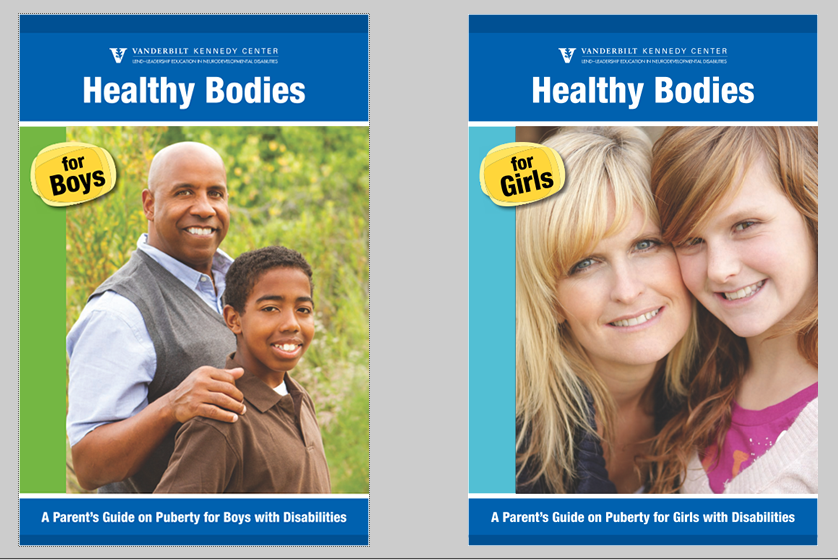
The Healthy Bodies Toolkit

Healthy bodiesThis publication was developed and written by Vanderbilt Leadership Education in Neurodevelopmental Disabilities (LEND).  There is a boy version and girl version.  Each version has a booklet for parents or teachers and supplemental materials which include storyboards and visuals that you can use in implementing the methods outlined in the toolkit.  It is free and there is a Spanish version!

Here is the website: https://vkc.vumc.org/healthybodies/

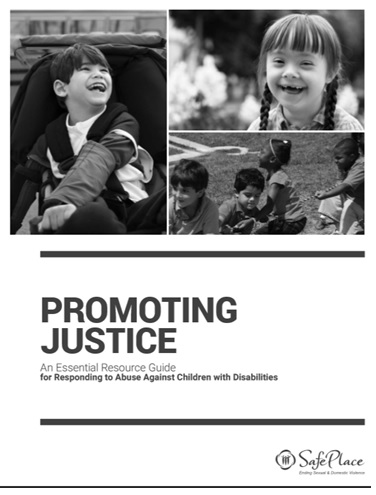
Promoting Justice: An Essential Resource Guide for Responding to Abuse Against Children with Disabilities

We came across a great resource from Safe Place concerning abuse, including sexual abuse, and children with a myriad of disabilities, including neurodevelopmental (ASD,ADHD, intellectual disability), physical and sensory (blindness, deafness), brain injury, and mental health disabilities. This guide poses many questions about communicating and interacting with children with disabilities who may suffer from abuse or neglect. It also offers many suggestions to caregivers, family members, and educators about how to understand specific disabilities in the context of abuse.

You can find the guide here.

Adult Human Sexuality Curriculum

These curricula materials are for educators working with young adults. It is a bit more in depth than the high school curriculum and discusses human sexuality in a broader sense.AdultHumanSexuality

Adult Human Sexuality Week 1: Welcome

In the first week of the adult human sexuality class, we focus on meeting the others in the class and establishing a level of respect and expectations for the class.

First, the group will create a list of rights and responsibilities.  We’ll start with a writing reflection of what participants think the rights and responsibilities should be.  As needed the facilitators will prompt important rights/responsibilities that should be included on the list including: to be heard, to ask any questions, to not be put down, to pass, to not have assumptions made about you, to have your own feelings, to say hello and good-bye to group members, to be present and confidentiality.  We will briefly discuss each right/responsibility.  These rights/responsibilities will be posted in each session.  The rights and responsibilities help establish safety and the tone of the sessions.  They serve as a guideline so participants know what is expected.

We will also create a question box and name cards and then there will be an ice breaker activity so the group gets the chance to learn about each other. Then, there will be a discussion about what human sexuality is and discuss the group’s thoughts of human sexuality.

Lesson 1 Materials

Human Sexuality Newsletter Week 1

Adult Sexuality week 1 Lesson Plan

Lesson 1 Worksheet

High School Human Sexuality Curriculum

This is the session of Human Sexuality 101 was offered by The Autism Program at the University of Illinois Urbana-Champaign. This group was designed for three high school/young adult girls and boys with ASD.   The teens in this group were bright and engaging and have had a little formal exposure to sexuality concepts, but still struggle with the more nuanced facets. Many of these activities could be adapted for groups of various sizes and ability levels.

You can find all of our lesson plans for the high school human sexuality classes here.

HighSchoolHumanSexuality

8 Week Middle School Human Sexuality Curriculum

Over the summer, I did a 8 week sexuality class with middle school students with autism (3 boys and 3 girls).  I’ve posted each lesson from the curriculum, but I thought I’d link all the posts together so you could get to them in one place.  For each session there is a lesson plan, parent letter, and power point slides.  Some lessons also have worksheets.  I’ve also commented about how the lessons went and some ideas for adaptation.  Click on the links below to go to the posts and access the materials.

Human Sexuality 101 topic

*We sent home a workbook with follow up/supplemental material during this lesson.  The workbook is available on the post.

High School Human Sexuality 101 Week 2- Anatomy

FemaleReproductiveSystem_Lateral_250w

Anatomy and Reproduction were the topics for week 2. We started off the session with a game called “Parts and Post-it Notes” to talk about body parts with the participants. To play this game we had a giant piece of paper with the outline of a body on it. We gave the participants post-it notes to write down the body parts that they knew and asked them to place them on the outline of the body.

After this activity, the participants were told that for the rest of the class they would be focusing on body parts related to reproduction (another way to refer to sex organs or private parts). The participants were then directed to the next activity where they practiced saying terminology related to reproduction out loud and recording their responses to how saying the words made them feel.

When the participants finished the terminology activity, we spit them into two groups to start the fruit anatomical model of reproductive organs using fruit. The participants were shown a picture of the parts of the body and were giving tooth picks and flash cards to label the fruit parts and their functions. This activity was great for the participants to learn the vocabulary in a little abstract and safe way! For a more concrete example of reproduction, we used the “Miracle of Life” video to explain the process.

We ended this session by having the participants briefly summarize that they learned during the session.

For more information on anatomy view our Human Sexuality 101 Week 2- AnatomyEXPLAINING ANATOMYYOUTUBE EDUCATIONAL RESOURCES: HEALTHCHANNEL, SEXPLANATIONS, AND CSPHADULT HUMAN SEXUALITY WEEK 2- ANTATOMY & REPRODUCTION posts

This Week’s Materials

Week 2 Lesson Plan

Week 2 Slides

Parent Letter

Worksheets

Anatomy labels

High School Human Sexuality 101 Week 3: Body Image Lesson Plan

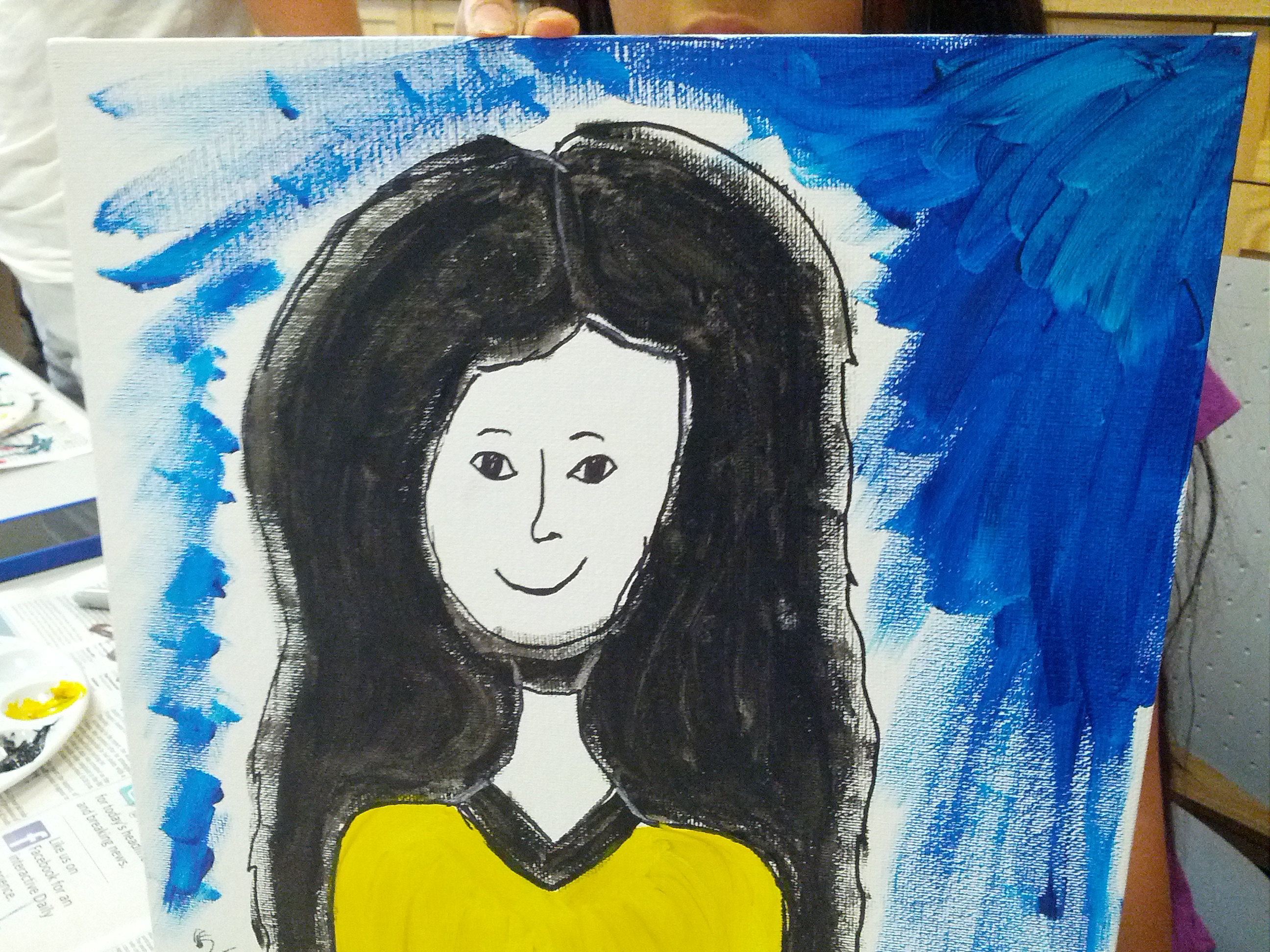
IMG_20120718_152104This lesson plan revolved around teaching what body image means, understanding that people feel differently about their bodies, and that people change how they feel about their bodies over time.  After doing several knowledge based activities, we moved to exploring how the students felt about their own bodies.

There was one theme that was really relevant for the student we were working with.  She was really interested in her perception of self and others perception of her.   In her self-portrait, she focused on the things that make her her; most of these were things you couldn’t see.

We also read body stories.  Each had a picture of a body.  Just seeing the images was really moving.  We were planning mostly for girls, but I included a story that might be more appropriate for a male audience.  The young woman chose to read the story about the women who was the most traditionally beautiful (not really a big surprise).  This was a story about a woman with chronic illness.  Serendipitously, the body story resonated concepts that this student was working through.

Materials

Lesson Plan

Slides

Parent Letter

Body Stories (all female) from This is Who I Am by Rosanne Olson (her website is http://bodyimagebook.com)

Body Story (male)

Dove Clip

High School Human Sexuality 101 Week 4- Crushes

 During week 4, we focused on understanding crushes.

There were three activities for the participants this week:

Crushes

What is a crush? 

The participants first brainstormed things that a person with a crush might feel or think. Participants had different levels of understanding on what having a crush meant to them. The purpose of this activity was to help the participants to understand that crushes are a special set of thoughts and feelings about another person. We later discussed thoughts and ideas that the group may have that may be unsafe when it comes to having a crush.

How to deal with a crush?

We used three videos to help the participants to understand how to deal with a crush. The videos covered these topics: What if you like a friend, How to tell if a guy likes you, and How to get a guys attention. These videos give concrete ways to deal with a crush.

Turning someone down

We used a video about how to say no to deal with a variety of situations when it comes to turning someone down.

For more information and activities on crushes visit our Human Sexuality 101 Week 5- Crushes and Adult Human Sexuality Week 3- Crushes curriculum

This Week’s Material

Week 4 Powerpoint

High school Human Sexuality 101 Week 5- Intimacy

Intimacy Intimacy was the focus of week 5. This concept can be difficult to understand because it is very broad so this is how we talked about it in our class.

We talked about how intimacy can be divided into two parts: physical and emotional. Physical intimacy involves expressing ones feelings for another person through a physical manner (holding hands, hugging, kissing, and sexual activity). While emotional intimacy involves the feelings towards another person. It is based on how comfortable you are with someone and how much you can share with them. It is important to understand that there are levels to intimacy and that it is not necessarily just for two people in a dating relationship.

For this week’s activities, we opened up with a discussion on the numerous ways to have intimacy with someone.  During group time, our plan was for participants to create a “Intimacy Chart”.

Intimacy Chart

We provided them with pictures displaying different types of intimacy ( holding hands, hugging, etc.) and asked them to write down how each of the pictures made them feel. After that we arranged the picture in order to what we felt would be the natural progression of relationships. To finish off the activity we categorized  each picture based on whom we are comfortable doing those actions with. The main purpose of the “Intimacy Chart” is to help the participants to visualize the different types of intimacy.

Although this was the plan, one of our students had a different idea of how she should do this activity.  She asked for a folder and then decorated it with her boyfriends name.  She then put the different acts of intimacy she felt comfortable with in the folder.  At first, she didn’t want to share which behaviors she had chosen, but then she decided that she would share.  What a great spontaneous adaption!

For more information on intimacy visit our Intimacy Activities and Adult Human Sexuality Week 6- Physical Intimacy and Human Sexual Response

This Week’s Material

Parent Letter Week 5

Intimacy Powerpoint

Puberty Videos for Boys & Girls

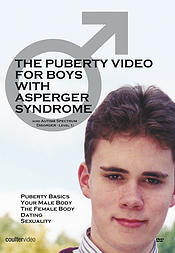
DVDB101_outHere are videos that were developed for 10 – 17 year olds on the autism spectrum regarding puberty & other sexuality topics.  They are clear, concrete, and move through the material slowly (this is one of the biggest problems with videos for a general audience- they go too fast!)

My favorite thing about the videos is that the male instructor is an individual with autism.

All of the videos can be found on www.coultervideo.com, a website that sells videos by Dan & Julie Coulter.  Dan & Julie are parents of a son with ASD who started creating educational videos on their vacation and now do it full time.

Videos that may be useful: