Intimacy Activity

This activity can be used to teach about different intimate activities, either alone or with a partner. All of the actions come in a word list form and in a visual form. The activity includes a continuum worksheet in which  activities can be classified as “less intimate” and “more intimate”.

One way to use this activity is to teach what sex is.  We often assume that people understand what sex is, but people have difficulty with understanding sex even when it is explained.  First list the acts of intimacy in a continuum and then discuss “where sex starts” or “which activities are sex and which ones are not.  This is more difficult than it seems.  For example, it is not uncommon for students to start with thinking that “kissing above the waist over the clothes” is sex. When we teach this activity, we encourage students to express their own understanding of what is more or less intimate but because the concept of a spectrum is difficult, we guide them at the anchors of what is the most inmate and least intimate.  By seeing sex in the context of different sexual activities it helps fill in some of the gaps.

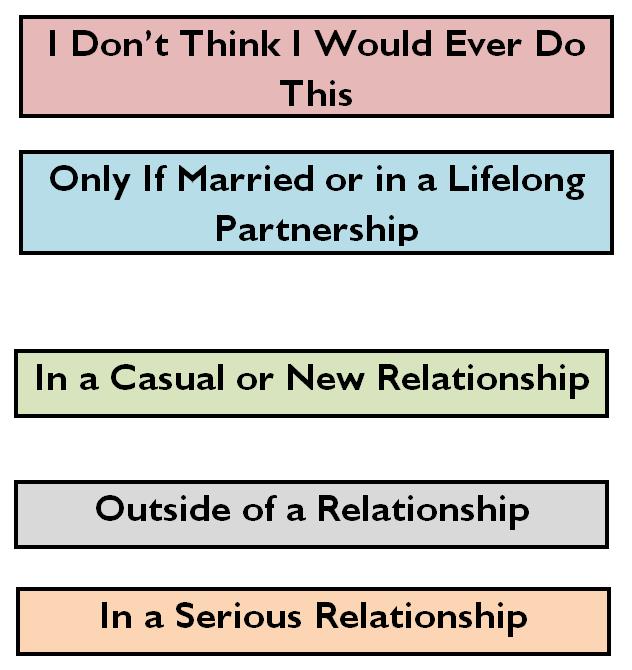
Instead of a continuum you could use categories- the categories we use help reinforce the idea of a continuum as well.  There is also a list of different levels of intimacy that can be used to classify these activities. Using the activity in this way is consistent with the concept of postponement- postponing intercourse until a relationship is more serious of formalized.

Sometimes when people see all the different acts of intimacy  they are surprised but it is important to be inclusive of all different forms of sexual expression.  We also don’t use all the different acts with every group, but we’ve given you a pretty comprehensive list that you can tailor to meet your student or child’s needs.

Download the intimacy activity intimacy activity pictures or with just words.

Levels of Intimacy

Levels of Intimacy

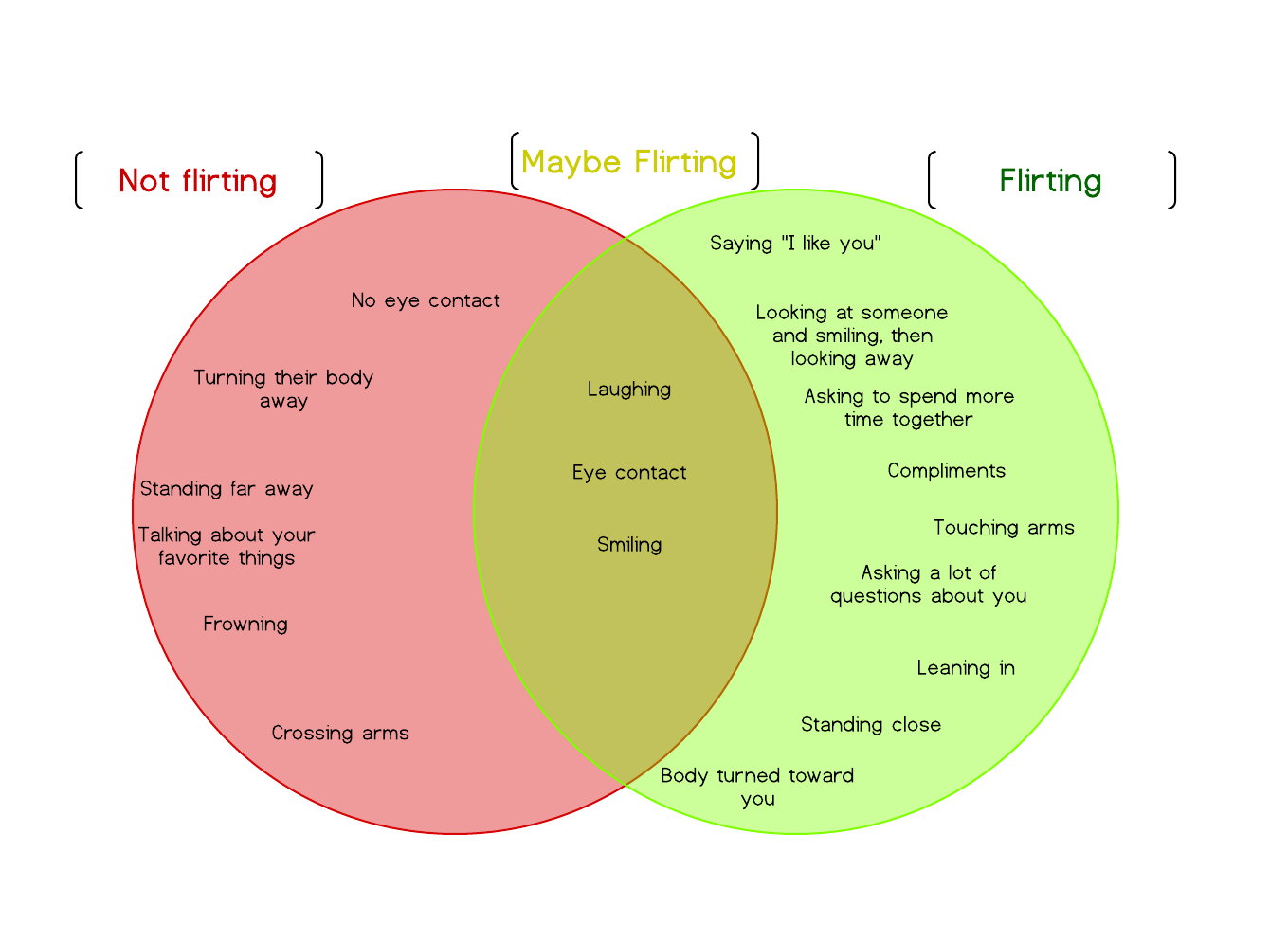
Signs of Flirting

Flirting can be a difficult subject to talk about because it always varies. This aid has some typical behaviors that are flirting, maybe flirting, and not flirting. It’s important to note that this is not a exhaustive list and that some of these behaviors are not guarantees of flirty or not flirty behavior, but it is a great place to start the conversation.  This activity can be used to steer a conversation about how and when flirting occurs, and the fluidity of these behaviors.

Download the signs of Flirting activity here.

Adult Human Sexuality Week 7- Sexual Health

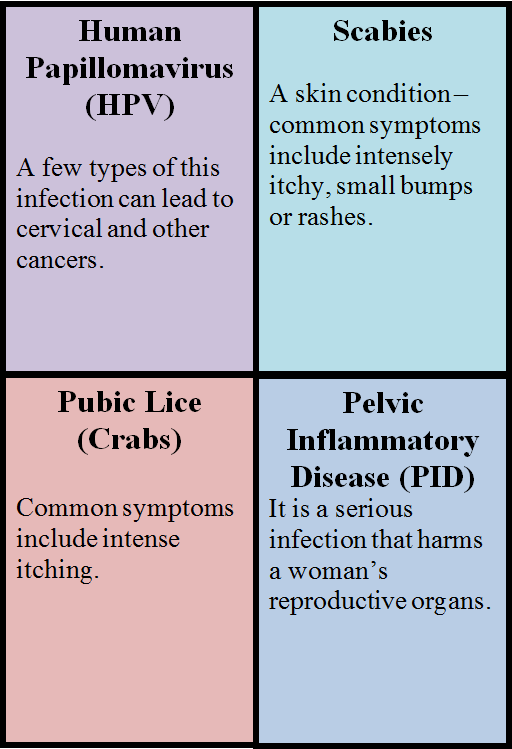
For our sexual health week stdswe talked focused on STDs and contraception methods although we did include more general health information in the newsletter.  We did a condom demonstration and then practiced putting on condoms (we used bananas as our phallics).  It was really important that we did that because several parts of putting on condom were tricky  such as opening the wrapper and making sure it wasn’t inside out.

We talked about the “morning after pill” and STD testing.  This is a more complicated topic for individuals with medical guardians.  Individuals have the right to these forms of medical care without guardian approval if they are part of post sexual assault forensics.  But what about outside of that context?  This was especially timely as we had this class the same week a New York judge struck down age limits on the “morning after pill”.

We played a game with contraception methods and STDs that mimic Go Fish.  It was a lot of fun.  The cards for the game are below.  Depending on your audience, you could either print out two copies of the same cards or there are two versions of each card so you can squeeze in twice as many facts.

If you’re teaching a class on this topic and would like to check out our materials, I’ve included them below.

Materials

High School Human Sexuality 101 Week 6- Power in Relationships

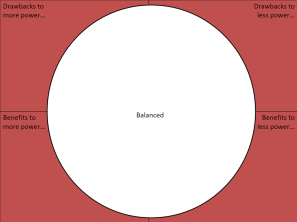
Power in Relationships The focus of week 6 was to better understand power relationships. During this week, the participants worked together on a activity that helped them to learn about power and control in relationships and specifically the benefits of having more power, benefits of having less power, drawbacks to having more power, and the drawbacks to having less power. The main concept that we were teaching with this activity is that there should be a balance when it comes to power. We first brainstormed  ideas on what it meant to have power in a relationship. After that, the participants discussed how different situations could be red flags that a relationship is not safe and we had them place those on the outside of the circle. We superimposed a circle onto our original brainstorming to reinforce this concept (using the powerpoint project and a dry erase board).
At the end of group we played a “Would you Rather” game to help them tune into how much power and control they prefer to have in relationships.  Students are asked about different relationships where there is a power difference (eg. parent-child). If they would prefer the more powerful option they take a step forward, the less and they stand still.  In my experience, individuals with disabilities are much more likely to choose a majority of less powerful positions in relationships. Food for thought.

For more information and activities on this topic see Adult Human Sexuality Week 5- Power Relationships

This Week’s Materials

Week 6 Slides

Parent Letter Week 6

YouTube Educational Resources: Healthchannel, Sexplanations, and CSPH

YouTube has a lost of great sexuality education resources but it can be hard to find among all of the “not safe for work” content.  Here’s a few channels and videos that might be useful.  One of the most difficult tasks sex educators report is explaining intimate acts.  This can be uncomfortable and difficult so I’ve tried to focus on these difficult to teach topics.  The videos may not be the best fit for the person/people you’re working with, but they can give you an idea where to start.  The channels also have great resources for expanding your own education on sexuality topics.


The Center for Sexual Pleasure and Health (CSPH) has a lot of great videos.  Is one of my favorite cites.  In addition to having direct information they also have videos for parents (“Use Your Words” videos).

Healthchannel is a YouTube channel with short videos on a variety of health care issues including sexual health resources including a few I’ve listed below.  The videos aren’t prefect.  They don’t feature animations with people with disabilities and focus on heterosexual couples, but they give very precise, clear information.

Sexplanations is another YouTube channel.  They have mini episodes on human sexuality topics from shared sexual behavior to STDs to anatomy.  Again the videos aren’t perfect.  They move a little too quickly than I would like, but I’ve selected a few I think could be helpful.  They could also be good to expand your own understanding of various topics.


Privacy Activity

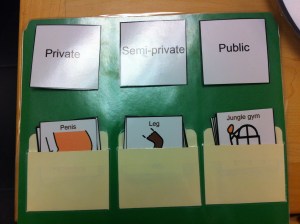
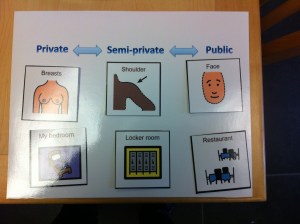
Teaching and learning about privacy can be difficult and confusing. This activity uses a continuum of privacy  (using private, semi-private, and public) to help differentiate privacy levels. There are two topics: body parts and places. You can use this activity to explain different privacy levels and explain contextual differences (i.e. a stomach can be a public body part at the beach, but a private body part at school) . Download the privacy activity places and body parts here!

privacy pocketsprivacy continuum

Social Narrative: Having a Boyfriend in Middle School

Boyfriend in Middle SchoolParents are often afraid of the day that their daughter comes home and says she has a boyfriend!  This social story having a boyfriend addresses this event to help a young girl understand what your expectations might be when it comes to having a boyfriend. We went with the strategy of instructing on how she can interact with her “boyfriend” in many age appropriate ways, for example, she can look at him, giggle, and then look away.

Adult Human Sexuality Week 8- Sexuality and the Law

At this stage in the game, my partner in crime took over teaching the course.  This is part of training paradigm were testing out where we partner with a community agency to teach the course.  We process course development together, I start out as lead facilitator, and then we transfer over.  For person who is facilitating also develops the materials.  In the end, the agency gets a copy of all the resources we developed (all the ones I’m sharing with you here).  If you’re interested in doing something like this and are in the Champaign-Urbana area, contact me:)

Everyone in our group really understood topics of sexuality and the law at the extremes so we spend most of our time processing situations that would be more nuanced and contextual.  These situations are quite difficult, even for individuals who have few/no intellectual impairments.  We gave some general guidelines, like Facebook commenting guidelines and also tried to simplify legal language.

People in the class were really interested in crime statistics regarding sexual violence.  We didn’t include a lot of that  information, but it is something that we might want to consider in the future.  It’s hard to balance providing people with accurate information but not sensationalizing or using scare tactics.

This week we used a case study activity.  I’ve never used this as a teaching tool before.  We read a news article about Facebook stalking.  I think the idea of using case studies is really interesting and I would like to test out this tool in the future.  I’d love to hear from you if this is something you’ve had success using.

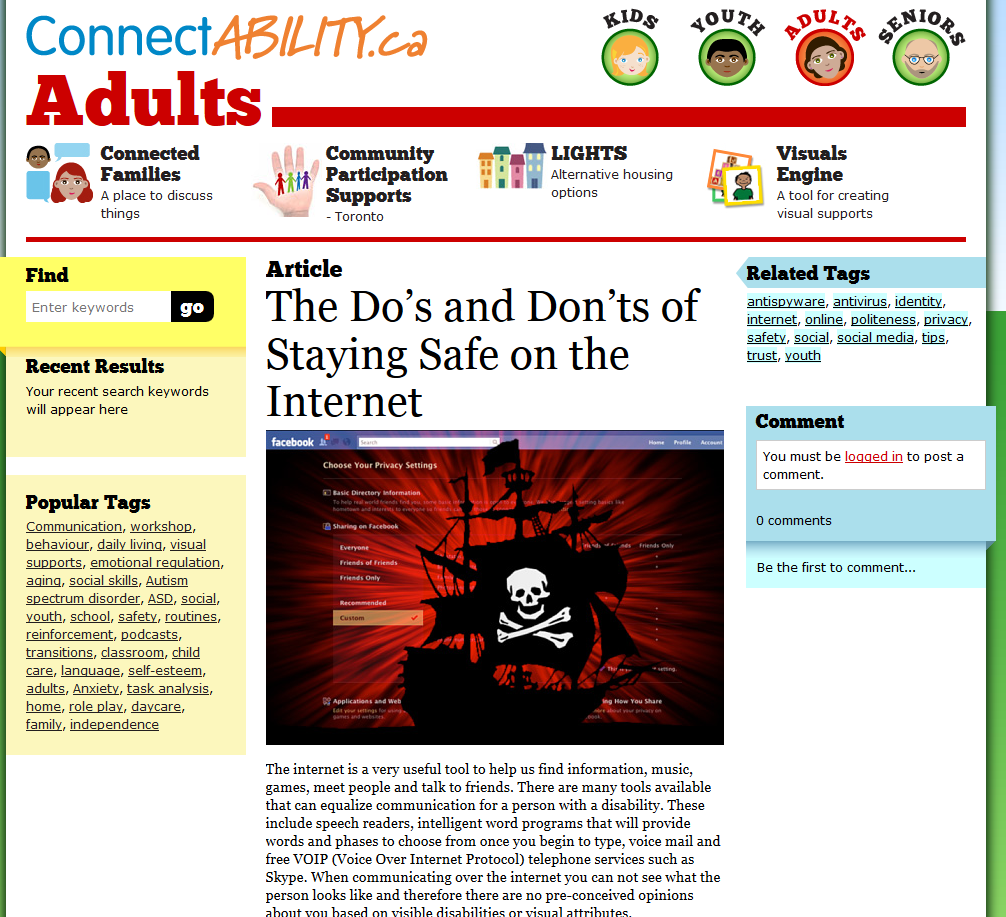
The article pictured below was featured in the Newsletter this week.  It’s from Connect Ability; a website that was specifically developed for individuals with developmental disabilities.

If you’re thinking about teaching this on your own, feel free to use the materials we’ve developed (below).

Materials

dos and don'ts

Adult Human Sexuality Week 10- Closing

ConnectionsThis week was just a review.  We had three review activities, but only got to two of them because we spent a lot of time on questions.  I posted all the topics and subtopics on the board and asked everyone to write three to five questions they had about any of the topics we covered in class.  Some of the questions were “What is considered to be by law a legal age to be sexually active?”, “What defines a person as a specific gender?”, What is the difference between having a crush on someone or just being in lust?”, “Can you provide an example of different ways for someone to commit voyeurism?”, Why do women get paid less than men who share the same job duties, nowadays, as a result of these stereotypes?”, & “Is it possible for a guy who may have any type of diseases to pass it on to a girl through rape?”.  I think actually seeing the questions tells me a lot about what people are picking up from class and what are areas we might of glossed over more.  I think it could be really fun to do this same activity the first week of class and then repeat it at the end.

If we would have got to everything, we would have role played situations where they would need to get information on sexuality topics after the class was over.  We did talk about this topic.  We did close with a values exercise where participants thought if they agreed or disagreed with different statements.  We had a lot of like minded people in our group so we would talk about why someone might feel differently then we do.  We sent participants home with a book that included supplemental material, material we covered in class that wasn’t in the handouts (activity based information), information from the newsletters, additional resources, and the worksheets they completed during class.  I hope that will be a useful resource for folks in the future.  We had such a nice time teaching the class- I hope the participants enjoyed it as much as we did (I think that they did!).


If you’re thinking about teaching this class, here are the materials we used.

Additional Materials

Adult Human Sexuality Week 9- Gender Roles

gender rolesIt was really fun teaching about gender roles.  Gender roles and gender identity were difficult concepts.  Most of the people in the group talked about wearing a dress as if it made you a women.  So we talked a lot about biology and society and how those both influence people and gender.  We also talked a lot about gender stereotypes and how they can put limits on how people act.

Our big activity this week was making gender stereotype collages.  We found images from magazines that we thought reflected gender stereotypes and made them into a collage.  We talked about which stereotypes were easy to break and which ones were hard to escape.  The men found a lot of images they thought were more realistic depictions of women.  In the future, I think it could be fun to structure that into the activity.

Throughout the entire session, one of the things that was really difficult is that there are gender roles, gender stereotypes, and gender identities.  They influence each other but they’re different.  It’s not so critical that folks in the class understand the precise definitions, but it might have been helpful to walk through that a little bit more concretely.  On the other hand it led to really nice discussion questions, for example one participant asked “What makes a person their gender?”

We used a couple videos in class.  The first video focused on gender identity.  It shows person in the process of gender reassignment.  Over the three year period you can see how their external appearance reflects gender identity more and more.

The second video is more about gender stereotypes and gender roles.  One of our participants brought up how boys don’t like to play with “girl toys” and I remembered having seen this and pulled it up (it’s nice when it works out like that!).

If you want to take a stab at teaching this on your own, hear are the materials we used.

Additional Materials

Symbols for Life- Picture Communication System

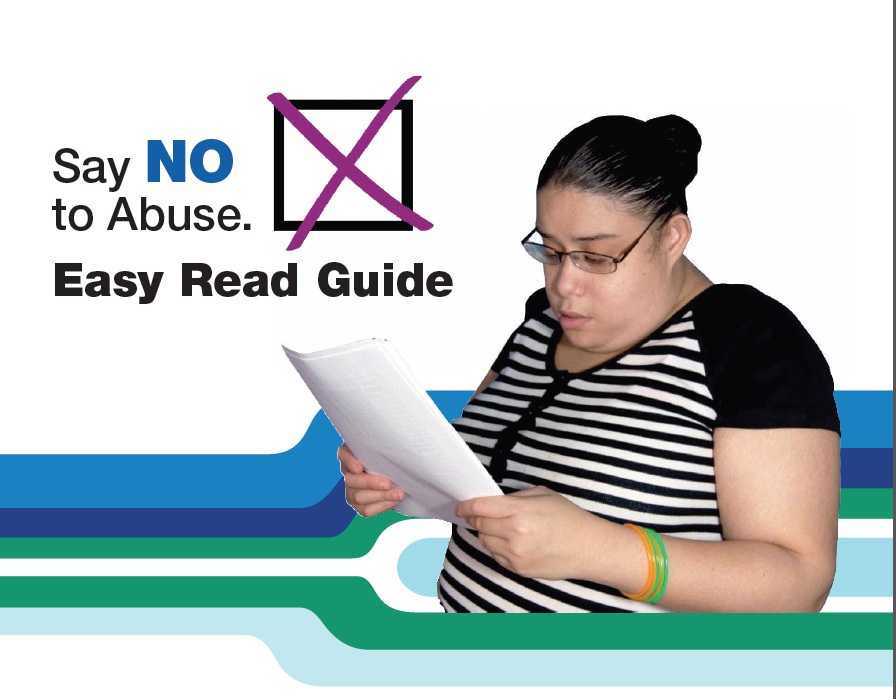
Untitled copyAn easy ready guide about abuse and neglect was forwarded along to me (thank you, Jennifer).  I think most agencies have adapted abuse and neglect information readily accessible to the individuals they serve and comparatively,  I thought this one was nicely done.  It’s made with a product called Symbols for Life.  Essentially, it’s a picture package featuring individuals with developmental disabilities.  One copy is $298.00 and then additional copies are discounted.  A lot of times, I like to make things with pictures of the individual I’m working with, but there are times when that is inappropriate/unfeasible.   I think this could be a good source for those occasions.

Here’s the Say NO to Abuse pdf if you want to check it out.

Circles and Life Horizons

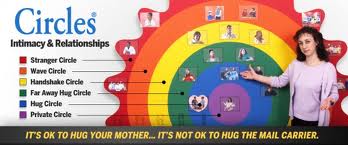
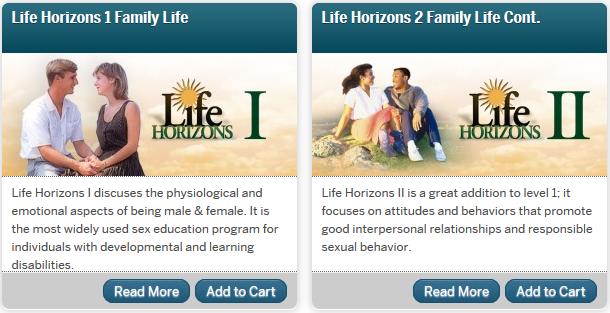
Circles and Life Horizons are two of the most popular human sexuality curriculum for adults with intellectual disability.

circlesCircles has two levels and two booster packs for $1999 which covers social distance, relationship building (Level 1), social distance expanded, relationship transitions (Level 2), recognizing/reacting  to exploitation, learning appropriate protective behaviors (Abuse Booster), communicable disease, and STD/AID (STD booster).  Again you can just buy specific levels.  This is appropriate for all age groups.

life horizonsLife Horizons is $799 for the two part DVD series which covers: parts of the body, sexual life cycle, human reproduction, birth control, sexual health (Level 1), building self-esteem, moral/legal/social issues male, moral/legal/social issues female, dating/love, marriage/other lifestyles, parenting, and preventing/coping with sexual abuse (Level 2).  You can buy either level separately.  Life Horizons is very useful.  They come with a workbook that you can follow.  It’s not necessarily the most engaging and there is sometimes inaccurate information.    It’s geered towards adults but could also be used with older teens.

This company has several other family life education programs that you might find useful such as “Janet’s Got Her Period” a curriculum for people with severe intellectual disabilities.

F.L.A.S.H.

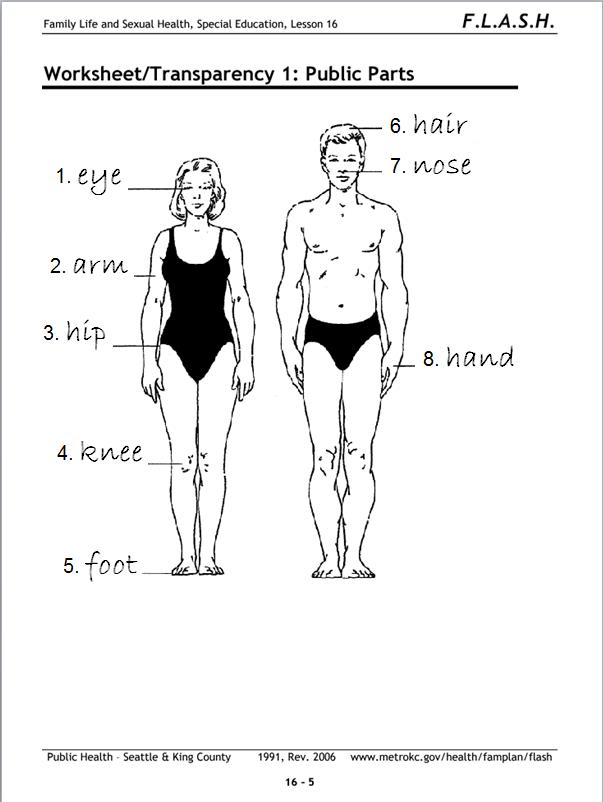
flashFLASH is a curriculum that was developed in the Seattle area and was adapted for students with special needs.  It’s free and has some nice lesson plans.  I don’t usually use any of them from start to finish on their own, but it’s a starting place to get ideas.  Did I mention that it’s free?  Many of the lessons have “transparencies” that are in Power Point form.

Developmental Disabilities and Sexuality Curriculum

ImageThis is a curriculum by Katherine McLaughlin at Planned Parenthood, Karen Topper at Green-Mountain Self-Advocates, and Jessica Lindert.  I know several folks who use this curriculum and really love it.  It was developed for adults, but they have a school expansion now.  If you already have the adult version you can get the supplement school materials for free.  

I think you get great bang for you buck with this curriculum.  It covers different types of relationships, public/private, friendship, communication, decision making, moving from friend to partner/sweetheart, many roads to relationships, being in a relationship, communicating about sex, decision making about sex, challenges or things that could go wrong, do you want to have a child, avoiding pregnancy, and getting a STI.

Privacy Social Stories and Notes on Language

living well with autismI wanted to put you in touch with a website called “Living Well with Autism“.  They have several Board Maker Social Stories related to privacy.

Privacy Social StoryWhile I think overall this site has some nice ideas, I’d be careful about using “Good Touch Bad Touch”.  Good/Bad may bring up feelings of guilt, could be over generalized, and might be confusing as an assault often starts with touches that feel good then moves to touches that feel bad.  Also, there are some studies that have shown that children understand the word touch differently than adults.  For example they wouldn’t categorize people kissing as touching, because well, they’re kissing.  I think this could be a problem for someone with an intellectual disability that doesn’t categorize well.  I like the terms safe and unsafe touch.  I also like saying touching makes you feel something.  If a touch feels good, it’s probably safe.  If a touch doesn’t feel good it’s probably not safe.  Then you can teach specific kinds of touches.  Having said that, the site gives you some good Social Stories to start with.  Pictured left is part of one of their  stories.

Just another note on language.  There is a movement among abuse prevention advocates to alter some our terminology when talking about sexual abuse prevention.   I mention in my workshop that we have to be careful when talking about using education to help prevent sexual abuse because it implies that the individual is responsible for reducing his or her own risk.  Alternative terminology includes personal safety skills, abuse-response skills, or self-protection skills.