Discover Intimacy Coaching: Reclaiming Connection and Pleasure

Intimacy coaching is a specialized type of relationship coaching that focuses on helping emotional and physical intimacy. Intimacy and connection are essential parts of being human. Everyone deserves the chance to experience it fully. Intimacy coaching offers a supportive, judgement-free space to help individuals or couples explore and deepen their capacity for emotions, physical, and even spiritual intimacy. An intimacy coach helps you reconnect with your desires and communicate your needs. If you’re looking to bring back the spark, try something new, or simply understand your needs/desires better, intimacy coaching is the perfect way to go. 

To learn more about what intimacy coaching does, watch this video.

Here are some intimacy coaches that have great reviews and cater towards people with disabilities. 

Joslyn Nerdahl: Certified Sex Coach and Clinical Sexologist, Physical Disabilities

Joslyn Nerdahl is an intimacy coach who specialize in working with people with physical disabilities. She believes that communication and consent are the foundation of healthy intimacy. She has a passion for helping people learn how to talk about sex openly and provides a safe space for her clients to explore their needs and desires. Her services include intimacy coaching, sex education, and sexual rehabilitation. Learn more about her: Services – Joslyn Nerdahl

Grace Myhill: Intimacy Coach, Neurodiverse Couples Coaching

Grace Myhill is a couples coach and educator who specializes in working with couples where on or both partners are a person with autism. She focuses on each partner experience and validating each other their perspectives. She wants to help both partners work together to build emotional and relation skills. If you want to know more about her work visits her website: https://www.gracemyhill.com/

Dr. Mitchell Tepper: Sex Coach and Educator for People with Physical Disabilities

Dr. Mitchell Tepper is an educator who specializes in working with individuals with disabilities and chronic conditions to help reclaim pleasure and intimacy. His approach focuses on empowerment, inclusion, and accessibility. He emphasizes that everyone, regardless of physical ability deserves access to intimacy, pleasure, and love. To explore his work and resources visit his website: Coaching – Dr. Mitchell Tepper

Amy Gravino: Autism and Sexuality Advocate, Speaker, and Relationship Coach

While Amy Gravino is not an intimacy coach, she still advocates for autism sexuality. She is an educator who empowers autistic adults to embrace healthy relationships, self-advocacy, and sexual expression. If you want to learn more about her advocacy or watch one of her videos visit: A.S.C.O.T Consulting

I think intimacy coaching is a great way to explore yourself, your relationship, and spice things up.
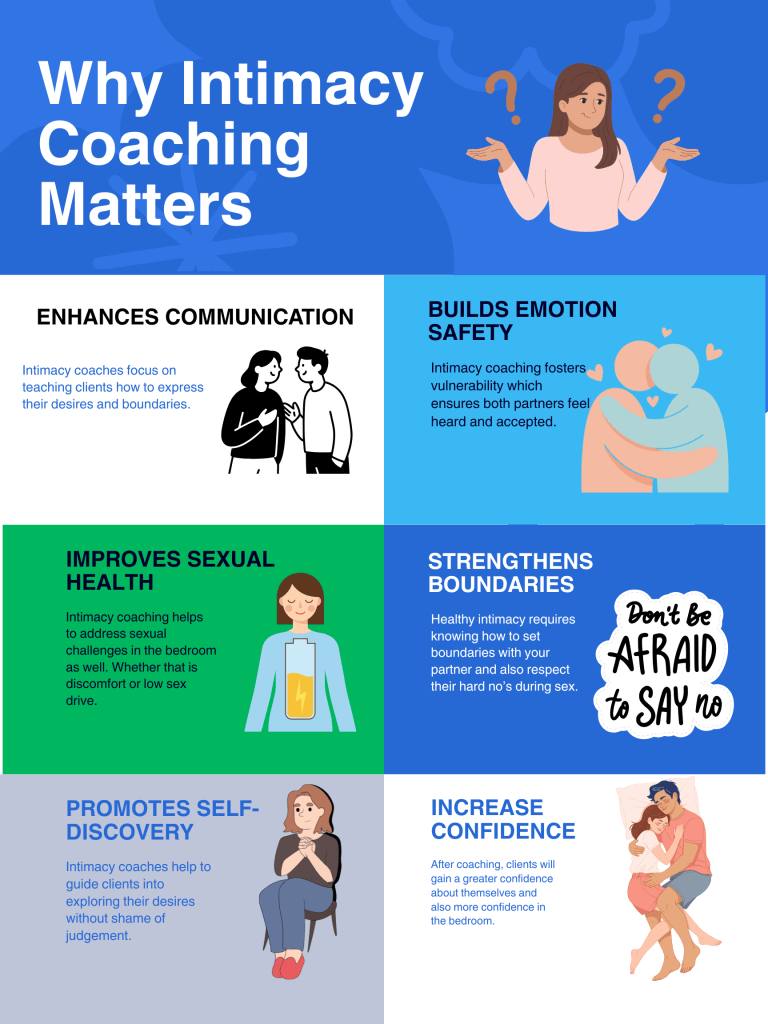
Why intimacy coaching matters. Enhances communication. Intimacy coaches focus on teaching clients how to express their desires and boundaries. Builds emotion safety. Intimacy coaching fosters vulnerability which ensures both partners feel heard and accepted. Improves sexual health. Intimacy coaching helps to address sexual challenges in the bedroom as well. Whether that is discomfort or low sex drive. Strengthen boundaries. Healthy intimacy requires knowing how to set boundaries with your partner and also respect their hard no’s during sex. Promote self discovery. Intimacy coaches help to guide clients into exploring their desires without shame of judgement. Increase confidence. After coaching, clients will gain greater confidence about themselves and also more confidence in the bedroom.

How to Guide on Flirting Online

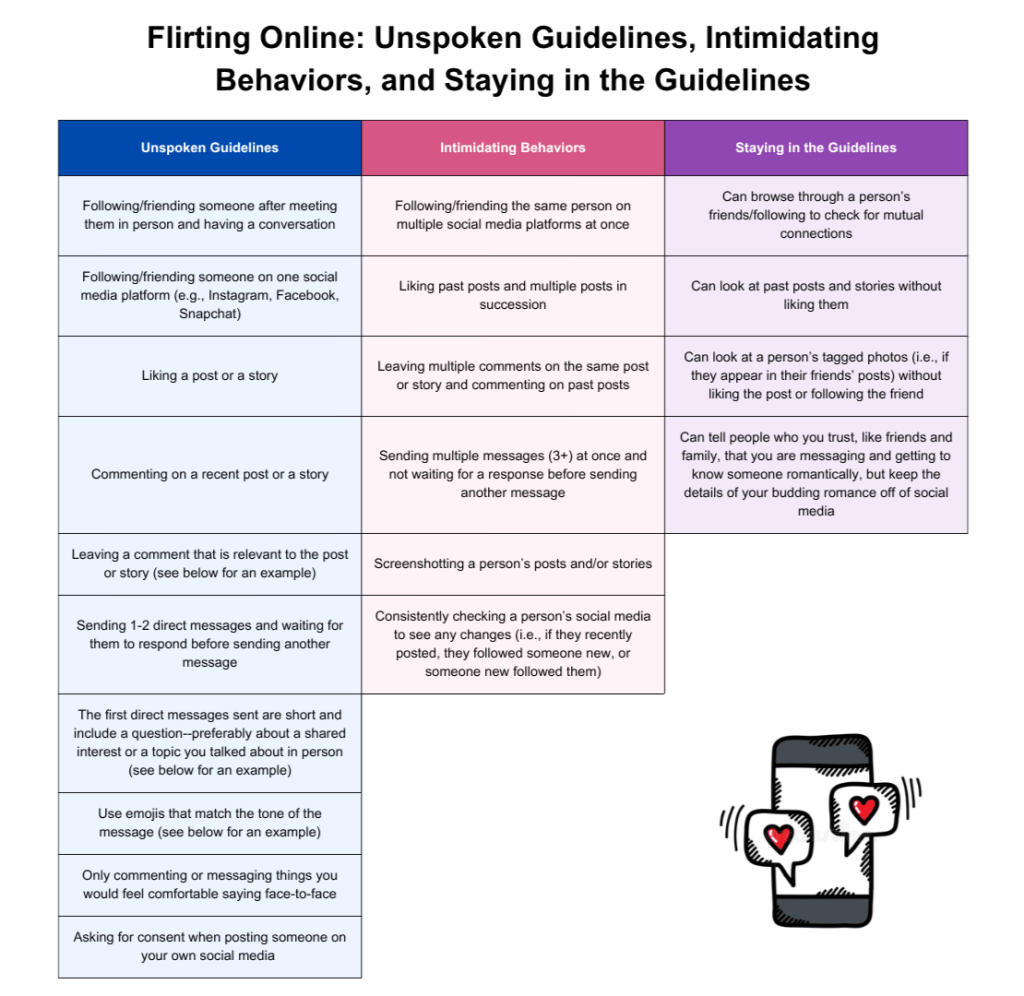
Social media can be difficult to navigate as there are unknown “rules” and behaviors that are widely followed when first interacting with others, especially those you are interested in romantically. This aid demonstrates several unspoken guidelines, intimidating behaviors, and tips on staying within the guidelines on social media when trying to flirt. It is worth mentioning that this is not a comprehensive list of all guidelines and intimidating behaviors, but rather a guide to help you talk to your crush online in a fun, respectful way that keeps everyone comfortable. As a 21-year-old who has been online from a young age, some of these guidelines are based on my own experiences and knowledge.

Table of unspoken guidelines, intimidating behaviors, and tips on staying in the guidelines. From top going down, unspoken guidelines: following/friending someone after them meeting in person, following/friending someone on one social media platform, liking a post/story, commenting on recent post/story, leaving relevant comments on posts/stories, sending 1-2 direct messages and waiting for a response before sending another message, the first direct messages are short and include a question, use emojis that match message tone, only commenting/messaging things you can say face-to-face, and ask for consent when posting someone. From top going down, intimidating behaviors: following/friending someone on multiple social media platforms at once, liking past posts and multiple posts in succession, leaving multiple comments and commenting on past posts, sending multiple messages at once and not waiting for a response before sending another message, screenshotting posts and stories, and consistently checking a person's social media for any changes. From top going down, staying in the guidelines: can browse through a person's friends/following, can look at past posts and stories without liking them, can look at a person's tagged photos without liking the post or following the friend, and can tell people who you trust, like friends and family, that you are getting to know someone, but keeping the details of your budding romance off of social media.

Example of a relevant comment: Someone posts a photo of them graduating school and you comment, “Congratulations!”

Example of a direct message: You talked to someone last week about a book series and sent this message: “Hi! It’s [your name], we talked last week about [book series]. I started reading it and really liked it. Do you have any other recommendations?”

Examples of using emojis: (1) You are messaging your crush about a movie that you both recently watched and talking about a scene that left you in disbelief: “I can’t believe that happened 😭 I was not expecting it at all!” (2) You made plans to hang out with your crush in person and sent this message: “I’m excited to hang out on Saturday 😊 See you then!”

Teen Vogue has a list of questions to keep the conversation going with your crush, whether you’re looking for something low-pressure, flirty, deep, random, interesting, or just plain fun.

The Napoleon Cat Blog gives some tips for commenting on someone’s post, showing different examples for different post scenarios. Some of them are intended for friends, but can still be used for your crush’s posts. Their 35 Short Comments for Instagram section is best used when you first start commenting, as they are simple, not intimidating, and friendly.

Advocates for Youth – Sex Education Lesson Plans

Advocates for Youth is an organization that is dedicated to improving sexual and reproductive health among adolescents and securing the rights of young people.

Advocates for Youth recognizes that sex education should equip people with tools to make informed decisions about sex and relationships, instead of withholding information and telling young people not to have sex.

The organization works with AMAZE to publish animated videos that provide children and adolescents with accessible and age-appropriate sexual information. More information about AMAZE can be found here.

Advocates for Youth offers a K-12 sex education curriculum specifically for students with intellectual disabilities that includes all of the topics the Centers for Disease Control and Prevention has labeled as essential. The curriculum emphasizes the importance of rights, respect, and responsibility, and covers topics such as gender identity, race, and healthy relationships. This curriculum can be found on the Advocates for Youth website, linked here.

In addition to making efforts to improve sexual education in the classroom, Advocates for Youth hosts virtual and in-person events for people interested in learning more! Some of their previous events involved discussions about STIs, abortion, and consent.

Oak Hill Positive Choices

Oak Hill Center for Relationship and Sexuality Education (CRSE) looks to educate and increase access to important sexual health information through various preventative programs. They also aim to decrease the vulnerability to sexual abuse that the intellectual/developmental disability community endures. They offer different curriculums, workbooks, parent/caregiver workshops, professional development workshops and therapeutic education.

Their most recent curriculum, Positive Choices, is designed for secondary students and aims to improve critical judgement about sexual health and relationship safety. On top of this, students will learn life skills, safe boundaries, women’s and men’s health, healthy relationships, and sexuality. This curriculum can be purchased on the Oak Hills website and costs $430. The teacher’s manual can be purchased for $180, and the student workbook is $25. Information is linked below: http://relationshipandsexuality.oakhillct.org/positive-choices/

Healthy Realationships and Autism

healthy relationships and autismA new curriculum called “Healthy Relationships and Autism” is now available from Wesley Spectrum (a behavioral health organization with several locations in the Pittsburgh, PA area). It was designed to teach skills to adolescents and young adults with Autism Spectrum Disorder or cognitive challenges in the areas of self care, sexuality, and relationship development.  Their website has an example lesson to help you determine if it would be right for your students.  They do not publish their pricing information (you have to email them for more information but they will send you a sample packet).

I have not used this curriculum but there is some evidence of it’s effectiveness.  A study published in School and Educational Psychology evaluated this program with six students.  These students showed increases in sexual knowledge which they retained one month after completing the class.

PEERS Program

The Program for the Education and Enrichment of Relational Skills (PEERS) was originally developed at UCLA by Dr. Elizabeth Laugeson, Founder and Director of the UCLA PEERS Clinic, and Dr. Fred Frankel in 2005 and has expanded to locations across the United States and the world. PEERS is a manualized, social skills training intervention for youth with social challenges.

There are four options for getting training in PEERS. (1) The PEERS Certified Training Seminar last two days and is hosted at UCLA.  It is designed specifically for mental health professionals and educators interested in learning and/or implementing the PEERS intervention into their clinical practice. (2) PEERS provides off-site training seminars, presentations or talks for a variety of agencies based on their specific needs.  These may range from 1-4 days, with varying costs. (3) The PEERS Certified School-based Training for Educators is designed exclusively for teachers, school psychologists, counselors, speech and language pathologists, administrators, and school-based professionals who are interested in learning to implement The PEERS Curriculum for School-based Professionals. Attendees will obtain 24 hours of training over 3 days and this training also takes place at UCLA. And (4) PEERS provides off-site School-based training seminars, presentations or talks for a variety of agencies based on their specific needs.  These may range from 1-4 days, with varying costs.

The PEERS program naturally lends itself to sex ed instruction.  For example, the adolescent program focuses on

  • How to use appropriate conversational skills
  • How to find common interests by trading information
  • How to appropriately use humor
  • How to enter and exit conversations between peers
  • How to be a good host during get-togethers
  • How to make phone calls to friends
  • How to choose appropriate friends
  • How to be a good sport
  • How to handle arguments and disagreements
  • How to change a bad reputation
  • How to handle rejection, teasing, and bullying
  • How to handle rumors and gossip

This video features a program that uses PEERS for sex ed

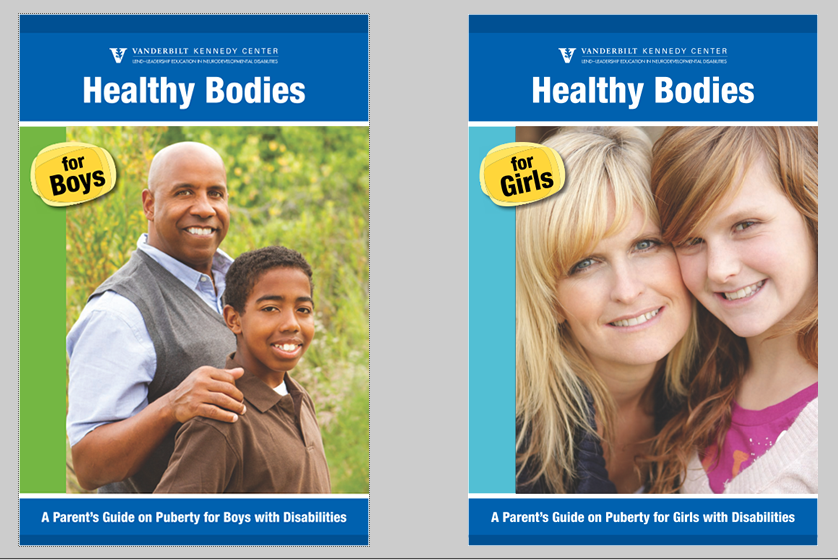
The Healthy Bodies Toolkit

Healthy bodiesThis publication was developed and written by Vanderbilt Leadership Education in Neurodevelopmental Disabilities (LEND).  There is a boy version and girl version.  Each version has a booklet for parents or teachers and supplemental materials which include storyboards and visuals that you can use in implementing the methods outlined in the toolkit.  It is free and there is a Spanish version!

Here is the website: https://vkc.vumc.org/healthybodies/

Adult Human Sexuality Week 1: Welcome

In the first week of the adult human sexuality class, we focus on meeting the others in the class and establishing a level of respect and expectations for the class.

First, the group will create a list of rights and responsibilities.  We’ll start with a writing reflection of what participants think the rights and responsibilities should be.  As needed the facilitators will prompt important rights/responsibilities that should be included on the list including: to be heard, to ask any questions, to not be put down, to pass, to not have assumptions made about you, to have your own feelings, to say hello and good-bye to group members, to be present and confidentiality.  We will briefly discuss each right/responsibility.  These rights/responsibilities will be posted in each session.  The rights and responsibilities help establish safety and the tone of the sessions.  They serve as a guideline so participants know what is expected.

We will also create a question box and name cards and then there will be an ice breaker activity so the group gets the chance to learn about each other. Then, there will be a discussion about what human sexuality is and discuss the group’s thoughts of human sexuality.

Lesson 1 Materials

Human Sexuality Newsletter Week 1

Adult Sexuality week 1 Lesson Plan

Lesson 1 Worksheet

8 Week Middle School Human Sexuality Curriculum

Over the summer, I did a 8 week sexuality class with middle school students with autism (3 boys and 3 girls).  I’ve posted each lesson from the curriculum, but I thought I’d link all the posts together so you could get to them in one place.  For each session there is a lesson plan, parent letter, and power point slides.  Some lessons also have worksheets.  I’ve also commented about how the lessons went and some ideas for adaptation.  Click on the links below to go to the posts and access the materials.

Human Sexuality 101 topic

*We sent home a workbook with follow up/supplemental material during this lesson.  The workbook is available on the post.

High School Human Sexuality 101 Week 1: Welcome

This summer, at TAP in Urbana-Champaign, we are doing an eight week human sexuality group for middle school students.  We have three boys and three girls in our group who range in age throughout the middle school years (from starting 6th grade to finishing 8th grade).   Check out the slides that accompany the lesson.

Our first week was a blast.  You can check out the full curriculum here [Sex Ed week 1].  We used a worksheet to help the students come up with their own definition of human sexuality.  I love the definition we came up with as a group, “Sometimes human sexuality topics make us feel uncomfortable, but it’s a part of life, specifically, part of our private life.  Human sexuality is about how we feel about people like loving someone and liking someone, but sometimes two people’s feelings may not match with each other. Human sexuality has to do with emotions, the body, and relationships.”

We sent a letter home with parents that explained the activities with fairly significant detail, touched on next weeks activities, and provided additional resources.  One of the important parts of this letter was suggestions for ways to incorporate these topics at home.  This week, as it was mostly about introductions, the parent component focused on using the rights and responsibilities at home.

High School Human Sexuality 101 Week 2- Anatomy

FemaleReproductiveSystem_Lateral_250w

Anatomy and Reproduction were the topics for week 2. We started off the session with a game called “Parts and Post-it Notes” to talk about body parts with the participants. To play this game we had a giant piece of paper with the outline of a body on it. We gave the participants post-it notes to write down the body parts that they knew and asked them to place them on the outline of the body.

After this activity, the participants were told that for the rest of the class they would be focusing on body parts related to reproduction (another way to refer to sex organs or private parts). The participants were then directed to the next activity where they practiced saying terminology related to reproduction out loud and recording their responses to how saying the words made them feel.

When the participants finished the terminology activity, we spit them into two groups to start the fruit anatomical model of reproductive organs using fruit. The participants were shown a picture of the parts of the body and were giving tooth picks and flash cards to label the fruit parts and their functions. This activity was great for the participants to learn the vocabulary in a little abstract and safe way! For a more concrete example of reproduction, we used the “Miracle of Life” video to explain the process.

We ended this session by having the participants briefly summarize that they learned during the session.

For more information on anatomy view our Human Sexuality 101 Week 2- AnatomyEXPLAINING ANATOMYYOUTUBE EDUCATIONAL RESOURCES: HEALTHCHANNEL, SEXPLANATIONS, AND CSPHADULT HUMAN SEXUALITY WEEK 2- ANTATOMY & REPRODUCTION posts

This Week’s Materials

Week 2 Lesson Plan

Week 2 Slides

Parent Letter

Worksheets

Anatomy labels

High School Human Sexuality 101 Week 3: Body Image Lesson Plan

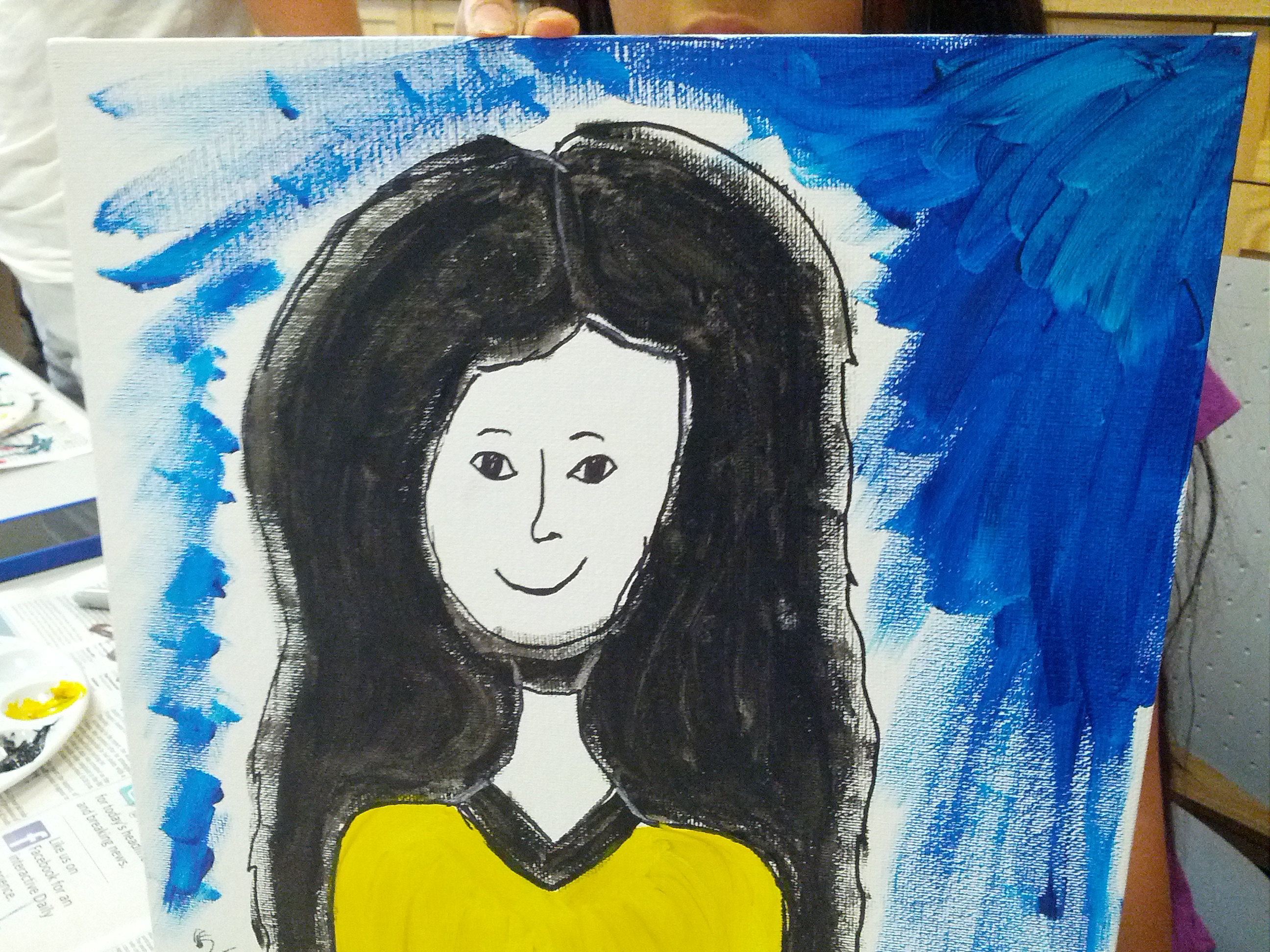
IMG_20120718_152104This lesson plan revolved around teaching what body image means, understanding that people feel differently about their bodies, and that people change how they feel about their bodies over time.  After doing several knowledge based activities, we moved to exploring how the students felt about their own bodies.

There was one theme that was really relevant for the student we were working with.  She was really interested in her perception of self and others perception of her.   In her self-portrait, she focused on the things that make her her; most of these were things you couldn’t see.

We also read body stories.  Each had a picture of a body.  Just seeing the images was really moving.  We were planning mostly for girls, but I included a story that might be more appropriate for a male audience.  The young woman chose to read the story about the women who was the most traditionally beautiful (not really a big surprise).  This was a story about a woman with chronic illness.  Serendipitously, the body story resonated concepts that this student was working through.

Materials

Lesson Plan

Slides

Parent Letter

Body Stories (all female) from This is Who I Am by Rosanne Olson (her website is http://bodyimagebook.com)

Body Story (male)

Dove Clip

High School Human Sexuality 101 Week 4- Crushes

 During week 4, we focused on understanding crushes.

There were three activities for the participants this week:

Crushes

What is a crush? 

The participants first brainstormed things that a person with a crush might feel or think. Participants had different levels of understanding on what having a crush meant to them. The purpose of this activity was to help the participants to understand that crushes are a special set of thoughts and feelings about another person. We later discussed thoughts and ideas that the group may have that may be unsafe when it comes to having a crush.

How to deal with a crush?

We used three videos to help the participants to understand how to deal with a crush. The videos covered these topics: What if you like a friend, How to tell if a guy likes you, and How to get a guys attention. These videos give concrete ways to deal with a crush.

Turning someone down

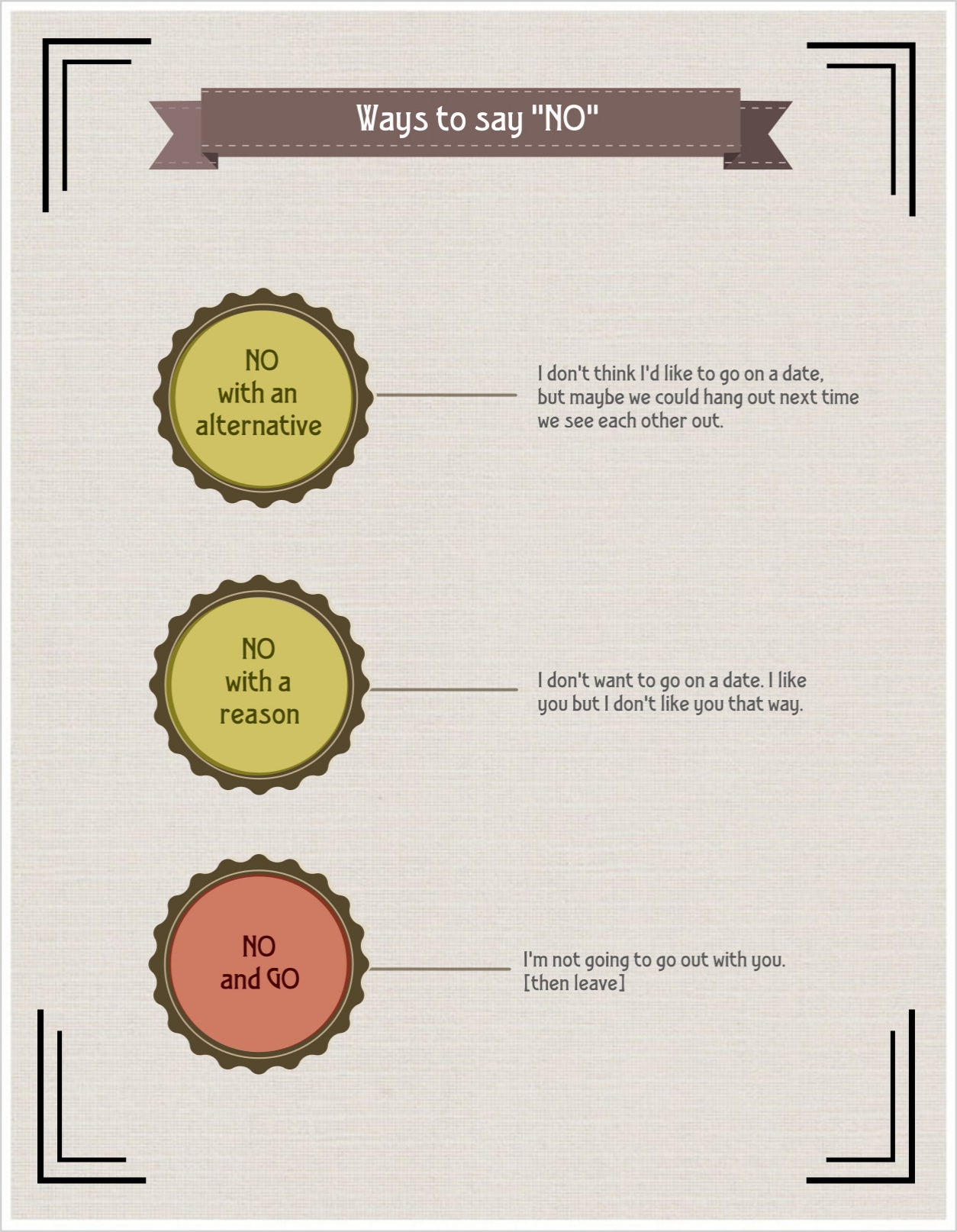
We used a video about how to say no to deal with a variety of situations when it comes to turning someone down.

For more information and activities on crushes visit our Human Sexuality 101 Week 5- Crushes and Adult Human Sexuality Week 3- Crushes curriculum

This Week’s Material

Week 4 Powerpoint

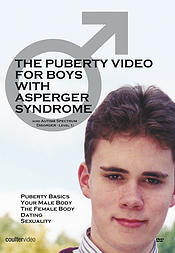
Puberty Videos for Boys & Girls

DVDB101_outHere are videos that were developed for 10 – 17 year olds on the autism spectrum regarding puberty & other sexuality topics.  They are clear, concrete, and move through the material slowly (this is one of the biggest problems with videos for a general audience- they go too fast!)

My favorite thing about the videos is that the male instructor is an individual with autism.

All of the videos can be found on www.coultervideo.com, a website that sells videos by Dan & Julie Coulter.  Dan & Julie are parents of a son with ASD who started creating educational videos on their vacation and now do it full time.

Videos that may be useful:

Adult Human Sexuality Week 3- Crushes

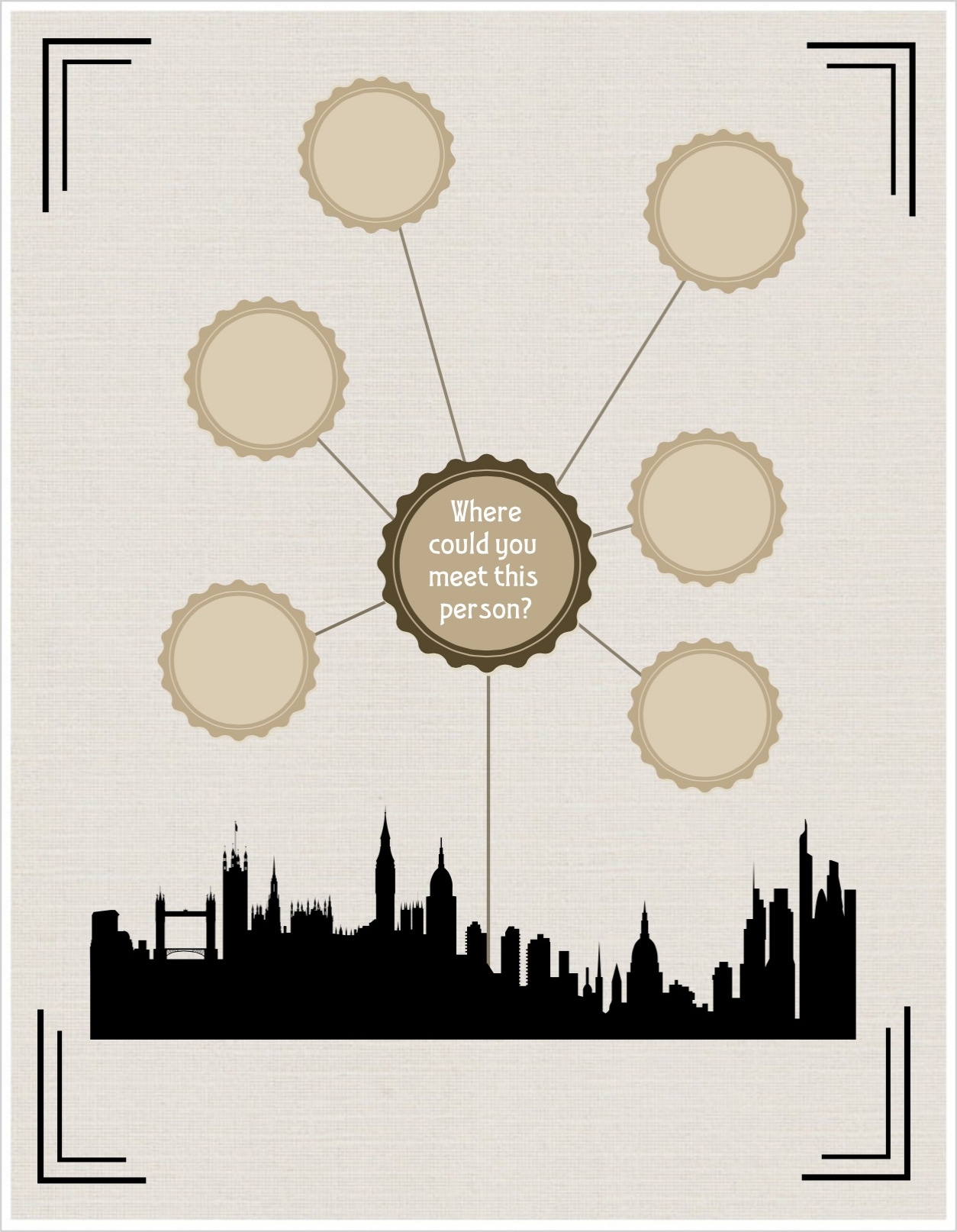
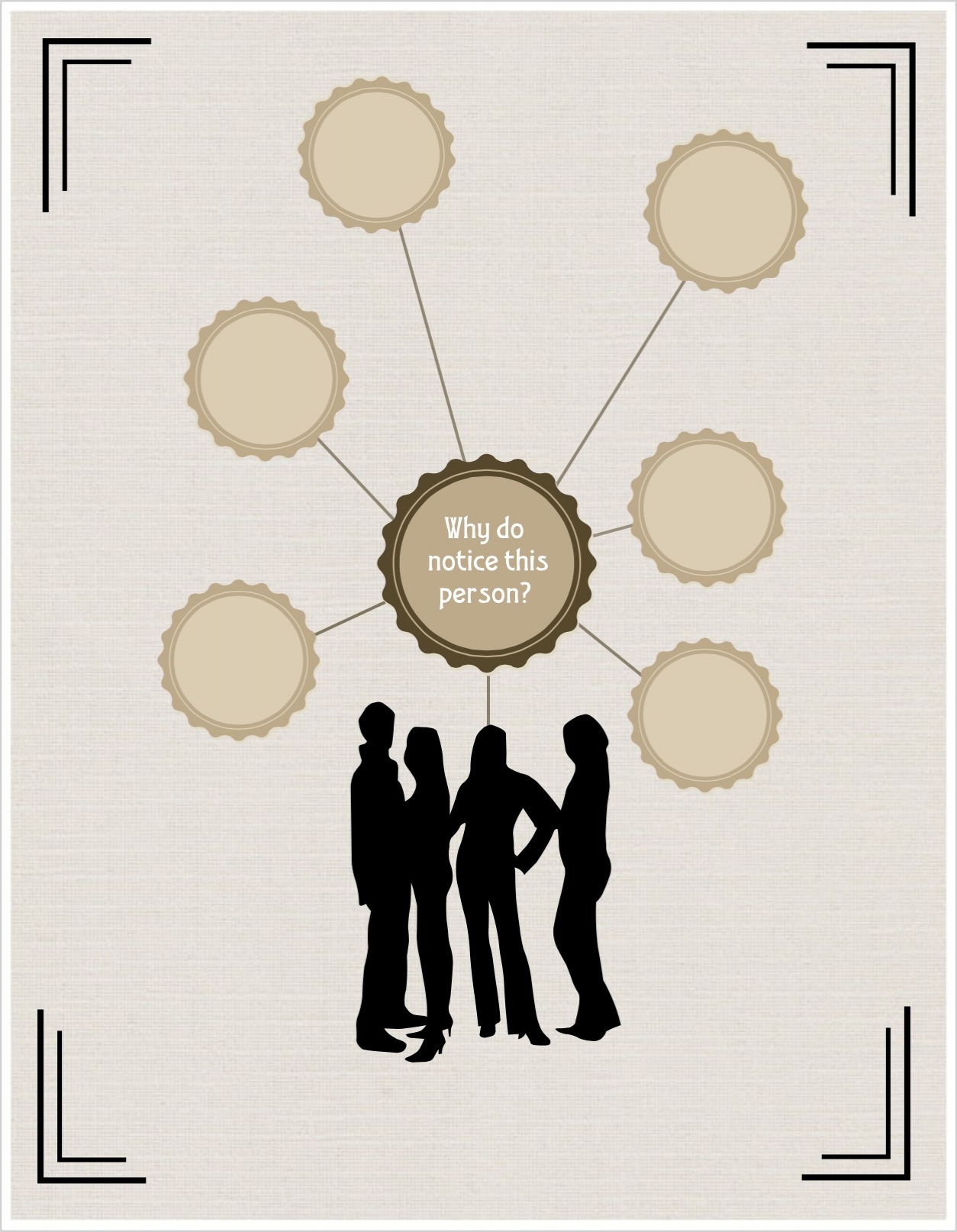
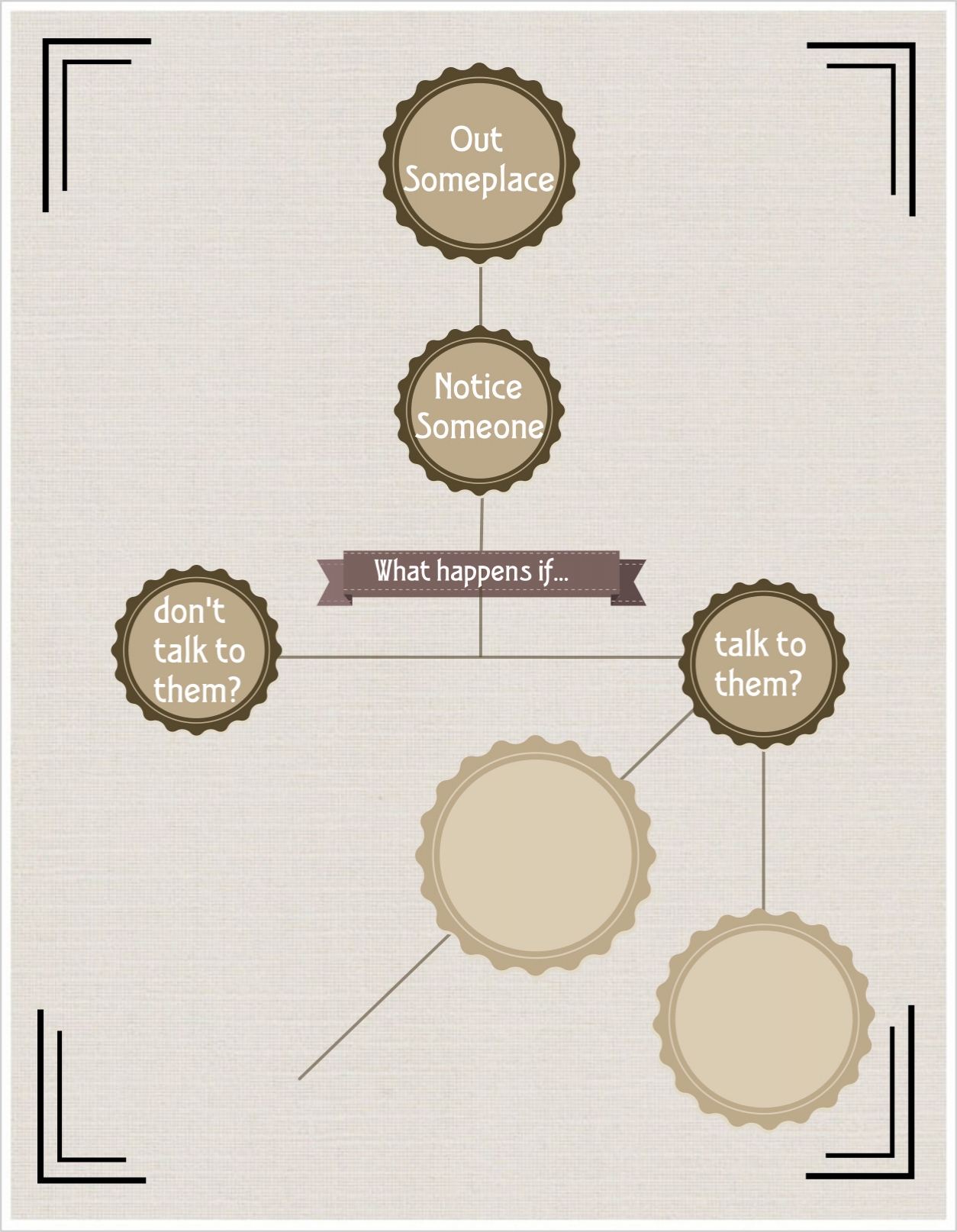
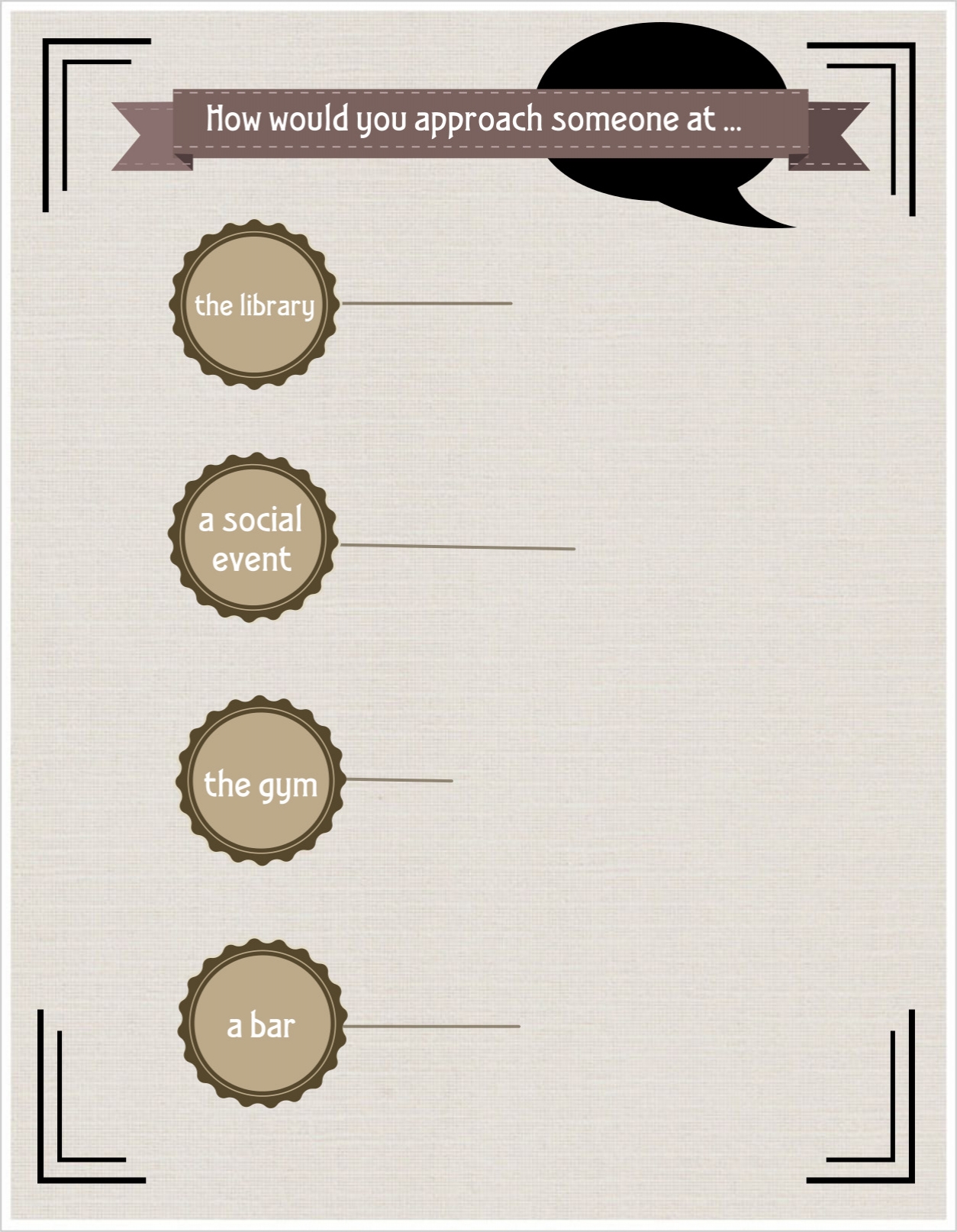
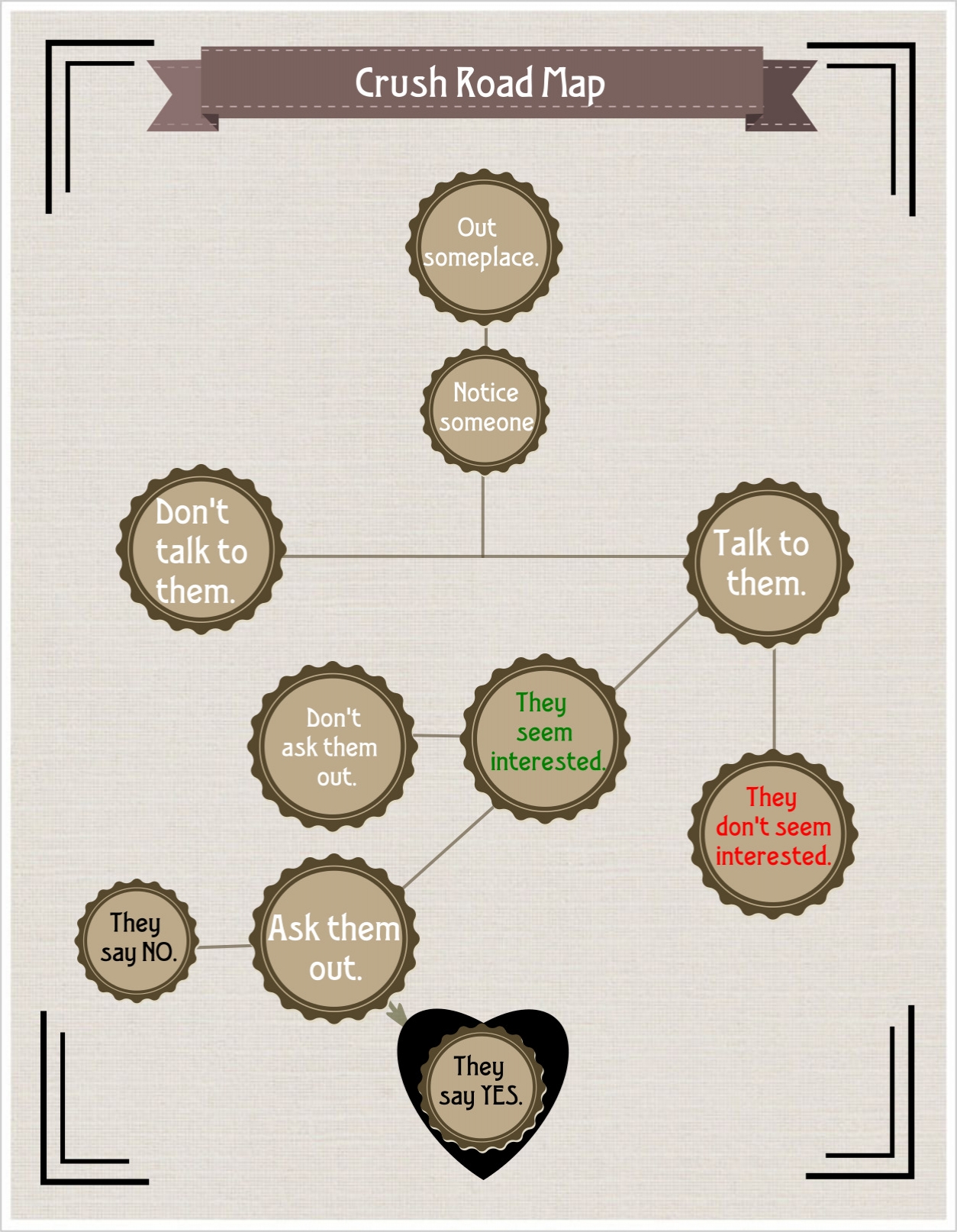
Where do you meet_1why notice_2to talk or not to talk _3approach _4Intersted or not _5road map _6say no _7

The main activity this week was a series of worksheets designed around walking participants through the steps of having a crush: places to meet someone, why you notice someone, deciding to talk to them or not, signs of being interested, approaching someone, asking out on a date, and saying “No”.   Probably the most difficult question on the worksheets was, “why do you notice this person?”  Many of the participants focused on things the would like if they got to know someone.  It took several prompts, but they were able to start thinking about the things they notice about others, the things that draw their attention.  When we got to different ways to approach someone there were many questions on bar etiquette.  We talked about buying drinks for others, when it’s expected to approach people and when it’s not, and the difference between the bar sitting area and table sitting area.  We didn’t get to our final activity, but were were going to sequence the road map with pictures of couples at different stages.  We have a little bit of a time management problem because there’s no clock in the room.  It’s the little things!

We gave them two additional resources this week.  First we sent them to a website on how to build self confidence.  We also suggested the book, What Men With Asperger Syndrome Want to Know About Women, Dating and Relationships by Maxine Aston.

Get all the materials for this weeks lesson