This lesson plan revolved around teaching what body image means, understanding that people feel differently about their bodies, and that people change how they feel about their bodies over time. After doing several knowledge based activities, we moved to exploring how the students felt about their own bodies.
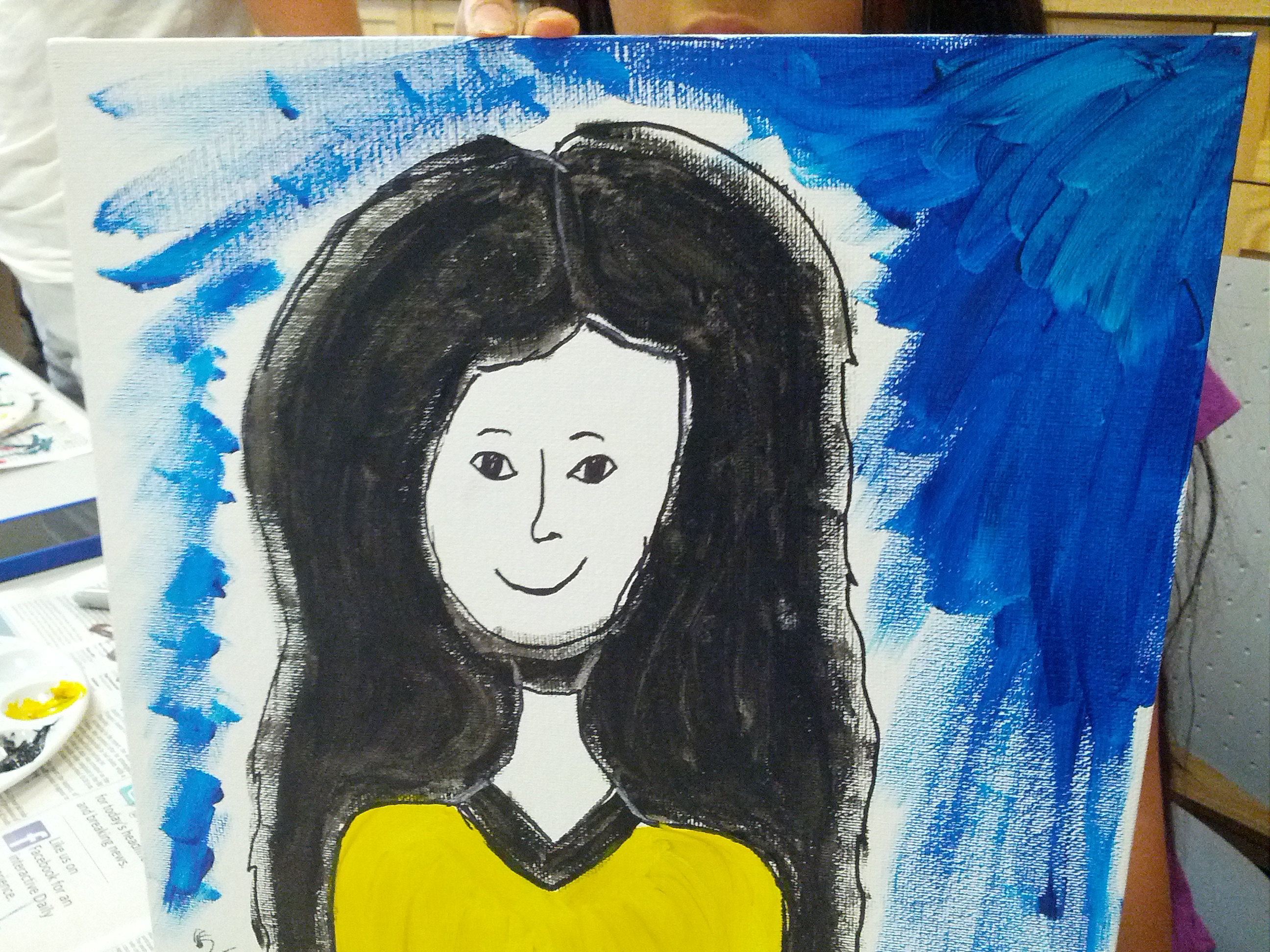
There was one theme that was really relevant for the student we were working with. She was really interested in her perception of self and others perception of her. In her self-portrait, she focused on the things that make her her; most of these were things you couldn’t see.
We also read body stories. Each had a picture of a body. Just seeing the images was really moving. We were planning mostly for girls, but I included a story that might be more appropriate for a male audience. The young woman chose to read the story about the women who was the most traditionally beautiful (not really a big surprise). This was a story about a woman with chronic illness. Serendipitously, the body story resonated concepts that this student was working through.
Here are videos that were developed for 10 – 17 year olds on the autism spectrum regarding puberty & other sexuality topics. They are clear, concrete, and move through the material slowly (this is one of the biggest problems with videos for a general audience- they go too fast!)
My favorite thing about the videos is that the male instructor is an individual with autism.
All of the videos can be found on www.coultervideo.com, a website that sells videos by Dan & Julie Coulter. Dan & Julie are parents of a son with ASD who started creating educational videos on their vacation and now do it full time.
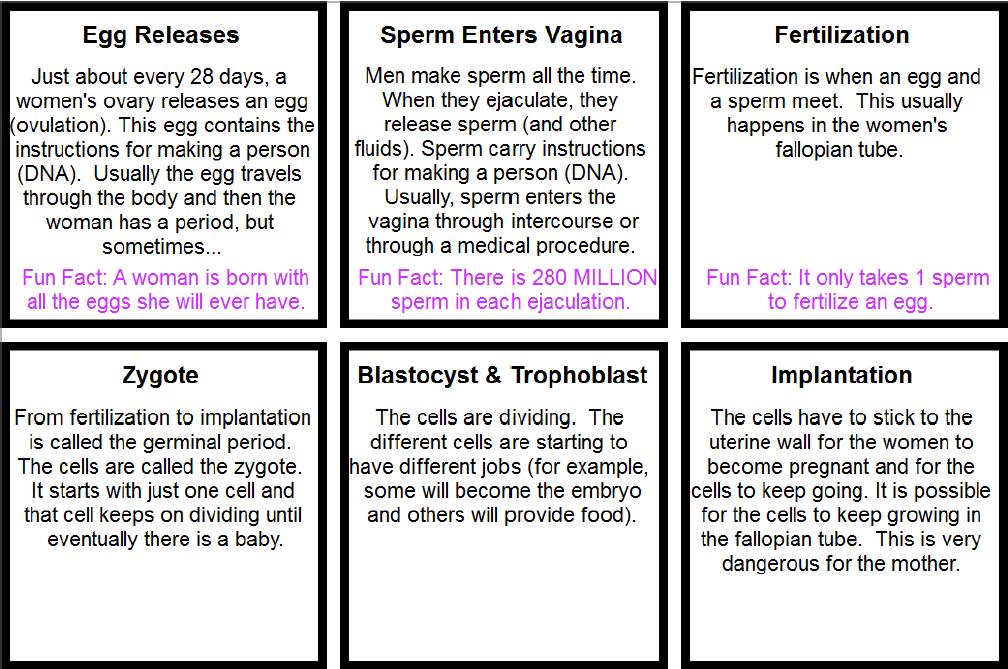
You’re probably sick of seeing my fruity anatomical models, but I just can’t help myself from teaching them- at least I gave you a different picture. I love that activity. One of the participants in the class has trained to be an EMT and is now working on becoming an nurses assistant so he was able to explain the reproductive processes and anatomy. On the other hand, other folks had a hard time looking at pictures of the developing fetus and seeing progression from cells to a more complex organism. I think there just wasn’t enough context and exposure to those images. All the participants in our class had this piece of sex ed before so they knew all the basic parts of anatomy. We got into a nice discussion about reproductive anatomy and why it’s private and why it’s taboo.
When talking about reproduction, be careful not to limit conception to just intercourse (although this is critical information too). In our activity we framed sperm entering the vagina as through intercourse or a medical procedure. You could go into more depth and talk about different fertility options. Why? First, intercourse is not the only birth story and specifically it’s less likely to be the birth story for children with gay or lesbian parents. I think it’s important not to assume that heterosexuality is the norm. Second, many individuals have difficulty conceiving and need fertility support. I think it’s important not to assume fertility is the norm.
For the supplemental materials my co-facilitator and I got into an interesting situation. The book she wanted to use was only available in the children’s section at the public library. It was a really nice resource, but we were concerned about sending adults to the children’s section. All the reproduction books with pictures were in the children’s not fiction section. In the end, we decided to include it, but put a warning where it was located. I’m not sure this was the best choice, but that’s what we went with at the time. We also encouraged participants to watch “Life’s Greatest Miracle”. This is a great teaching tool, and they could stream it for free!
I’ve attached the lesson plan and supplemental materials below.
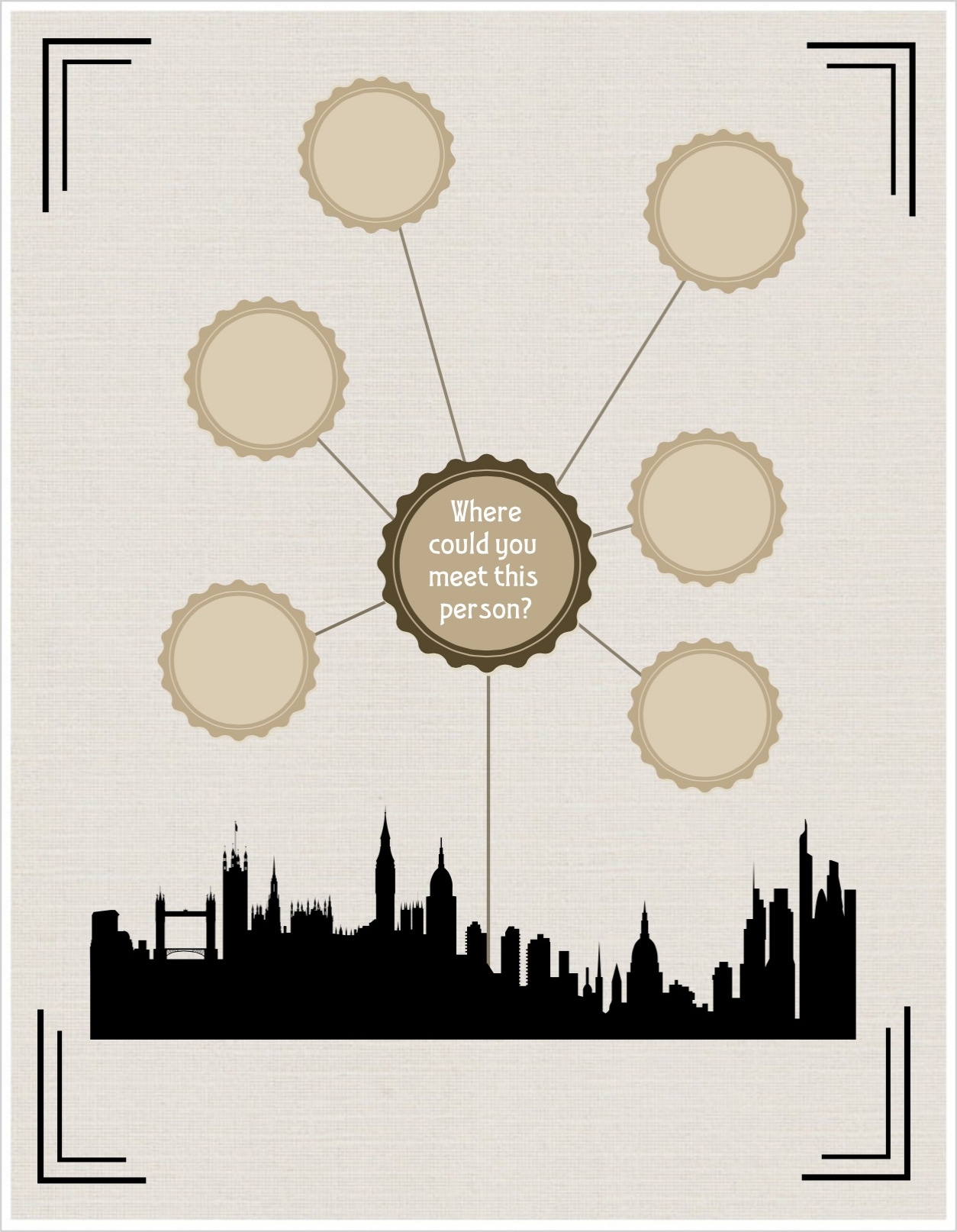
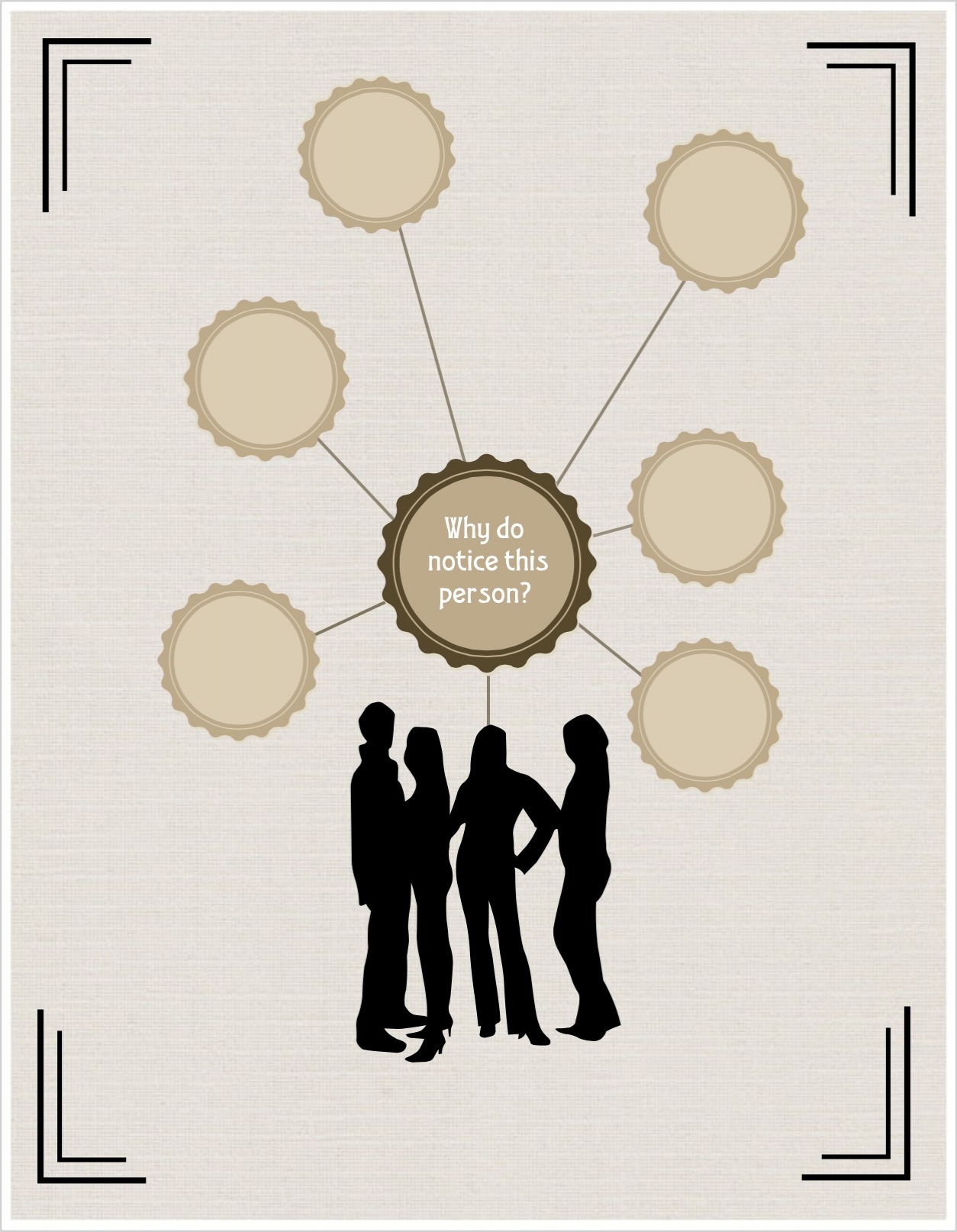
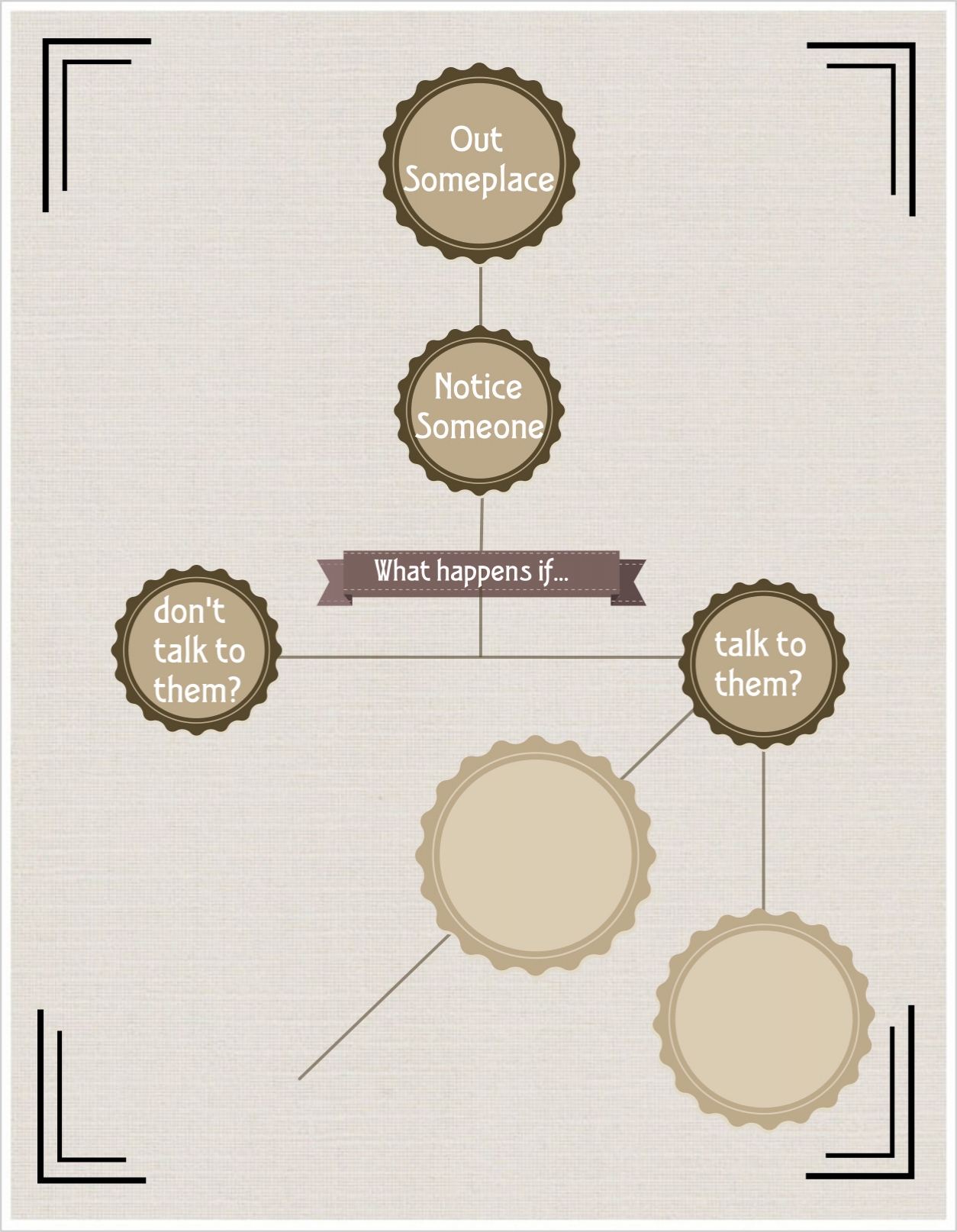
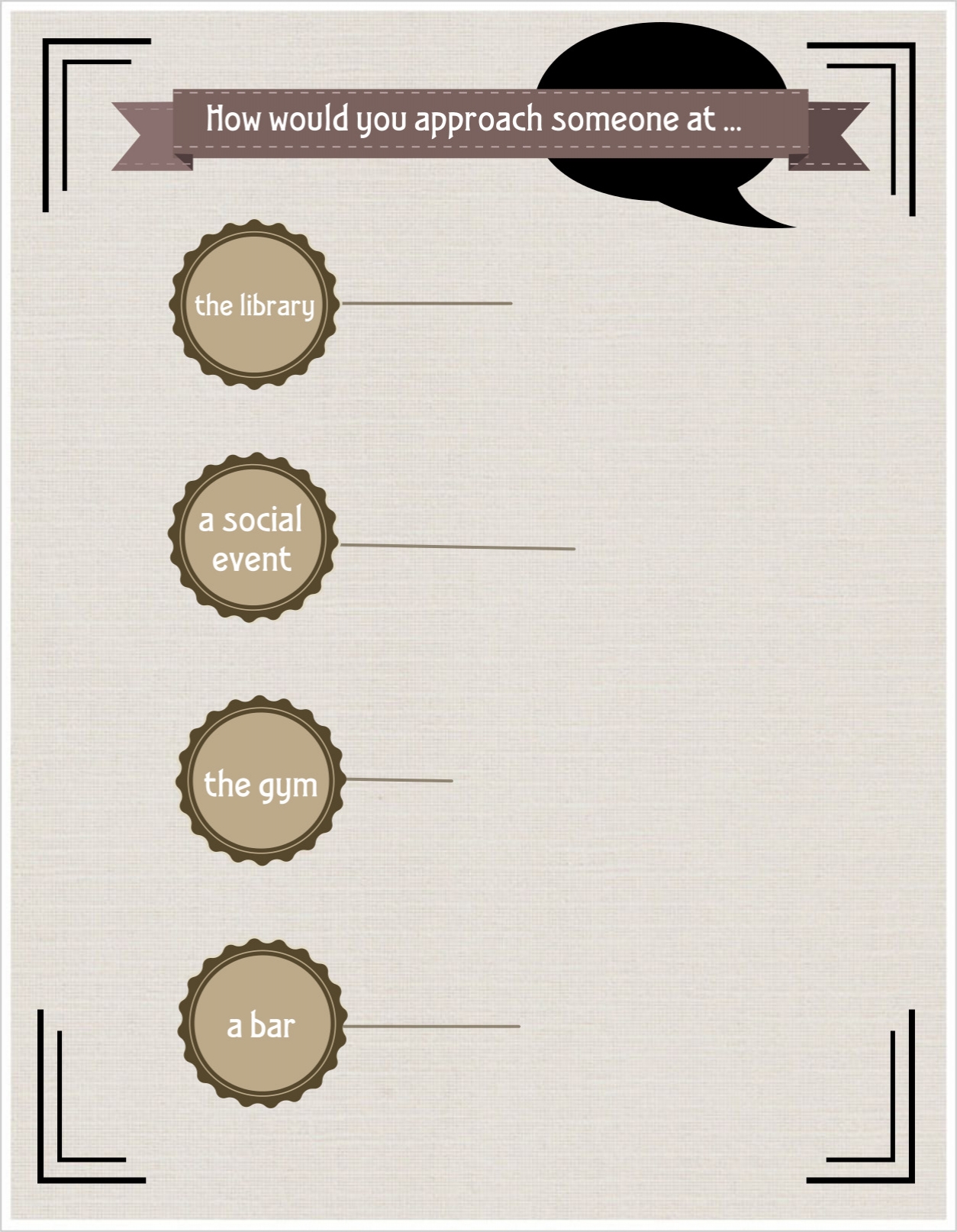
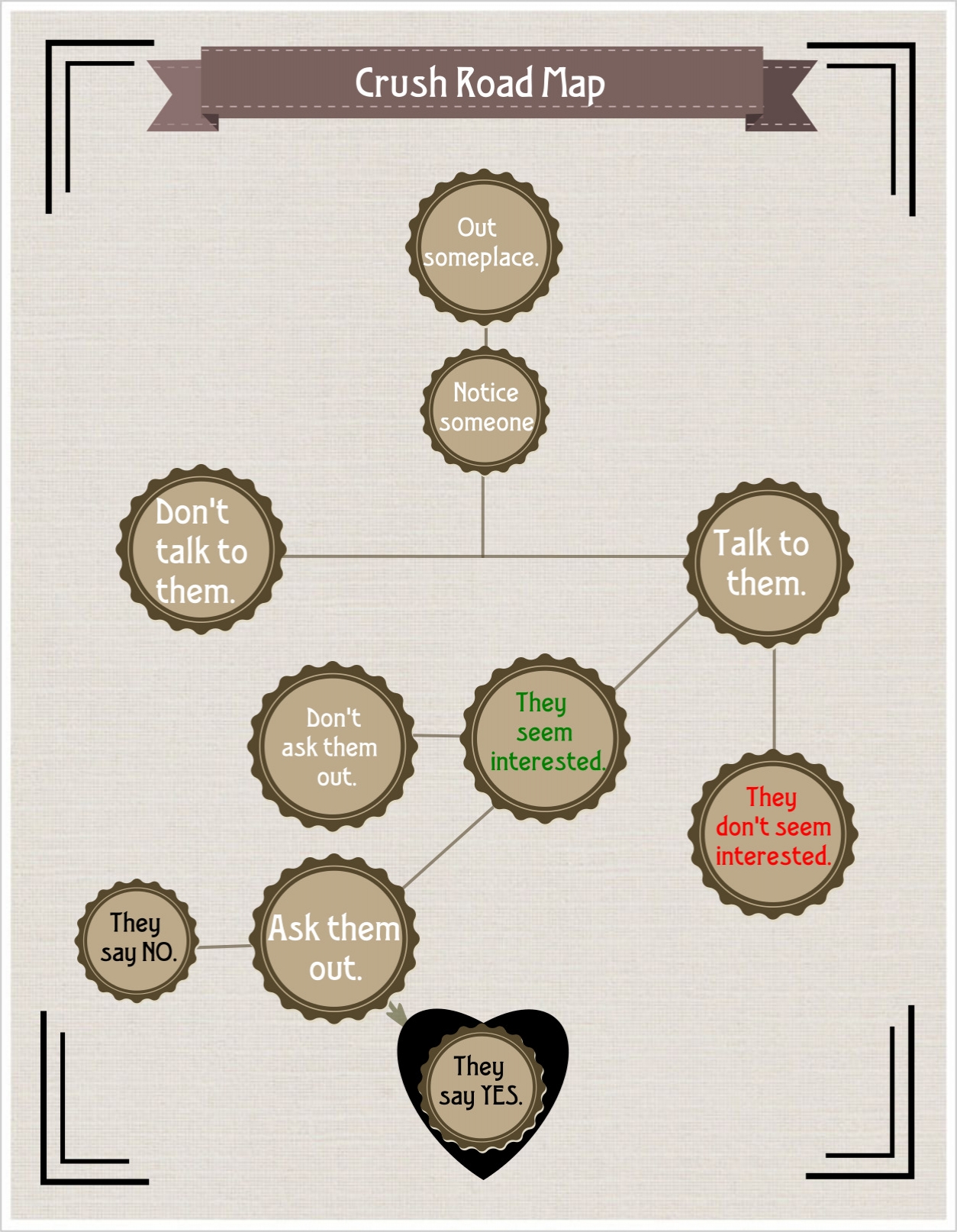
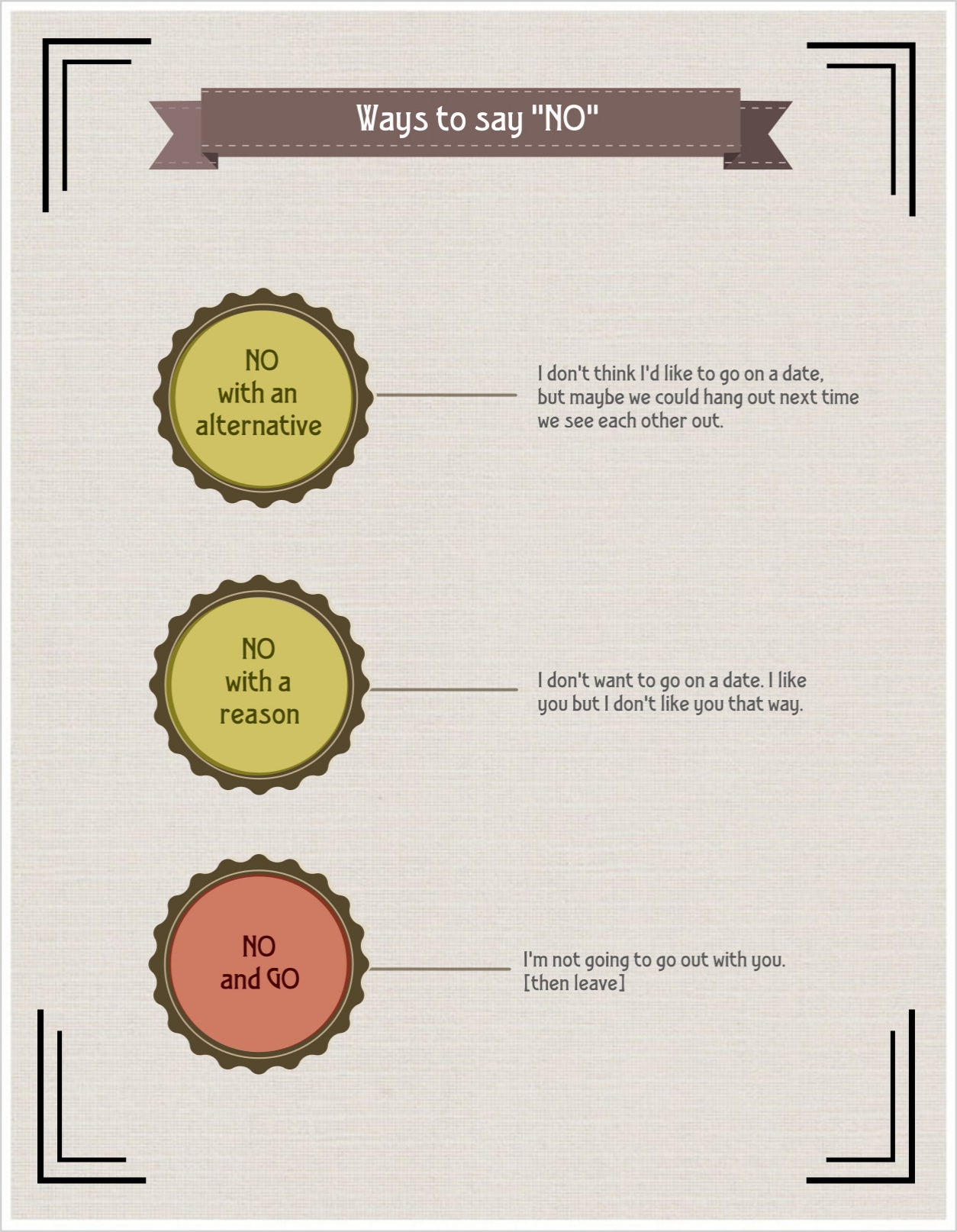
The main activity this week was a series of worksheets designed around walking participants through the steps of having a crush: places to meet someone, why you notice someone, deciding to talk to them or not, signs of being interested, approaching someone, asking out on a date, and saying “No”. Probably the most difficult question on the worksheets was, “why do you notice this person?” Many of the participants focused on things the would like if they got to know someone. It took several prompts, but they were able to start thinking about the things they notice about others, the things that draw their attention. When we got to different ways to approach someone there were many questions on bar etiquette. We talked about buying drinks for others, when it’s expected to approach people and when it’s not, and the difference between the bar sitting area and table sitting area. We didn’t get to our final activity, but were were going to sequence the road map with pictures of couples at different stages. We have a little bit of a time management problem because there’s no clock in the room. It’s the little things!
The previous week focused on crushes so this week’s topic, dating, was a natural extension. We did a lot of role playing and it went wonderfully. We were able to pull out parts of the role play to reinforce many of the different concepts. The last time I had done role playing was with middle school students- adults are just so much different to work with. They took the role plays very seriously and put a lot of effort in. One of the actors did turn out to have a comedic streak so the activity was fun as well as thoughtful.
We also did an activity where we asked participants to think about the characteristics in a relationship that were most important to them. We had a couple red flags on the list (like one about physical mutuality) and they were all tuned into why that is important. This activity lead to a nice open discussion where we talked about other items on the list that were important to us. For the most part, people in the group are really centered on having similar interests and values.
Rape, Abuse, and Incest National Network: General resource about rape, abuse, and incest. There’s a lot of information, but not all of it is specific to people with intellectual disability.
The National Domestic Violence Hotline: A great resource on domestic violence and abuse issues, along with contact information for hotlines and other related services.
You Are in Charge of Your Body: A video series aimed at young children to identify and understand sexual abuse and how to communicate these incidents to adults. It also teaches children to take charge of their bodies.
Sexual violence comes in many forms and it can be difficult to distinguish them. Here’s a basic guide on how to classify types of sexual violence.
Sexual Harassment: Giving someone unwanted sexual attention. This can include touching someone’s body without their explicit permission, asking for sexual acts, and catcalling, which is an unwelcome, sexually charged comment.
Rape: Forced vaginal, anal, or oral sexual intercourse. Rape lacks clear consent. Rape can occur by strangers or people you know, even a partner. Sometimes, power is used to coerce a person into sexual intercourse. In these case, usually a person declines sexual advances and is then guilted into intercourse.
Statutory Rape: Sexual intercourse with a person who is a minor or not at the age of consent (which varies by state and country). Get more information on statutory rape and the age of consent here.
Incest: Sexual acts between people who are related. This can be siblings, parent-child, uncles/aunts and nephews/nieces.
Domestic Violence: Violence between two people in an intimate partnership. This includes threats and acts of violence (i.e. battery).
Stalking: When a person repeatedly follows, watches, or harasses someone for a long period of time. This can include excessive phone calls (i.e. five phone calls in one hours) and giving gifts.
So, how can we prevent sexual violence and protect ourselves and others against it?
Understanding sexual violence: By understanding the types of sexual violence, it can be easier to identify and understand how it can affect yourself and others.
Speak out if something doesn’t feel right: If you are feeling that you have been part of a sexual act that did not make you feel good or that you did not want to do, telling someone you trust or contacting a sexual assault survivor’s line can help clarify the situation.
Teach consent as a mandatory step in all sexual situations: Consent is a fancy way of saying “yes, I would like this to happen.” By giving consent, you are allowing another person to touch your body. You can tell them what you are and are not comfortable with (i.e. “I do not want to do vaginal sex, only oral”). Understanding that consent can change at anytime during the interaction is also important and can be overlooked. It’s okay to say “stop, I don’t want to have sex anymore.”
Here’s a quick video about consent, including examples of what consent looks like.
For those of you who have come to a workshop, this activity was similar to what we did in the workshop. We thought about power and control in relationships and specifically the benefits of having more power, benefits of having less power, drawbacks to having more power, and the drawbacks to having less power. Once we got it all up on the board we used put a circle in the center and talked about how different situations would be red flags that a relationship would be unsafe. We also did a shortened version of the “What Should I do Worksheet” and role played some of the different scenarios (like one friend calling another friend because her boyfriend just told her there was a greater age difference than she assumed).
We want more people to get good sexuality education so feel free to use our materials. If you improve on them, let me know!
One of the participants in our group loves to do trainings and so we included a online training program to identity dating violence in teen relationships. You may find this site really useful too. Dating Maters offers a 1 hour and 20 minute training that will allow you to identify examples of teen dating violence and understand the consequences of teen dating violence. The training will teach you the risk factors, protective factors, warning signs, and challenges for seeking help for teen dating violence. The material is a good starting place for adult relationships too.
This activity was a little more difficult than we expected (I don’t know why I didn’t expect it to be hard- we’re talking about sexual activity after all!). It was hard for us to explain each of the sexual activities. Part of the point of this activity is to talk about the variety of sexual activities, but sometimes we get caught on our own hang ups and assumptions about what people need to know. On the other hand, this material was difficult and new for many of the participants in the group. Talking about sexual activities can make people feel uncomfortable. I think, in the end we struck a nice balance between expressing the diversity of sexual expression and having opportunities to set personal boundaries. I would make some revisions to the lesson plan and those revisions are reflected in the lesson.
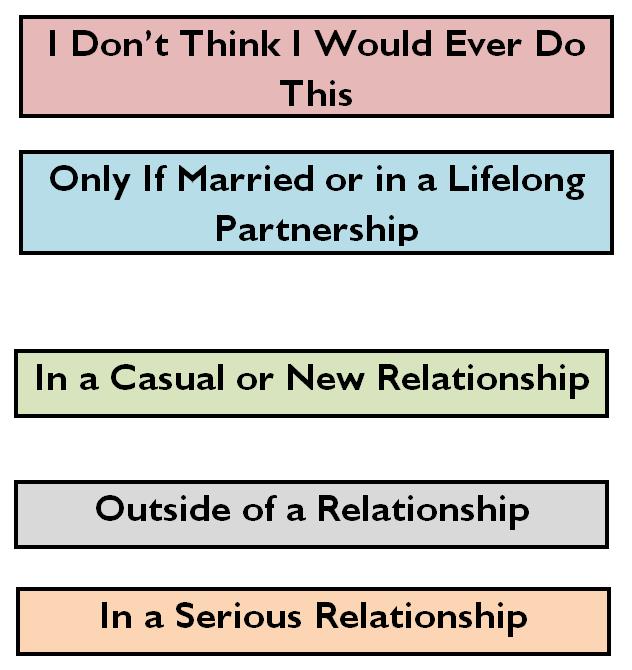
We did a mini pretest which we revisited at the end. The bulk of our activity involved sorting sexual activities into categories and talking about the continuum of intimacy. The relationship categories really helped set up the continuum so I would recommend doing that step first (the relationship categories aren’t listed in order. I would do it from left to right- outside a relationship, in a casual relationship, in a serious relationship, only if married or in a lifelong partnership, and I don’t think I would ever do this). I would then move into talking about how these activities have a continuum. I changed the picture a little to better represent the continuum concept.
We then talked about the human sexual response cycle. As we were talking we used the sexual activities to help make the sexual response cycle more concrete.
We ended with revisiting the pretest questions and talking about our own values. Most of our group really values the emotional components of relationships.
This activity can be used to teach about different intimate activities, either alone or with a partner. All of the actions come in a word list form and in a visual form. The activity includes a continuum worksheet in which activities can be classified as “less intimate” and “more intimate”.
One way to use this activity is to teach what sex is. We often assume that people understand what sex is, but people have difficulty with understanding sex even when it is explained. First list the acts of intimacy in a continuum and then discuss “where sex starts” or “which activities are sex and which ones are not. This is more difficult than it seems. For example, it is not uncommon for students to start with thinking that “kissing above the waist over the clothes” is sex. When we teach this activity, we encourage students to express their own understanding of what is more or less intimate but because the concept of a spectrum is difficult, we guide them at the anchors of what is the most inmate and least intimate. By seeing sex in the context of different sexual activities it helps fill in some of the gaps.
Instead of a continuum you could use categories- the categories we use help reinforce the idea of a continuum as well. There is also a list of different levels of intimacy that can be used to classify these activities. Using the activity in this way is consistent with the concept of postponement- postponing intercourse until a relationship is more serious of formalized.
Sometimes when people see all the different acts of intimacy they are surprised but it is important to be inclusive of all different forms of sexual expression. We also don’t use all the different acts with every group, but we’ve given you a pretty comprehensive list that you can tailor to meet your student or child’s needs.
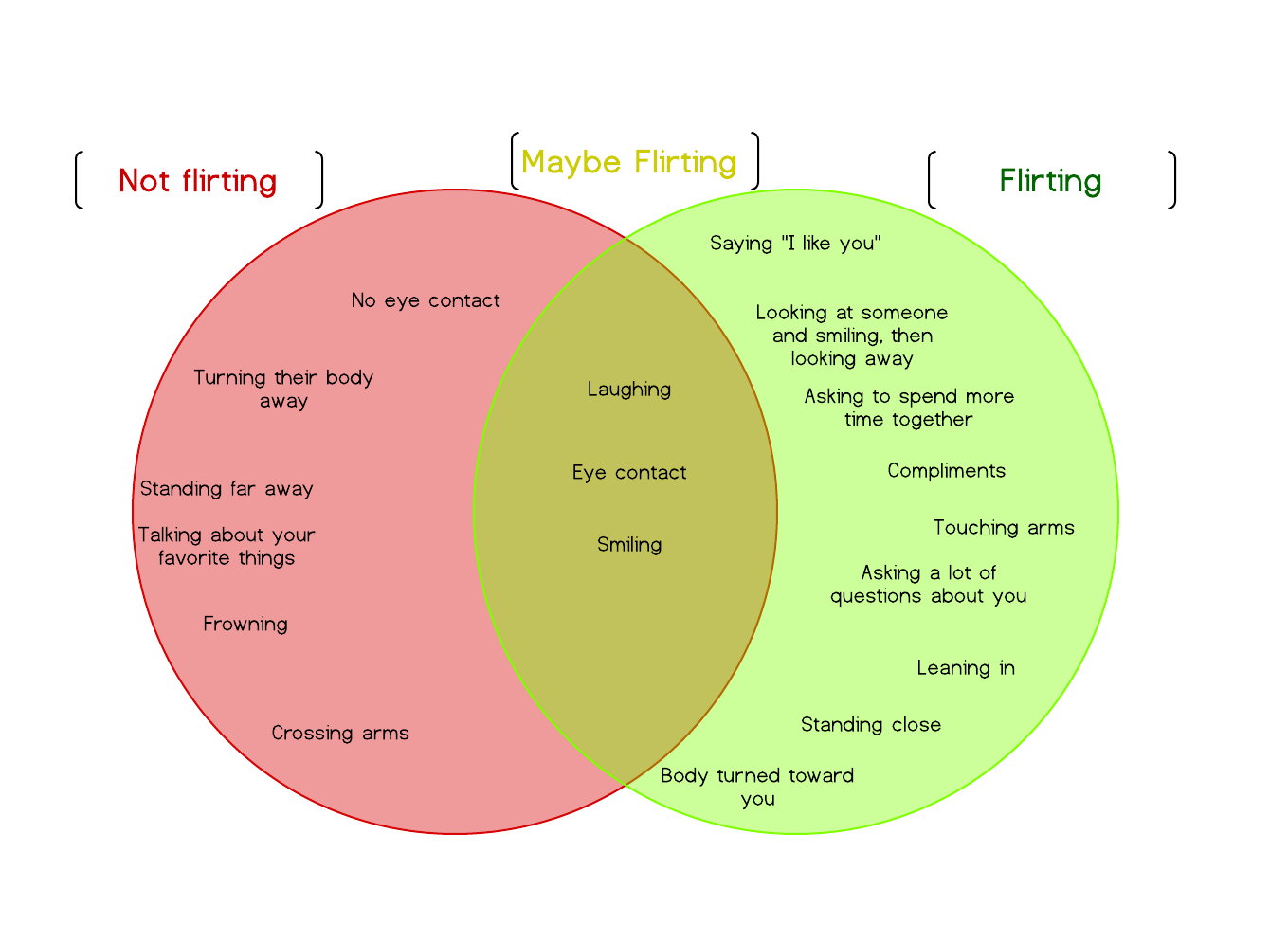
Flirting can be a difficult subject to talk about because it always varies. This aid has some typical behaviors that are flirting, maybe flirting, and not flirting. It’s important to note that this is not a exhaustive list and that some of these behaviors are not guarantees of flirty or not flirty behavior, but it is a great place to start the conversation. This activity can be used to steer a conversation about how and when flirting occurs, and the fluidity of these behaviors.
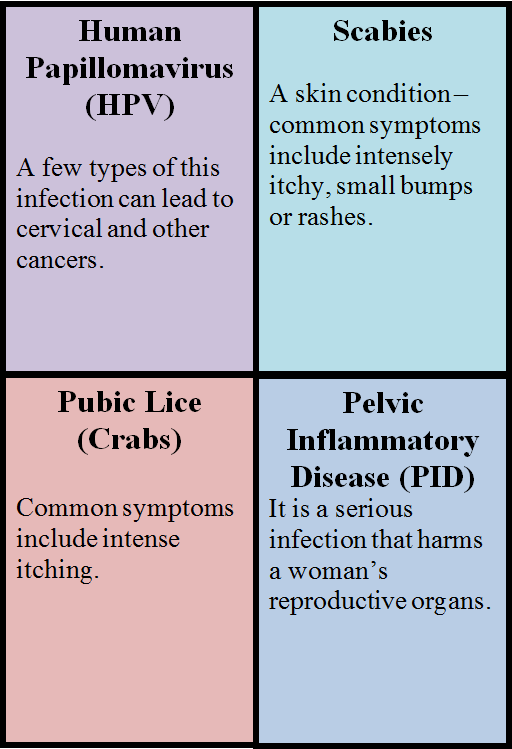
For our sexual health week we talked focused on STDs and contraception methods although we did include more general health information in the newsletter. We did a condom demonstration and then practiced putting on condoms (we used bananas as our phallics). It was really important that we did that because several parts of putting on condom were tricky such as opening the wrapper and making sure it wasn’t inside out.
We talked about the “morning after pill” and STD testing. This is a more complicated topic for individuals with medical guardians. Individuals have the right to these forms of medical care without guardian approval if they are part of post sexual assault forensics. But what about outside of that context? This was especially timely as we had this class the same week a New York judge struck down age limits on the “morning after pill”.
We played a game with contraception methods and STDs that mimic Go Fish. It was a lot of fun. The cards for the game are below. Depending on your audience, you could either print out two copies of the same cards or there are two versions of each card so you can squeeze in twice as many facts.
If you’re teaching a class on this topic and would like to check out our materials, I’ve included them below.
The focus of week 6 was to better understand power relationships. During this week, the participants worked together on a activity that helped them to learn about power and control in relationships and specifically the benefits of having more power, benefits of having less power, drawbacks to having more power, and the drawbacks to having less power. The main concept that we were teaching with this activity is that there should be a balance when it comes to power. We first brainstormed ideas on what it meant to have power in a relationship. After that, the participants discussed how different situations could be red flags that a relationship is not safe and we had them place those on the outside of the circle. We superimposed a circle onto our original brainstorming to reinforce this concept (using the powerpoint project and a dry erase board).
At the end of group we played a “Would you Rather” game to help them tune into how much power and control they prefer to have in relationships. Students are asked about different relationships where there is a power difference (eg. parent-child). If they would prefer the more powerful option they take a step forward, the less and they stand still. In my experience, individuals with disabilities are much more likely to choose a majority of less powerful positions in relationships. Food for thought.
YouTube has a lost of great sexuality education resources but it can be hard to find among all of the “not safe for work” content. Here’s a few channels and videos that might be useful. One of the most difficult tasks sex educators report is explaining intimate acts. This can be uncomfortable and difficult so I’ve tried to focus on these difficult to teach topics. The videos may not be the best fit for the person/people you’re working with, but they can give you an idea where to start. The channels also have great resources for expanding your own education on sexuality topics.
The Center for Sexual Pleasure and Health (CSPH) has a lot of great videos. Is one of my favorite cites. In addition to having direct information they also have videos for parents (“Use Your Words” videos).
Healthchannel is a YouTube channel with short videos on a variety of health care issues including sexual health resources including a few I’ve listed below. The videos aren’t prefect. They don’t feature animations with people with disabilities and focus on heterosexual couples, but they give very precise, clear information.
Sexplanations is another YouTube channel. They have mini episodes on human sexuality topics from shared sexual behavior to STDs to anatomy. Again the videos aren’t perfect. They move a little too quickly than I would like, but I’ve selected a few I think could be helpful. They could also be good to expand your own understanding of various topics.
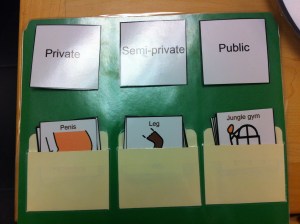
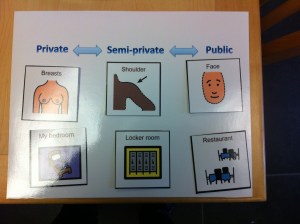
Teaching and learning about privacy can be difficult and confusing. This activity uses a continuum of privacy (using private, semi-private, and public) to help differentiate privacy levels. There are two topics: body parts and places. You can use this activity to explain different privacy levels and explain contextual differences (i.e. a stomach can be a public body part at the beach, but a private body part at school) . Download the privacy activity places and body parts here!
Parents are often afraid of the day that their daughter comes home and says she has a boyfriend! This social story having a boyfriend addresses this event to help a young girl understand what your expectations might be when it comes to having a boyfriend. We went with the strategy of instructing on how she can interact with her “boyfriend” in many age appropriate ways, for example, she can look at him, giggle, and then look away.
 This lesson plan revolved around teaching what body image means, understanding that people feel differently about their bodies, and that people change how they feel about their bodies over time. After doing several knowledge based activities, we moved to exploring how the students felt about their own bodies.



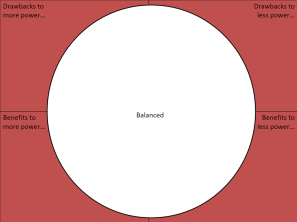 The focus of week 6 was to better understand power relationships. During this week, the participants worked together on a activity that helped them to learn about power and control in relationships and specifically the benefits of having more power, benefits of having less power, drawbacks to having more power, and the drawbacks to having less power. The main concept that we were teaching with this activity is that there should be a balance when it comes to power. We first brainstormed ideas on what it meant to have power in a relationship. After that, the participants discussed how different situations could be red flags that a relationship is not safe and we had them place those on the outside of the circle. We superimposed a circle onto our original brainstorming to reinforce this concept (using the powerpoint project and a dry erase board).